




India–Mexico Trade Corridor: A Gateway of Opportunity for Indian SMEs and Financial Institutions

As global trade patterns realign and nations seek resilient supply chain alternatives, a new chapter in South-South commerce is unfolding with India and Mexico at its center.
In a strategic move to deepen trade cooperation between the two economies, Credlix, a global fintech platform for cross-border supply chain financing, has launched the India–Mexico Connect, a digital-first solution enabling Mexican businesses to source directly from Indian manufacturers while accessing seamless, collateral-free trade financing.
Unveiled at the IndMex Chamber event on June 19, 2025, hosted by the Embassy of India in Mexico, this initiative has the potential to redefine the trade dynamics between two of the largest developing economies, while creating unprecedented opportunities for Indian small and medium enterprises (SMEs).
India’s trade with Mexico currently stands at approximately USD 11 billion, a small fraction compared to Mexico’s USD 120 billion trade with China. As Mexico evolves into a nearshoring hub for North America and India solidifies its position as a global manufacturing partner, both countries have strategic reasons to close this trade gap.
India–Mexico Connect aims to do just that, by removing friction in procurement and trade financing, and offering a structured digital infrastructure that benefits buyers and sellers alike.
“This is more than a sourcing platform. It’s a bridge between two economies with complementary strengths,” said Rahul Garg, Founder & CEO of Credlix and Moglix. “We’re solving both market access and capital access for India’s SME sector.”
How the Platform Works
The India–Mexico Connect model is built on two pillars:
- Sourcing Efficiency
Mexican buyers gain access to over 20,000 verified Indian suppliers across sectors such as automotive components, engineering goods, chemicals, electronics, packaging, and textiles enabling product diversity and competitive pricing. - Trade Financing Access
Exporters from India receive up to 90% invoice-based working capital at the time of shipment, entirely without collateral. The process is digitally managed, with robust documentation and payment security baked into the workflow.
This is especially impactful for Indian SMEs, which often struggle with long payment cycles, limited buyer reach, and difficulty obtaining bank loans without assets or credit histories.
Why It Matters for Indian SMEs
India’s MSME ecosystem numbering over 63 million enterprises accounts for 30% of GDP, 46% of exports, and employs over 250 million people. However, most remain excluded from global trade due to barriers such as:
- Lack of access to verified global buyers
- Limited working capital to fulfill export orders
- Complex export documentation
- Absence of reliable payment assurance mechanisms
India–Mexico Connect directly addresses these issues, unlocking cross-border demand while ensuring that capital flows in tandem with product movement. The initiative helps SMEs become export-ready, scalable, and creditworthy.
New Avenues for Financial Institutions
This initiative is also a milestone for India’s financial sector, particularly banks and non-banking financial companies (NBFCs) seeking to grow their MSME portfolios.
By integrating trade verification and digital finance, platforms like Credlix help financial institutions:
- Deploy low-risk credit tied to real shipments
- Access ESG-aligned lending opportunities (e.g., in solar, sustainable packaging)
- Leverage data-rich, invoice-level underwriting
- Expand into global SME trade financing with minimal operational overhead
The rise of impact-linked finance, supported by regulatory developments such as the RBI’s green taxonomy draft and schemes like SIDBI’s green credit guarantee, further enhances the strategic value of such platforms.
Diplomatic Backing and Policy Alignment
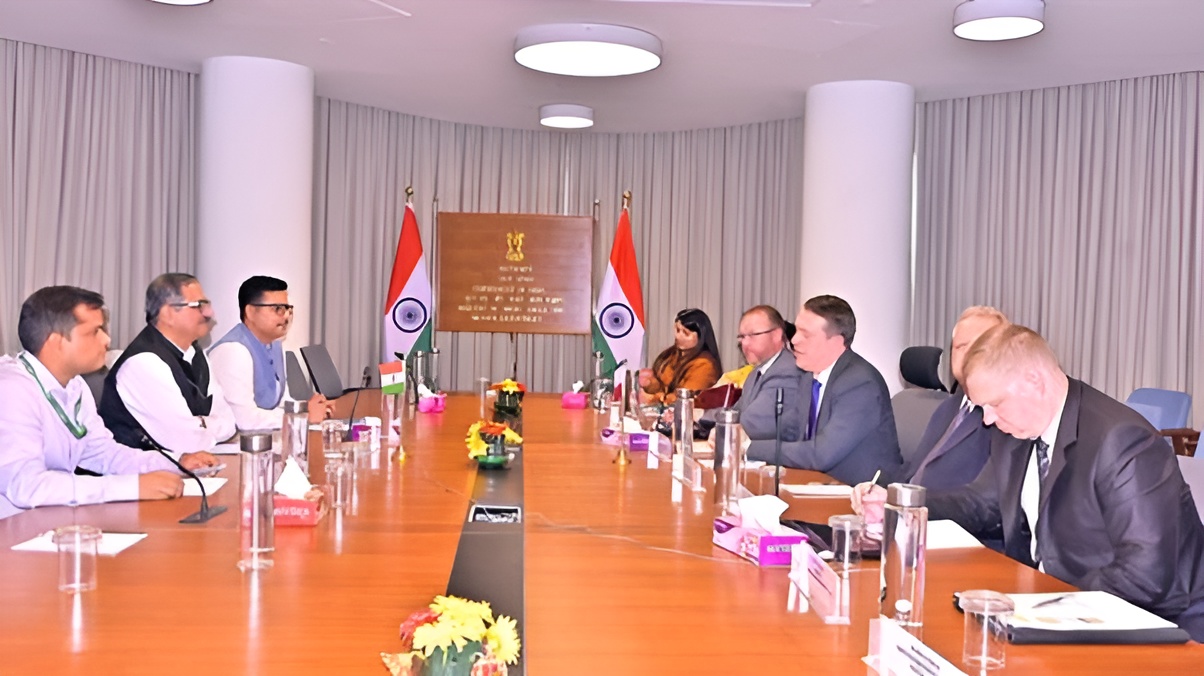
The initiative has garnered strong diplomatic support. Dr. Pankaj Sharma, Ambassador of India to Mexico, who presided over the IndMex Chamber event, emphasized the importance of translating bilateral goodwill into tangible outcomes.
“India–Mexico Connect exemplifies how diplomacy can empower economic cooperation,” said Dr. Sharma. “This is the kind of result-oriented engagement that strengthens long-term bilateral ties.”
The move also aligns with India’s Foreign Trade Policy (2023–28), which prioritizes export diversification, SME participation, and trade digitalization. It complements recent policy efforts such as:
- MSE-GIFT Scheme – offering concessional finance for green manufacturing
- SIDBI’s green upgrade guarantee programs
- The government’s push for Digital Public Infrastructure (DPI) in trade and finance
The Bigger Picture
India–Mexico Connect is more than a bilateral project it’s a template for South-South cooperation in the 21st century. As global supply chains shift away from traditional hubs, emerging economies like India and Mexico are poised to build alternative, resilient networks.
The initiative showcases:
- How fintech can democratize trade finance
- How SMEs can become global players through digital platforms
- How emerging economies can build mutual trust through infrastructure, not just diplomacy
For Mexico, where over 50% of transactions are still cash-based, Indian digital finance models present a transformative opportunity. For India, this corridor serves as proof that its SME sector is not just domestically vital but globally competitive.
Looking Ahead
The India–Mexico Connect initiative is expected to grow in scale and scope. Future possibilities include:
- Expansion into other LATAM markets such as Brazil, Colombia, and Chile
- Integration with India’s UPI and ONDC stack for seamless B2B transactions
- Inclusion of impact financing products such as climate bonds or ESG-linked credit
- Greater participation from public and private sector lenders, both domestic and international
As the world increasingly looks for resilient, diversified, and sustainable trade partnerships, this initiative shows how digital infrastructure, financial innovation, and entrepreneurial ambition can converge to unlock real growth, for small businesses, financial institutions, and national economies alike.