




India-UK Trade Corridor Strengthens as Bilateral Relations Deepen
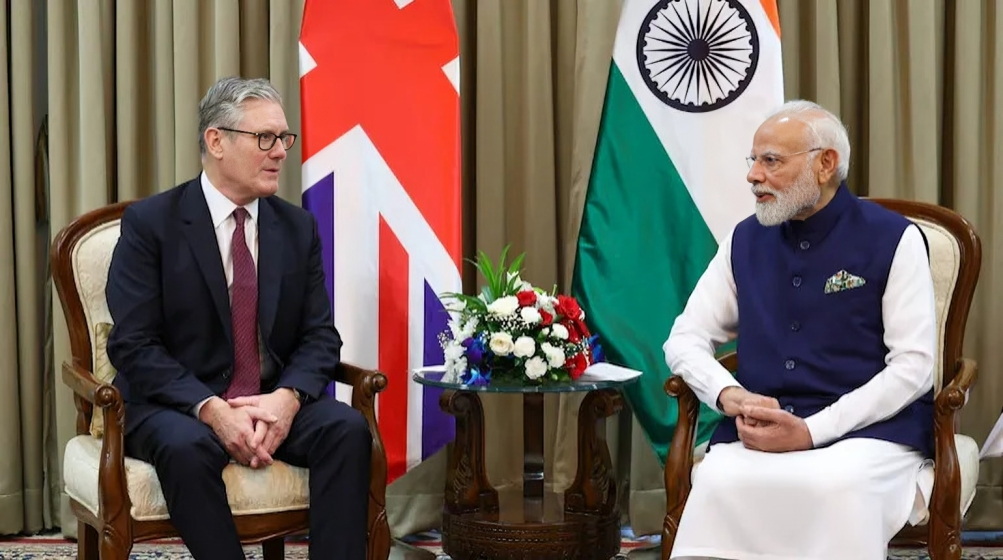
Following the historic visit of UK Prime Minister Keir Starmer to India from 8–9 October 2025, the India-UK trade corridor is entering a new phase of growth and strategic collaboration. The visit, which included a high-level delegation of 125 CEOs, entrepreneurs, university vice chancellors and cultural leaders, reinforced the momentum created by the signing of the India-UK Comprehensive Economic and Trade Agreement (CETA) and adoption of the India-UK Vision 2035. Both nations are now actively moving to operationalize these agreements, with tangible developments across trade, investment, technology, education and climate initiatives.
Economic Growth and Trade Initiatives
Prime Ministers Narendra Modi and Keir Starmer emphasized the need to expedite the ratification of CETA to unlock economic benefits for businesses in both countries. In this context, the reconstitution of the India-UK Joint Economic Trade Committee (JETCO) will provide structured oversight for implementation and ensure that trade policies remain aligned with evolving market needs. The CEO Forum, held on the sidelines of the summit in Mumbai, highlighted opportunities across sectors such as construction, infrastructure, clean energy, advanced manufacturing, defence, education, financial services, science, technology and consumer goods.
The UK-India Infrastructure Financing Bridge (UKIIFB) exemplifies the commitment to sustainable growth, facilitating joint investment in infrastructure projects while encouraging private sector participation. Both governments reiterated their intent to enhance connectivity and cooperation in aviation, including the renewal of the India-UK Air Services Agreement, offering potential expansion opportunities for aerospace collaborations.
Technology and Innovation Collaboration
Technology and innovation are central pillars of the strengthened India-UK partnership. Prime Ministers Modi and Starmer welcomed tangible progress under the Technology Security Initiative (TSI), highlighting projects in AI, 6G networks, cyber security, critical minerals and biotechnology. Key developments include:
- India-UK Connectivity and Innovation Centre– A joint hub for AI-native networks, 6G, Non-Terrestrial Networks and cybersecurity for telecommunications, backed by £24 million in initial funding.
- India-UK Joint Centre for AI- Focused on advancing responsible and trustworthy AI applications in health, climate, fintech and engineering biology.
- UK-India Critical Minerals Supply Chain Observatory Phase II– Expanding coverage and integrating advanced technologies to secure resilient supply chains, including the establishment of a satellite campus at IIT-ISM Dhanbad.
- Critical Minerals Industry Guild– Promoting investment, collaboration and green technology adoption in both nations.
- Biotechnology Partnerships– Collaborative research programs linking UK institutions such as CPI, HRI and ONT with India’s BRIC and IISc, fostering innovation in biomanufacturing, 3D bioprinting and genomics.
These initiatives underscore a strategic alignment to not only drive economic growth but also strengthen national security and global competitiveness in frontier technologies.
Education and Cultural Exchange
Education remains a key element in deepening bilateral ties. The UK and India continue to expand opportunities for student mobility and academic partnerships. During the visit, Letters of Intent were handed over for the launch of Lancaster University in Bengaluru and in-principle approval for the University of Surrey in GIFT City. Earlier approvals for campuses of University of Liverpool, University of York, University of Aberdeen, University of Bristol, Queen’s University Belfast and Coventry University are progressing. These developments reinforce the shared commitment to higher education, innovation and workforce development.
The leaders also emphasized cultural cooperation through the India-UK Programme of Cultural Cooperation and the first Annual Ministerial Strategic Education Dialogue, fostering youth engagement, creative industries, arts, tourism and sports. Both governments recognize the Indian diaspora in the UK as a vital bridge for enhancing cultural, economic, and social ties.
Climate, Energy and Health Research Initiatives
The India–UK partnership is taking a decisive lead on climate and clean energy. The ‘India-UK Climate Finance Initiative’ and the Climate Technology Startup Fund aim to scale climate financing, stimulate innovation in climate tech and support sustainable entrepreneurship. The Offshore Wind Taskforce and continued collaboration through the Global Clean Power Alliance reflect mutual commitment to net-zero goals.
Health and research collaborations are also expanding. Phase III of the Bio-Medical Research Career Program has been launched, and a Letter of Intent between ICMR and the UK’s NIHR on health research underlines the focus on innovation, capacity building and translational research.
Defence, Security and Regional Cooperation
Strategic defence and security remain central to the bilateral agenda. Both nations agreed to expand military cooperation, including joint exercises, training programs and integration of Indian Air Force Qualified Flying Instructors into UK Royal Air Force training.
Commitments to maritime electric propulsion systems, Lightweight Multirole Missile systems and broader defence collaboration demonstrate an emphasis on capability building aligned with Atmanirbhar Bharat objectives. The two leaders also reiterated a zero-tolerance stance on terrorism, committing to global cooperation in combating violent extremism, radicalization and cross-border financing of terrorism.
On regional and multilateral fronts, both Prime Ministers reaffirmed support for peace and stability in Ukraine, the Middle East and the Indo-Pacific, while advocating for reformed multilateral institutions, including the UN Security Council. Collaboration on Commonwealth initiatives, sustainable development and youth engagement will further solidify a rules-based international order.
Gains for SMEs and Corporates
The deepening India-UK trade corridor presents concrete opportunities for SMEs and corporates alike. SMEs gain from increased market access, participation in joint innovation initiatives and funding support via programs like the Climate Technology Startup Fund and the India-UK Connectivity and Innovation Centre, enabling adoption of frontier technologies, enhanced supply chain resilience and international scaling. Corporates benefit from infrastructure financing through UKIIFB, strategic partnerships in technology and defence and access to skilled talent fostered through higher education and research collaborations. Together, these measures create a dynamic ecosystem where businesses of all sizes can innovate, expand and strengthen global competitiveness.
A Strengthened India-UK Corridor
Prime Minister Starmer’s first official visit to India marks a turning point in bilateral relations, reinforcing both strategic and economic partnerships. The India-UK trade corridor is now set for accelerated growth, supported by innovative technology collaborations, education initiatives, defence cooperation and climate-focused investments.
The path forward involves leveraging these agreements to create jobs, enhance trade and investment flows and develop frontier technologies. As CETA moves toward ratification, businesses and governments in both countries are poised to benefit from greater market access, reduced trade barriers and deeper integration across critical sectors.
This evolving partnership demonstrates a comprehensive vision for the next decade, balancing economic growth, technological advancement, climate action and security imperatives, while fostering stronger people-to-people ties. India and the United Kingdom are strategically aligned to not only expand bilateral trade but also address global challenges collaboratively, setting a benchmark for international cooperation in the 21st century.