



Oman-India Economic Ties Strengthen: Strategic Windows for Indian SMEs and Investors
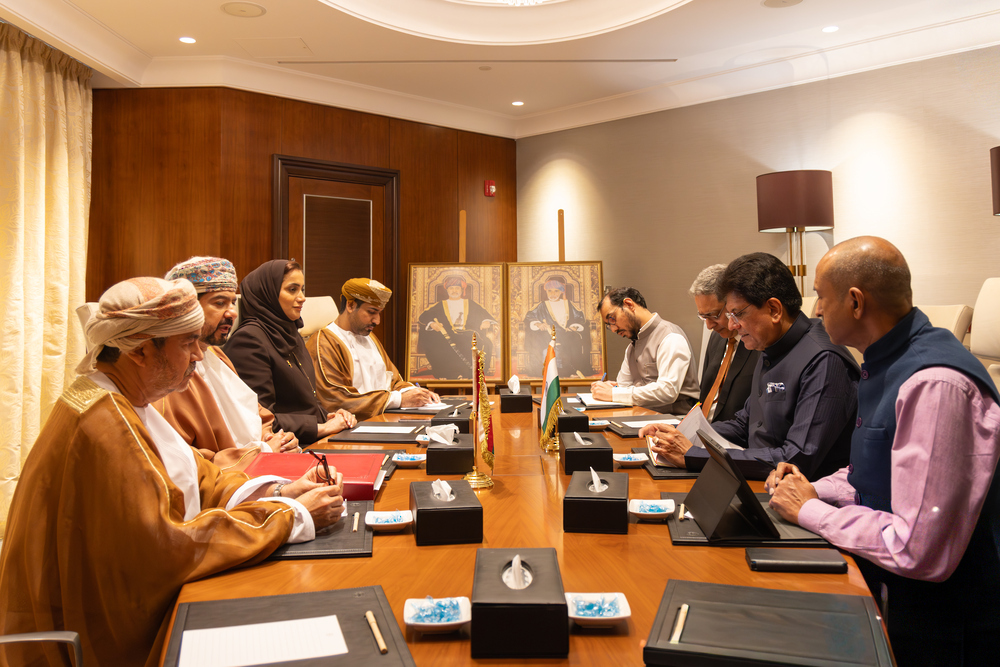
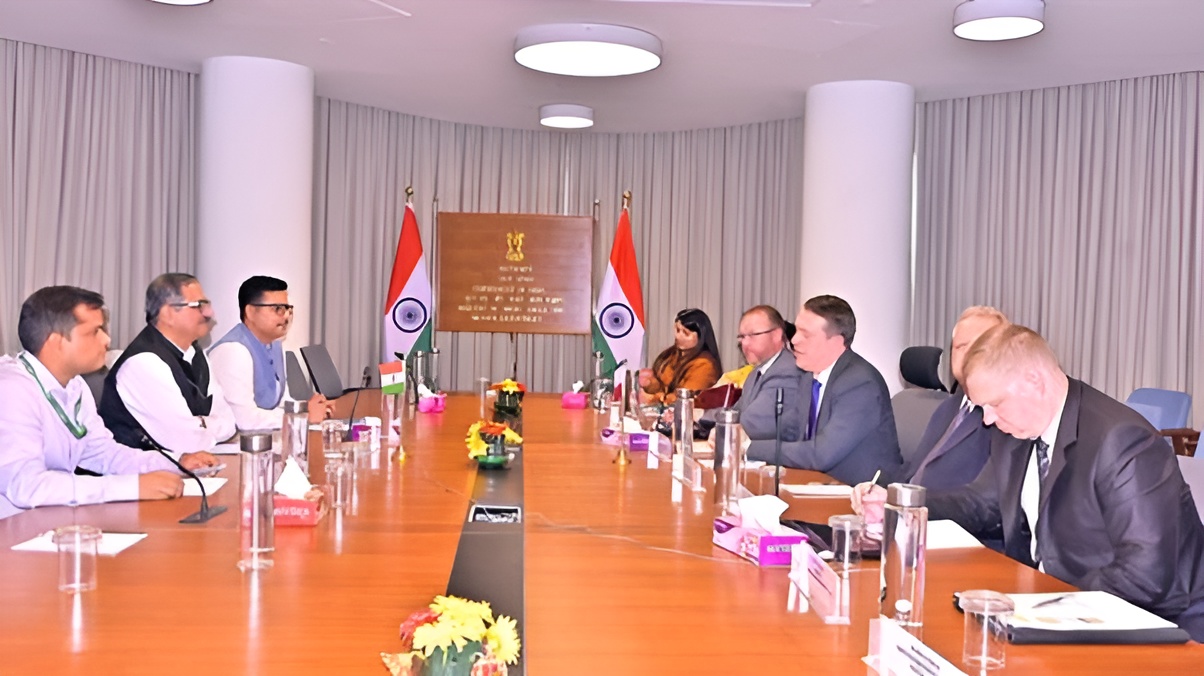
The India-Oman economic partnership is moving decisively beyond formal agreements into execution-led cooperation, marking a strategic inflection point for trade, investment, and industrial collaboration in the Gulf region. On the sidelines of the Oman–India Business Dialogue, Qais bin Mohammed Al Yousef, Oman’s Minister of Commerce, Industry and Investment Promotion, met with Piyush Goyal, India’s Minister of Commerce and Industry, to chart concrete pathways for leveraging the recently finalized Comprehensive Economic Partnership Agreement (CEPA).
Both sides underscored that the next phase of engagement would be defined less by diplomatic symbolism and more by timelines, delivery mechanisms, and measurable outcomes. Emphasis was placed on structured monitoring through the Oman-India Joint Committee, with the forthcoming twelfth session in India expected to prioritise sector-specific targets across trade facilitation, industrial investments and SME participation.
Investment Hotspots and Sectoral Opportunities
Oman’s special economic zones (SEZs) are fast emerging as a strategic gateway for Indian SMEs seeking entry into Gulf, East African, and transshipment-driven global markets. These zones collectively contribute over 15 percent of Oman’s non-oil GDP, with logistics, manufacturing, and downstream processing as core pillars. Regulatory single-window clearances, tax incentives, and long-term land leasing models have significantly reduced entry barriers for foreign SMEs.
Several sectors stand out where Indian SMEs can gain early-mover advantage:
- Logistics and Supply Chain: Oman’s ports at Sohar, Duqm, and Salalah collectively handle over 7 million TEUs annually, positioning the Sultanate as a preferred logistics hub linking India with Africa and Europe. Indian logistics and warehousing SMEs can integrate into regional value chains rather than operate purely as exporters.
- Renewable Energy and Green Technology: Oman targets net-zero emissions by 2050, with renewable energy expected to contribute over 30 percent of power generation by 2030. Indian SMEs in solar EPC, green hydrogen components, energy storage and carbon monitoring technologies find strong alignment here.
- Pharmaceuticals and Healthcare: GCC healthcare spending is projected to cross USD 135 billion by 2030, driven by population growth and medical tourism. Regulatory convergence under CEPA lowers approval friction for Indian pharma SMEs, particularly in generics, medical devices and diagnostics.
- Technology and IT Services: Oman’s digital economy strategy prioritises smart manufacturing, fintech-enabled trade, and cybersecurity. SMEs providing ERP, supply-chain digitisation and compliance-tech solutions are increasingly relevant as CEPA accelerates cross-border transactions.
- Agri-business and Food Processing: Oman currently imports over 65 percent of its food requirements, creating sustained demand for Indian SMEs in food processing, cold-chain logistics and value-added agri exports aligned with food security objectives.
Crucially, CEPA is not limited to tariff reductions. It introduces procedural harmonisation, faster customs clearances and investment protection mechanisms, directly improving speed-to-market and reducing compliance-induced working capital stress for SMEs.
Trade and FDI Momentum
The underlying trade data reflects a structurally strengthening relationship rather than cyclical growth. Bilateral trade reached approximately RO 1.049 billion in the first half of 2025, with India retaining its position as Oman’s third-largest trading partner. Between 2020 and 2024, cumulative trade expanded by 63 percent, translating into an average annual growth rate of around 13 percent, well above global trade growth averages during the same period.
On the investment front, India ranks as the tenth-largest source of foreign direct investment into Oman, with inflows touching RO 268.4 million by Q2 2025. More telling is the depth of business integration: over 10,589 registered companies in Oman have Indian shareholding, spanning manufacturing, logistics, construction, professional services and trading enterprises. This breadth signals not episodic engagement, but institutionalised commercial presence.
Business Implications for Indian SMEs
For Indian SMEs, the Oman–India CEPA offers a strategic operating framework rather than a transactional export advantage:
- Market Diversification: Entry into Oman provides access to a combined Gulf and East African consumer base exceeding 600 million people, reducing dependency on domestic demand cycles.
- Industrial Partnerships: SEZ-led joint ventures allow SMEs to embed themselves in regional manufacturing and processing ecosystems rather than operate as standalone exporters.
- Supply Chain Integration: Preferential customs treatment and logistics proximity enable SMEs to become tier-two and tier-three suppliers to regional conglomerates.
- Financial Efficiency: Reduced tariffs, faster clearances, and regulatory predictability directly improve cash conversion cycles, a critical survival metric for SMEs.
CEPA also dovetails with Oman’s broader push towards economic diversification, ESG-aligned industrialisation, and smart trade infrastructure, creating space for SMEs to participate in long-duration, high-value projects rather than short-term trade arbitrage.
Strategic Outlook
As India-Oman cooperation transitions from policy articulation to operational execution, SMEs that align early with CEPA-backed sectors, compliance frameworks, and industrial clusters stand to secure durable competitive positions in the Gulf. Conversely, delayed or reactive engagement risks gradual exclusion from emerging value chains, particularly in capital-intensive, ESG-sensitive and technology-driven sectors.
Ultimately, this partnership is not merely about expanding trade volumes. It represents a strategic blueprint for industrial collaboration, SME-led market diversification, and resilient cross-border value creation, positioning Indian enterprises to grow alongside Oman’s evolving economic architecture in an increasingly interconnected Gulf–India corridor.