




Belagavi: Precision Manufacturing’s Quiet Stronghold in South-West India
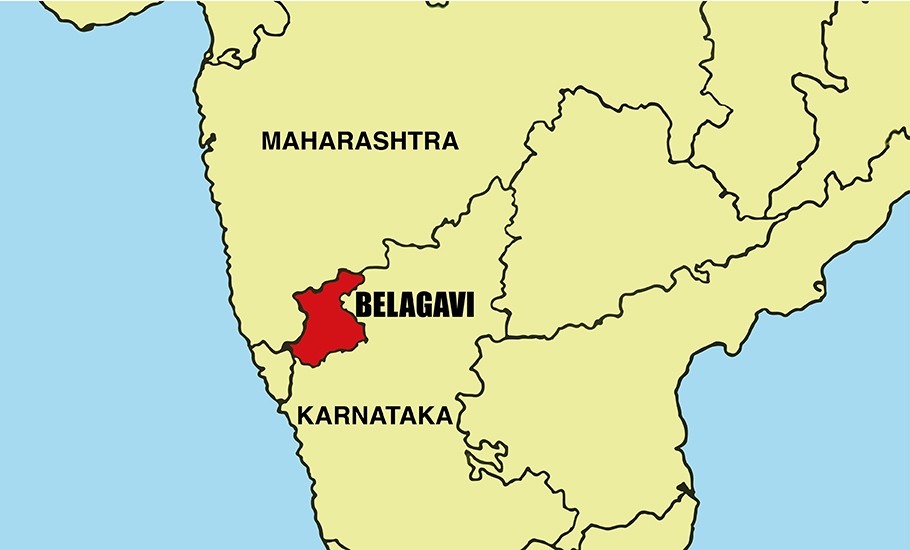
Belagavi does not announce itself with the drama of India’s megacities. There are no headline-grabbing startup valuations or sprawling technology parks. Yet, beneath its measured pace lies one of South-West India’s most quietly effective precision-manufacturing ecosystems, an industrial cluster that has steadily earned credibility across aerospace ancillaries, machine tools and defence manufacturing.
For decades, Belagavi’s industrial base has been shaped by engineering discipline rather than speculative capital. The region’s SMEs grew up servicing demanding sectors where tolerances are tight, delivery schedules unforgiving and reputational risk high. This orientation has produced a culture where process integrity matters more than scale, and reliability often trumps visibility. In an era where global manufacturers are reassessing supply chains for resilience rather than just cost, that mindset has become a competitive asset.
Aerospace ancillaries form one of the cluster’s defining strengths. Small and mid-sized firms here specialise in precision machining, forgings, castings and assemblies that feed into larger Tier-1 and Tier-2 suppliers. While few of these firms carry consumer-facing brands, many operate within qualification frameworks that demand long gestation periods, repeat audits and zero-defect mindsets. The result is a cohort of enterprises comfortable with patient capital cycles and sustained capability-building, traits that global aerospace programmes increasingly value.
Machine tools are the second pillar of Belagavi’s manufacturing identity. The city has nurtured a dense network of toolmakers, component suppliers and retrofitting specialists who support both domestic manufacturing and export-oriented SMEs across western and southern India. This ecosystem has evolved through hands-on apprenticeship models and inter-generational knowledge transfer, creating a labour pool skilled in both conventional engineering and incremental automation. As Indian manufacturing pushes toward higher productivity without sacrificing cost competitiveness, such hybrid capability becomes critical.
Defence manufacturing adds a strategic dimension to Belagavi’s profile. With India accelerating indigenisation and supplier diversification, the city’s SMEs are increasingly finding themselves integrated into defence supply chains, not as opportunistic entrants, but as credible, compliant partners. Their familiarity with documentation, traceability and quality assurance aligns naturally with defence procurement requirements. For policymakers, clusters like Belagavi offer a reminder that defence self-reliance is as much about strengthening mid-tier industrial capabilities as it is about flagship platforms.
Institutional depth has played a quiet but decisive role in this evolution. Local industry associations, engineering colleges and SME networks have acted as connective tissue, facilitating skills development, shared infrastructure and dialogue with state agencies. Chambers of commerce, tool manufacturers’ associations and regional SME forums have helped enterprises navigate everything from export compliance to technology upgrades. This collaborative architecture may lack the glamour of national-level initiatives, but it has anchored growth in local realities.
Equally important is the region’s policy-industrial alignment. Karnataka’s manufacturing incentives, combined with district-level facilitation, have allowed SMEs to expand capacity without being overwhelmed by administrative friction. Industrial estates around Belagavi have benefited from relatively stable power, improving logistics linkages and proximity to both Maharashtra and Goa—advantages that quietly compound over time. For many entrepreneurs, this predictability has mattered more than headline incentives.
Belagavi’s story also carries a lesson for India’s broader SME narrative. Industrial competitiveness does not always emerge from disruption; it often comes from continuity. In an economy increasingly obsessed with speed, clusters like Belagavi demonstrate the value of slow-burn capability, where firms grow by mastering processes, nurturing skilled labour and embedding themselves deeply into value chains.
As India positions itself as a reliable manufacturing partner to the world, the spotlight will inevitably fall on large hubs and marquee investments. Yet the country’s true manufacturing resilience may well rest in places like Belagavi: precision-driven, institutionally grounded and quietly indispensable. In the calculus of industrial strength, such clusters are not peripheral. They are foundational.