



Factory Gate to Foreign Buyer: Why Indian SMEs Must Think in Corridors, Not Containers
Indian exporting has never been short of ambition. What it has often lacked is choreography. Too many small and mid-sized manufacturers still approach global markets as a transaction: produce, pack, book a container, ship, repeat. That mindset belonged to an era when logistics was a back-office function and the buyer absorbed variability as the cost of doing business with an emerging market.
That era is ending. The world’s supply chains now reward reliability over rhetoric. Lead times, traceability, carbon disclosures, temperature integrity, customs documentation, sanctions screening and data visibility have become part of the purchase decision. India’s export opportunity is real: total exports touched about $778bn in 2023–24, according to the Ministry of Commerce and Industry. Yet a country with roughly $432bn of merchandise exports in 2023 still accounts for a modest share of global goods trade. The gap is not only product or pricing. It is predictability.
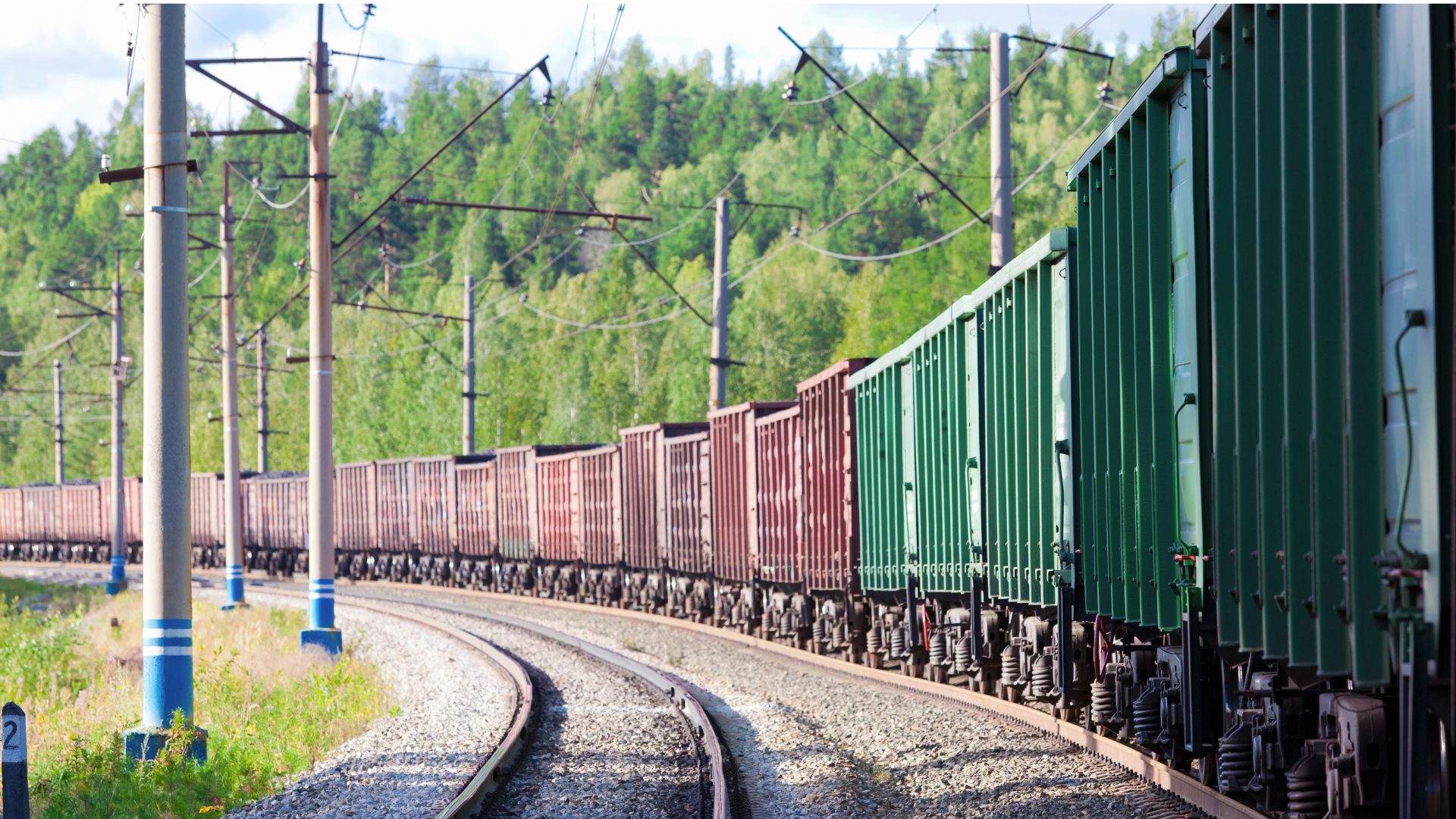
This is where the frame must shift from containers to corridors. A container is a unit of movement. A corridor is an operating system, linking industrial clusters, inland depots, road-rail interfaces, ports, airports, customs nodes, cold chains and service providers into a repeatable pathway to the foreign buyer. Corridors reduce the “unknown unknowns” that destroy SME margins: missed cut-offs, documentation loops, last-mile bottlenecks, port dwell-time surprises, and opaque surcharge stack-ups.
India’s own policy direction recognises that logistics is a competitiveness variable, not a mere cost. A recent DPIIT-backed assessment estimated India’s logistics cost at 7.97 per cent of GDP in 2023–24, reflecting a more data-driven attempt to measure and manage the problem. If that number holds and continues to fall, it will be because corridors both physical and digital start functioning as systems rather than disconnected projects.
The strongest illustration is the ecosystem effect around India’s major gateways. Jawaharlal Nehru Port near Mumbai recorded 6.43 million TEUs in FY 2023–24, a scale that attracts shipping services, freight forwarders, customs expertise, and hinterland rail connectivity. For an engineering SME in Pune, an auto-component supplier in Aurangabad, or a chemicals exporter in Vapi, access to that ecosystem can be the difference between quoting “ex-works” and quoting confidently delivered-to-port with predictable timelines.
The same logic is playing out in air cargo, especially for high-value, time-sensitive exports. Hyderabad is a case in point. Rajiv Gandhi International Airport handled about 1,80,914 metric tonnes of cargo in 2024, as per reporting on the airport’s cargo performance. That matters because the city’s pharma and life sciences base does not sell “products” alone; it sells integrity in the form of cold chain compliance, documentation accuracy and rapid replenishment. The foreign buyer’s trust is built as much by the corridor as by the formulation.
Look across India and the pattern repeats. Tirupur’s knitwear competitiveness is not just a story of entrepreneurship; it is a story of proximity to ports and consolidators that can keep seasonal shipping windows. Surat’s gems and jewellery relies on tightly managed air-freight lanes where time is literally value. Noida’s electronics ambitions increasingly depend on integrated inland logistics planning and multimodal access to gateways, because global OEM supply chains penalise uncertainty more than they reward discounts.
Corridors also change the SME’s internal operating model. When a company aligns to a corridor, it is forced to professionalise: standardise SKUs, digitise documentation, adopt compliance routines, build buffer strategies, and negotiate service-level agreements with logistics partners. It begins to think in terms of total landed cost, not freight rate. It builds resilience like alternate routing, multi-carrier options and incident playbooks, because corridors are designed for throughput under stress, not just movement on good days.
The next step for India’s SME ecosystem is therefore not merely “more exports”, but more corridor-ready exporters. This is precisely why the Cargo Corridors – Hyderabad edition in February 2026, organized by SME Communities, is positioned as more than a conference. It is a practical conversation about how manufacturing exporters, logistics providers, policy enablers and gateway ecosystems can convert geography into advantage, so that SMEs stop shipping in isolation and start scaling with systems.
In the decade ahead, foreign buyers will not reward the cheapest shipment. They will reward the most dependable corridor. Indian SMEs that understand that distinction early will not just export more. They will export with credibility.