




Manufacturing reimagined: How Budget 2026 Can Reshape India’s Electronics SME Ecosystem
Authored by Jairaj Srinivas, Founder and Director General, Confederation of Indian Manufacturers in Electronics (ESDM) Industries.
The Union Budget 2026–27 arrives at a moment when India’s electronics story is shifting from “scale” to “substance”. Over the last decade, the country has built credible assembly depth and export momentum; the next leg is about domestic value addition like components, sub-assemblies, materials, tooling, test infrastructure and design IP, so that Indian factories are not merely the last stop in the value chain, but a meaningful origin point. That is why this Budget’s manufacturing thrust matters: it signals intent to move from an EMS-heavy model to a components-and-capabilities model that can survive cyclical demand, tariff noise and geopolitics.
From the standpoint of SMEs in electronics manufacturing, the most material headline is the sharper fiscal push behind the Electronics Components Manufacturing Scheme, with the outlay raised to ₹40,000 crore. For SMEs, this is not just a number, it is a potential re-wiring of the supplier landscape. When component ecosystems deepen locally, SMEs gain three hard advantages: reduced import lead times, less working capital trapped in inventory buffers and stronger bargaining power with OEMs because supply reliability improves. But Raw material challenges in passive electronic component manufacturing stem from high price volatility in critical metals (tantalum, nickel, copper, silver) and rare materials, causing, supply chain disruptions and increased production costs. Key issues include heavy dependency on limited geographical sources (like China), raw material scarcity for components like MLCCs, geopolitical tensions impacting supply and the urgent need for sustainable, eco-friendly materials, which are driving up material costs and complicating procurement.
The Government’s own framing is clear: ECMS is meant to reinforce the domestic component base and position India as a credible hub for advanced electronics manufacturing, anchored to an ambition of a $400 billion electronics ecosystem by 2030-31.
The second big lever is the launch of India Semiconductor Mission 2.0, with an explicit pivot to semiconductor equipment and materials, full-stack Indian IP, and supply-chain fortification, backed by provisions for industry-led research and training centres. This is strategically important for SMEs because “chip sovereignty” is not only about fabs; it is about the thousands of precision-manufacturing and process SMEs that sit upstream and downstream: specialty chemicals, cleanroom consumables, fixtures, gases, advanced packaging, PCB substrates, power electronics and test/measurement services. If ISM 2.0 is executed with speed and transparency, it can seed a domestic vendor universe where MSMEs become qualified suppliers to large anchors, exactly the kind of compounding flywheel that turned East Asian clusters into durable manufacturing powerhouses.
A third strand, less discussed, but consequential, is the Budget’s approach to “manufacturing adjacency”: the datacentre and cloud infrastructure push, including the long tax-clarity window for foreign firms serving global cloud markets using Indian data centres. On the surface, that looks like a digital policy. In practice, it is also an industrial policy, because modern electronics manufacturing competitiveness is increasingly software-defined: factories run on data, predictive maintenance, machine vision, digital twins, traceability and cybersecurity. If India becomes a stronger data-centre hub, SMEs in electronics can access more resilient, compliant, India-resident compute and AI capabilities critical for quality systems, export audits, customer security requirements and IP protection.
CIMEI welcomes these directions and I would underline the underlying logic: components localisation must move in parallel with supply-chain resilience and skills. The Budget’s emphasis on high-tech tool rooms structured as digitally enabled service bureaus for designing, testing and manufacturing high-precision components can become a quiet enabler for MSMEs that cannot afford capex-heavy prototyping and metrology in-house. Tool rooms, if run with industry-grade SLAs and transparent pricing, can compress product-development cycles for SMEs, help them qualify faster with large buyers, and reduce failure costs in early production runs.
The broader manufacturing architecture also matters. Measures such as reviving 200 legacy industrial clusters and supporting chemical parks have a direct bearing on electronics because electronics supply chains are, ultimately, materials and processes at scale. Cluster upgrades lower common costs like power quality, logistics, effluent handling, testing infrastructure, skill pipelines and help SMEs compete on delivered cost, not just factory-gate price. Done right, cluster policy can be the bridge between “Make in India” and “Made for the World,” especially for electronics SMEs as India has proximity to design talent, global OEM ecosystems, and export-ready manufacturing mindsets.
Yet a Budget is only a starting point. The real test is execution: predictable approvals, fast disbursals, stable duty structures and a procurement environment where MSMEs can participate without being squeezed on payment terms and compliance overhead. SMEs will also need complementary enablers working capital aligned to order cycles, export credit depth, faster standards certification and a risk lens that includes cybersecurity and continuity planning. Our sector’s competitiveness will be measured not by announcements, but by whether an MSME in Peenya, Whitefield or Hosur can move from build-to-print to design-led value addition and then sustain export quality at scale.
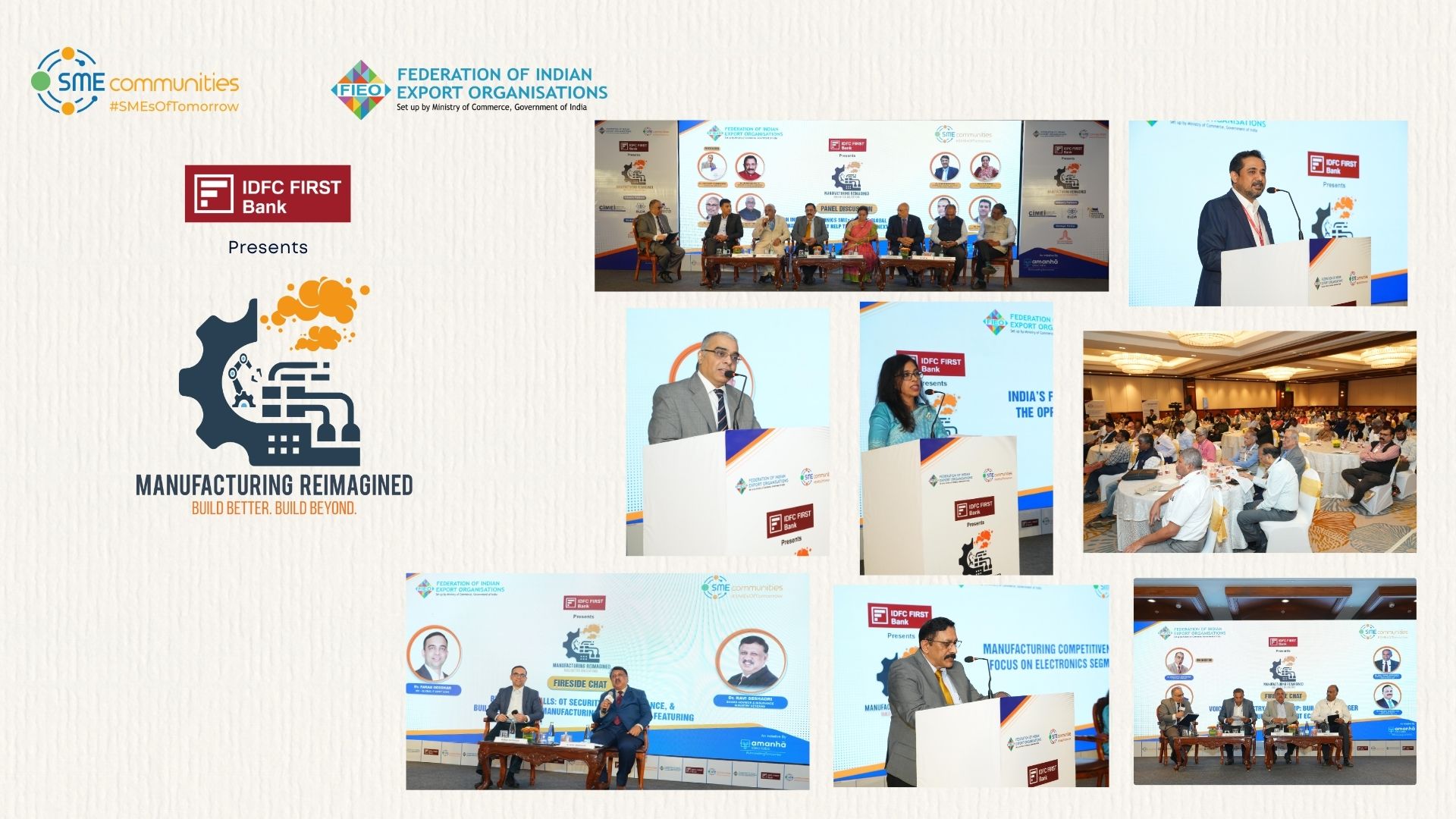
CIMEI will works with stakeholders to translate this policy momentum into measurable outcomes like supplier development, skilling pathways, component champions and deeper integration with global value chains. CIMEI is proud to be associated as Industry Partner in the forthcoming event ‘Manufacturing Reimagined’, organized by SME Communities and FIEO, focusing on the Indian electronics manufacturing segment.