




Manufacturing Finance Is Being Rewritten: From Asset Loans to Cash-Flow Intelligence

For decades, manufacturing finance in India followed a familiar script. Credit was anchored to fixed assets, collateral coverage and historical balance sheets. Machines were financed, buildings were mortgaged, and working capital limits were periodically enhanced to match scale. This model helped build capacity, but it was poorly suited to volatility. As manufacturing becomes more integrated, data-driven and globally exposed, that legacy approach is beginning to fracture.
The shift is structural rather than cyclical. Manufacturing today is less about owning assets and more about orchestrating flows: of materials, data, orders and cash. Globally, lenders are responding by moving away from static collateral-based lending towards models that price risk dynamically, using real-time indicators of cash generation, supply-chain performance and sustainability compliance. In this transition, finance is no longer a back-end support function. It is becoming an embedded layer of the manufacturing system itself.
India’s context makes this transition particularly urgent. Manufacturing contributes roughly 17 per cent to GDP, while SMEs account for a significant share of industrial employment and exports. Yet access to timely, flexible finance remains uneven. According to RBI and MSME ministry estimates, the credit gap for Indian MSMEs runs into several lakh crore rupees. The problem is not a lack of capital in the system, but a mismatch between how risk is assessed and how modern manufacturing actually operates.
Asset-based lending struggles in environments where value is increasingly intangible. A precision electronics SME in Bengaluru may generate strong order flows and predictable receivables, yet struggle to raise finance if its balance sheet is light on hard assets. A contract manufacturer in automotive components may operate with razor-thin inventories and just-in-time schedules, making traditional stock-based working capital limits obsolete. What these businesses need is finance that understands cash velocity, not just asset ownership.
This is where cash-flow intelligence becomes central. Data-linked lending models use transaction data, GST filings, invoicing systems and supply-chain records to assess creditworthiness continuously. Instead of relying on annual financials, lenders can track how money moves through the business. For SMEs, this reduces friction. Credit limits adjust with performance. Liquidity becomes more responsive to demand cycles. Risk pricing becomes more granular.
Supply-chain financing extends this logic further. When financiers anchor risk assessment to the strength of the buyer-supplier relationship, smaller manufacturers gain access to cheaper capital by virtue of their integration into credible value chains. For exporters supplying large OEMs or multinational buyers, invoice discounting and payables financing aligned to confirmed orders can unlock working capital without inflating balance sheets. The factory’s credibility with its customer becomes a financial asset.
ESG-linked credit is adding another dimension. Globally, sustainability metrics are no longer peripheral to finance; they influence cost of capital. In India, manufacturers in sectors such as textiles, chemicals and engineering exports are increasingly evaluated on energy efficiency, emissions, water usage and labour practices. Financial institutions are beginning to link pricing and access to demonstrable ESG performance. For SMEs, this creates both pressure and opportunity. Investments in cleaner processes or traceability are no longer just compliance costs; they can translate into preferential financing terms.
Embedded finance completes the picture. When credit, insurance and payments are integrated directly into manufacturing and procurement platforms, finance becomes contextual rather than episodic. An SME placing a raw material order can access instant credit. A shipment can be insured automatically based on route and risk profile. Receipts can trigger loan repayments seamlessly. This reduces administrative overhead and aligns financial services with operational reality.
Indian industry examples illustrate how quickly this shift is taking hold. In Bengaluru’s electronics and precision manufacturing clusters, lenders are piloting cash-flow-based models linked to ERP and GST data. In textile hubs, supply-chain finance tied to export orders is easing seasonal liquidity stress. In capital goods and auto ancillaries, embedded financing through vendor portals is shortening cash cycles without increasing leverage risk.
The implications for manufacturing leadership are significant. Finance decisions can no longer be separated from operational data and strategy. CFOs and founders must engage with data quality, systems integration and transparency, not as reporting exercises, but as enablers of capital access. The competitive advantage will accrue to firms that can make their cash flows legible and reliable to financiers.
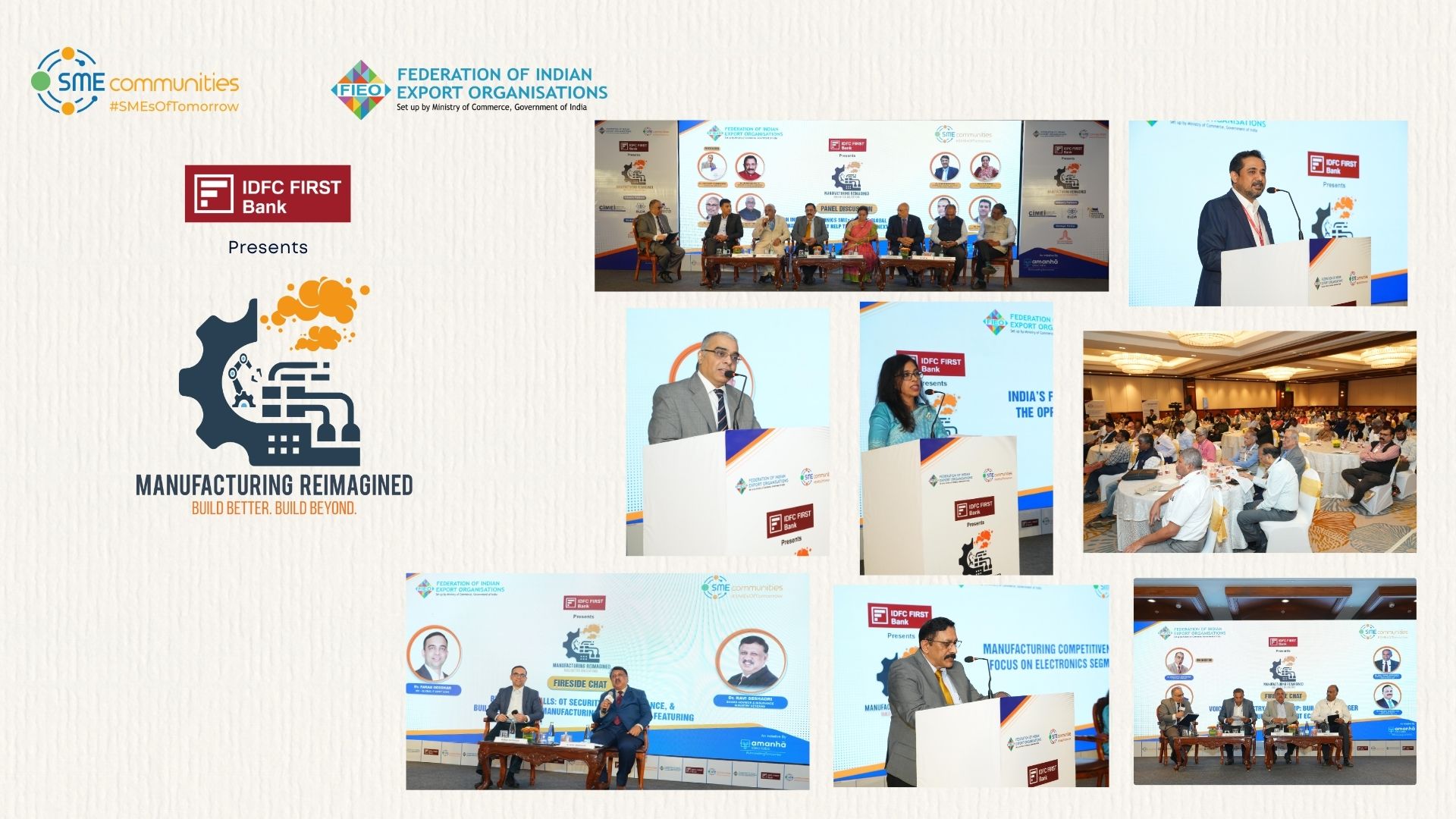
This transformation is a central theme at Manufacturing Reimagined – Bengaluru, February 2026, organized by SME Communities, where manufacturers, lenders and ecosystem partners will examine how finance is evolving alongside production systems. The conversation is not about replacing lenders, but about redefining how manufacturing risk is understood and priced in a data-rich economy.
The era of manufacturing finance built solely on assets is ending. In its place is a model that rewards visibility, resilience and integration. For Indian SMEs, the message is clear: the future of finance will not be negotiated once a year in a loan review meeting. It will be embedded in the daily flow of business and those prepared for that reality will scale faster, with greater resilience, than those still borrowing against yesterday’s balance sheet.