




India’s Dual-Track Economy: Services Surge, Manufacturing Struggles to Keep Pace
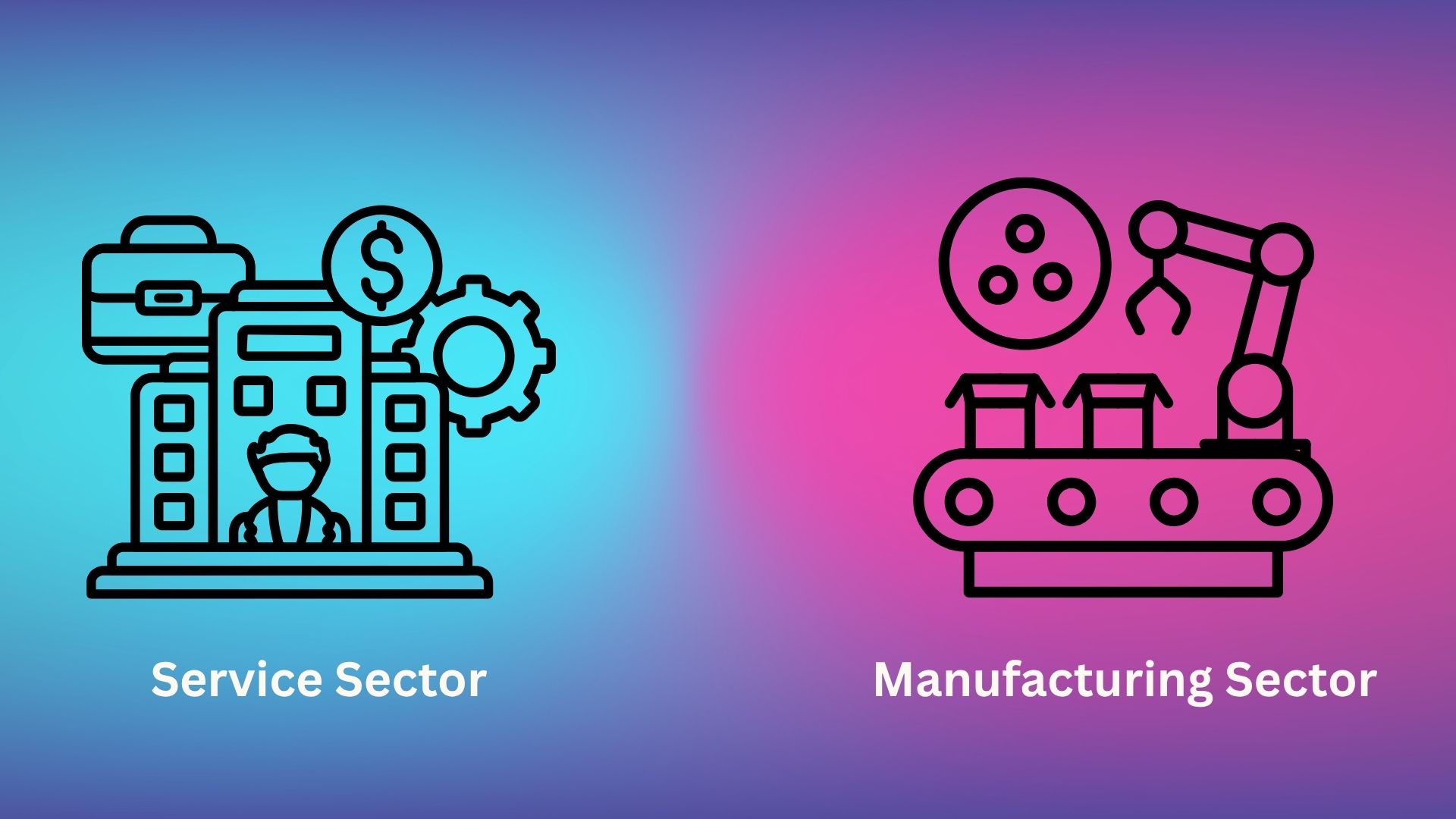
India’s economic structure continues to be defined by disparity. The services sector now contributes over 56% to Gross Value Added (GVA) in FY2025-26, while manufacturing remains range-bound at 17-18%, despite sustained policy focus. This divergence has helped India emerge as one of the fifth leading services exporters, with exports estimated at around $380-390 billion in FY24. At the same time, manufacturing leaders such as Tata Steel, Reliance Industries and Tata Motors operate within a more constrained ecosystem, facing persistent structural and cost-related challenges.
Drawing on recent estimates from the Ministry of Statistics and Programme Implementation (MoSPI), along with PMI trends and Annual Survey of Industries (ASI) data, the picture that emerges is not of underperformance alone, but of uneven structural evolution. Services have scaled rapidly due to favourable fundamentals, while manufacturing continues to expand, but below its potential.
From a growth perspective, services have been the backbone of India’s economic resilience. MoSPI’s First Advance Estimates for FY2025-26 place overall real GVA growth at around 7.3%, with services segments such as financial, real estate and professional services growing close to 9.5-10%. Trade, transport, communication, and hospitality sectors have also maintained steady momentum at around 7-7.5%. This sustained expansion has gradually increased the sector’s share in GVA from roughly 53% in FY23 to over 56% now.
The underlying drivers are structural. Companies such as Tata Consultancy Services and Infosys continue to benefit from global demand for digital transformation, cloud migration and consulting services. The scalability of these businesses, combined with relatively low capital intensity, allows them to expand quickly across geographies. The rise of global capability centres (GCCs) and outsourcing hubs has further strengthened India’s position in the global services value chain.
Manufacturing, by contrast, presents a more nuanced trajectory. While the broader industrial sector, including construction, has recorded growth of around 6.5-7%, manufacturing output itself has grown more moderately in real terms. ASI data suggests that while nominal growth remains healthy, real growth is constrained by input costs, logistics inefficiencies and productivity gaps. Employment has increased, but not at a pace or quality sufficient to absorb large sections of the workforce, particularly in lower-skilled categories.
High-frequency indicators reinforce this divergence. Services PMI readings have consistently remained in stronger expansion territory, while manufacturing PMI, though still above the neutral 50 mark, has been relatively softer, reflecting cost pressures and global uncertainty. Companies like Tata Motors and Mahindra & Mahindra demonstrate scale and export capability, particularly in automobiles, yet also highlight dependence on imported components and global supply chains.
The contrast becomes sharper when examining export performance. Services exports have expanded significantly over the past decade, rising from under $100 billion to nearly $380-390 billion. Software services continue to dominate, but there is a gradual diversification toward business, financial and consulting services. This has enabled India to maintain a consistent surplus in services trade, which helps offset the country’s merchandise trade deficit.
Manufacturing exports, on the other hand, have shown pockets of strength but remain structurally constrained. Electronics and automobile exports have grown by multifolds in recent years, supported by policy initiatives such as the Production Linked Incentive (PLI) schemes. However, India continues to run a substantial goods trade deficit, driven by high import dependence on energy, electronics components and intermediate goods. This limits the net export gains from manufacturing expansion.
The reasons for this divergence are well understood but difficult to resolve. The services sector benefits from a large pool of English-speaking, technically skilled professionals, supported by digital infrastructure and policy initiatives The sector’s relatively low capital requirements make scaling easier and faster.
Manufacturing, however, faces deeper structural constraints. Trusted buyers, raw material input cost, regulatory complexity and infrastructure bottlenecks continue to affect project timelines and costs. Industrial activity remains geographically concentrated, increasing vulnerability to regional disruptions. Skill gaps persist, particularly in advanced manufacturing and precision engineering. Access to affordable and timely credit remains a challenge for MSMEs, which form a significant part of the manufacturing ecosystem.
Looking ahead, both sectors are expected to grow, but along different trajectories. Services are likely to maintain an annual growth rate of 8-9%, with their share in GVA potentially rising further. Export growth is expected to continue, driven by emerging segments such as AI-enabled services, fintech, and global capability centres.
Manufacturing has more ambitious targets. Policy frameworks aim to increase its share to around 25% of GDP over the medium term. Achieving this would require sustained investment, improvements in logistics and supply chains, and a stronger push toward domestic value addition and substantial investments in innovations & R&D. Sectors such as electronics, renewable energy equipment, defence manufacturing, and specialty chemicals offer significant growth potential, but scaling them to global competitiveness will require consistent execution.
Both sectors face evolving risks. Services must contend with the possibility of technological disruption, particularly from artificial intelligence, which could reshape traditional IT and business process outsourcing models. There are also concerns around income inequality, as services-led growth tends to be concentrated in higher-skilled, urban segments.
Manufacturing faces a different set of challenges. Supply chain disruptions, geopolitical tensions and volatility in commodity prices continue to create uncertainty. At the same time, the sector must generate large-scale employment to support inclusive growth.
In this context, innovation and research and development become central to India’s long-term strategy. India’s overall R&D spending remains below 1% of GDP, significantly lower than major manufacturing economies. Within manufacturing, R&D intensity is concentrated in sectors such as pharmaceuticals, while others lag behind. Many companies demonstrate the benefits of sustained R&D investment, while the broader manufacturing ecosystem needs to move toward higher-value, design-led production.
Ultimately, India’s economic future will depend on its ability to reduce this structural imbalance. Services have delivered scale, global integration and resilience. However, manufacturing will be critical for employment generation, export diversification, and strategic autonomy. For India to get positioned as dominant economic force in the region and to sustained growth there is a need to integrate and utilize the success & strengths of service sector to strengthen manufacturing sector.