




India signs FTA with 27 countries, opening opportunities across multiple sectors and states

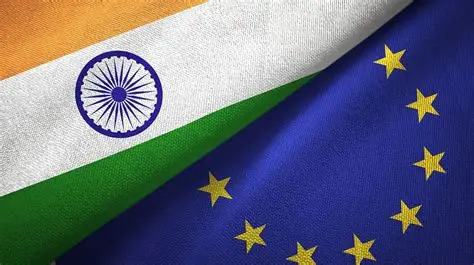
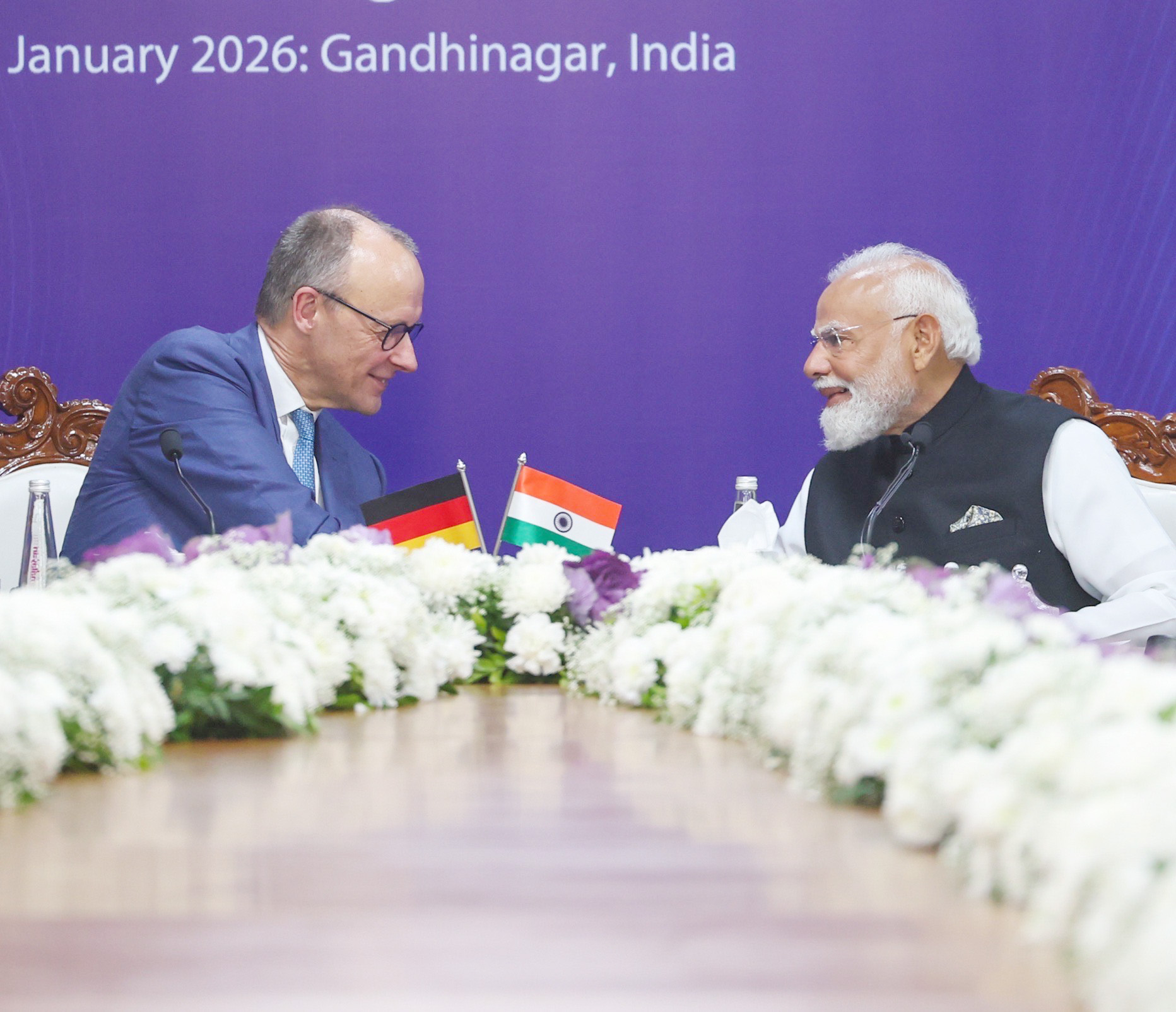
India has concluded one of its most consequential trade agreements in recent decades by finalising a Free Trade Agreement with the European Union, a 27-nation bloc that together represents nearly a quarter of global GDP and close to one-third of global trade. Announced at the 16th India-EU Summit by Prime Minister Narendra Modi and European Commission President Ursula von der Leyen, the pact marks India’s eighth FTA since 2021 and arguably its most strategically significant.
At a headline level, the agreement provides preferential market access for over 99 percent of Indian exports by value into the EU. In commercial terms, this translates into export potential of around ₹6.4 lakh crore, or nearly USD 75 billion, with particular gains expected in labour-intensive and MSME-driven sectors. In strategic terms, it signals India’s intent to embed itself deeper into trusted global value chains at a time of geopolitical fragmentation, supply-chain realignment and rising regulatory barriers in developed markets.
From negotiation to conclusion
Negotiations for the India-EU FTA were re-launched in 2022 after a long hiatus. The conclusion of talks in early 2026 reflects sustained political commitment on both sides to deliver a balanced, rules-based and future-oriented trade framework. Unlike earlier generation trade deals, this agreement goes well beyond tariff liberalisation to address services, digital trade, mobility, sustainability, intellectual property and regulatory cooperation.
The scale of the partnership is significant. In 2024-25, bilateral trade in goods stood at approximately ₹11.5 lakh crore, with India exporting goods worth ₹6.4 lakh crore and importing around ₹5.1 lakh crore from the EU. Trade in services reached another ₹7.2 lakh crore. With both sides among the world’s largest economies, integration at this depth creates opportunities that extend far beyond headline export numbers.
State-level and sectoral gains
One of the distinctive features of the India-EU FTA is its broad geographical footprint within India. As highlighted in official assessments and trade mapping, multiple Indian states stand to gain across diverse sectors. Gujarat and Maharashtra are positioned to benefit through engineering goods, chemicals, pharmaceuticals, gems and jewellery, and electronics. Tamil Nadu, Karnataka and Telangana are expected to see gains in electronics, machinery, automotive components, chemicals, and medical devices. Punjab, Rajasthan and Uttar Pradesh are set to benefit from textiles, leather, footwear, handicrafts and furniture exports, while coastal states such as Kerala, Andhra Pradesh, West Bengal and Assam gain from marine products, agri-products, tea, spices and processed foods.
Overall, nearly USD 33 billion of exports in labour-intensive sectors such as textiles, apparel, leather, footwear, marine products, gems and jewellery, and handicrafts will see tariffs reduced to zero upon entry into force. For MSMEs, which dominate these sectors, preferential access to a high-value and standards-driven market like the EU can materially improve margins, scale and long-term competitiveness.
Make in India with calibrated openness
The agreement reflects a calibrated approach to market opening. In sensitive areas such as agriculture and dairy, India has retained safeguards, with no market access commitments that could disrupt domestic producers. At the same time, favourable access for agricultural and processed food exports such as tea, coffee, spices, fruits, vegetables and value-added foods provides new opportunities for farmers and agri-enterprises.
In automobiles, the FTA introduces a carefully structured, quota-based liberalisation. This allows EU manufacturers to introduce high-end models in India while preserving space for domestic manufacturing and future export opportunities under the Make in India framework. Indian consumers are likely to benefit from greater choice and advanced technologies, while Indian manufacturers gain reciprocal access to the EU market.
Services, mobility and talent
A major differentiator of the India-EU FTA lies in services and mobility. The EU has offered commercially meaningful commitments across 144 services sub-sectors, including IT and IT-enabled services, professional services, education, financial services, tourism, construction and other business services. India, in turn, has opened 102 sub-sectors, creating a framework for mutually beneficial services trade.
The mobility provisions establish predictable pathways for business visitors, intra-corporate transferees, contractual service suppliers, and independent professionals. Commitments covering 37 sectors for contractual service suppliers and 17 sectors for independent professionals are particularly relevant for India’s skilled workforce. The agreement also provides for dependents’ entry and work rights in defined cases, along with a framework for engagement on social security arrangements and post-study opportunities for students.
Notably, India has secured recognition pathways for practitioners of traditional Indian medicine in EU member states where such practices are permitted, reinforcing soft-power and services exports beyond conventional sectors.
Addressing future risks
The agreement also acknowledges emerging trade risks. Provisions related to the EU’s Carbon Border Adjustment Mechanism seek constructive engagement through technical cooperation, recognition of carbon pricing systems, and targeted financial and technical support. This is critical for Indian exporters facing rising climate-linked compliance costs.
Commitments on digital trade, intellectual property protection aligned with TRIPS, recognition of India’s Traditional Knowledge Digital Library and cooperation in areas such as artificial intelligence, clean technologies and semiconductors position the FTA as a forward-looking instrument rather than a static trade deal.
A strategic inflection point
With the EU now emerging as India’s 22nd FTA partner, alongside recent agreements with the UK and EFTA, Indian exporters are positioned to access nearly the entire European market on preferential terms. The focus for policymakers now moves decisively from negotiation to execution. Translating the agreement into tangible gains will hinge on MSME readiness, adherence to EU regulatory and sustainability standards, efficient logistics, and proactive trade facilitation at the state level. Ease of doing business, in this context, cannot remain a policy assertion; it must be experienced on the ground by exporters.
Beyond trade flows, the India-EU FTA strengthens India’s image as a reliable, rules-based, and globally integrated economy. At a time when global trade is increasingly shaped by fragmentation and protectionist impulses, the agreement signals strategic convergence, economic self-assurance, and long-term intent. Its full impact will unfold gradually, reshaping sectoral dynamics, regional growth trajectories, and India’s integration into global value chains over the next decade.