



The IMEEC Corridor: How India’s Vision Could Redraw the Map Between Asia and Europe
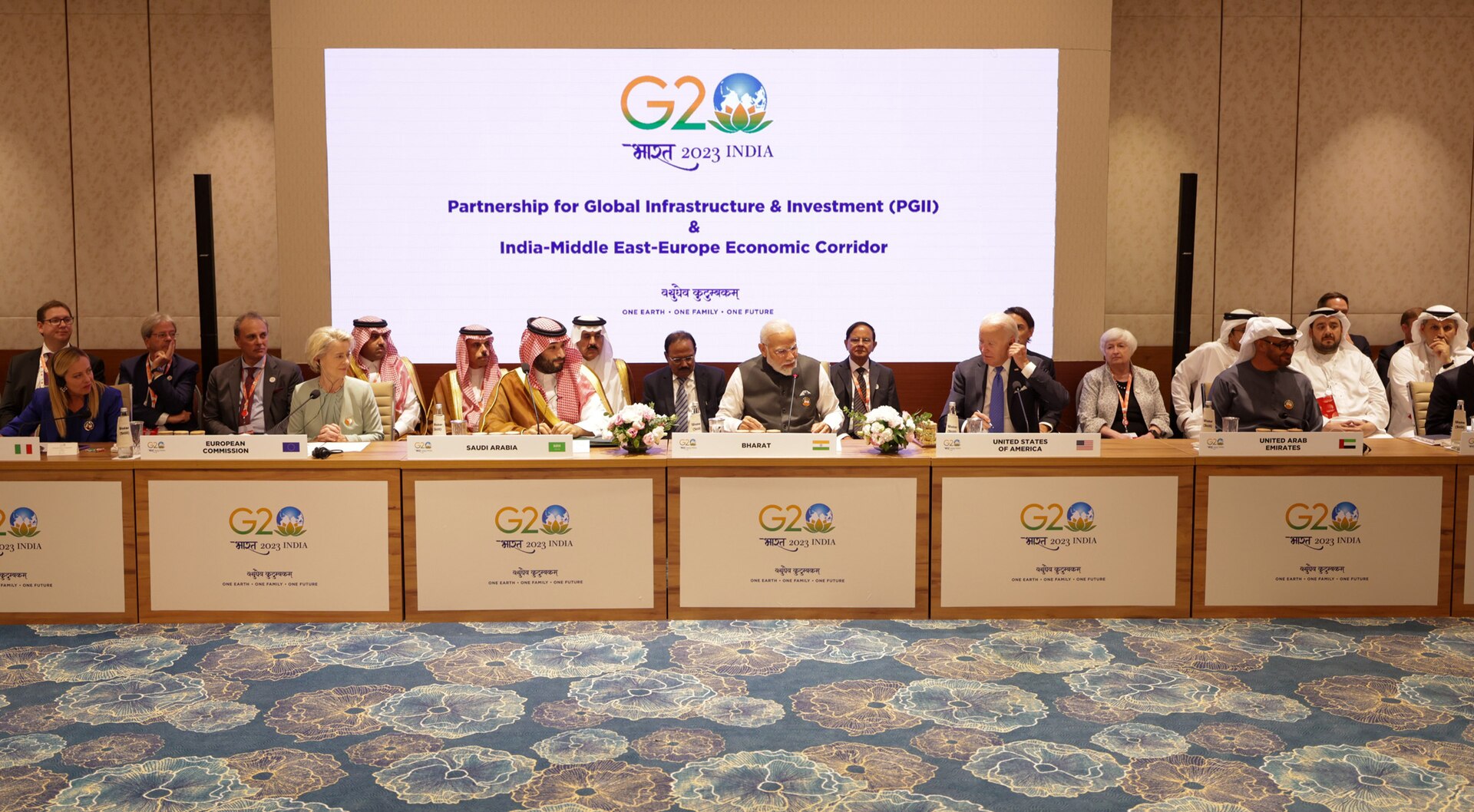
When the idea of the India–Middle East–Europe Economic Corridor (IMEEC) was announced during the 2023 G20 Summit in New Delhi, it sounded like another diplomatic headline lofty, visionary, but perhaps too grand to materialize soon. Two years later, the conversation has changed. What once looked like a conceptual map is steadily turning into an emerging reality one that could alter how goods, data and energy flow between Asia and Europe.
IMEEC isn’t just a trade corridor. It’s a strategic rebalancing of geography, an economic statement from India and its partners that global connectivity can no longer be defined by a single chokepoint or power bloc. It’s India’s bid to translate diplomacy into infrastructure and ambition into access.
From Concept to Structure
The corridor will connect India’s western ports to the Arabian Peninsula and from there to Europe, through a mix of sea, rail and digital links. On paper, it sounds simple: India–UAE-Saudi Arabia-Jordan-Israel-Greece, creating a new spine of global commerce. In practice, it represents a reengineering of how Asia meets Europe bypassing the Suez Canal and cutting transit times by as much as 40%.
The project’s design goes beyond moving cargo. IMEEC proposes shared energy grids, hydrogen pipelines, data cables and smart logistics systems, making it a blueprint for how 21st-century trade infrastructure can merge physical, digital and green networks. It’s not just about containers it’s about connectivity as an economic advantage.
The Momentum Builds
Over the past year, IMEEC has evolved from diplomatic declaration to diplomatic race. India and the UAE have already launched a Virtual Trade Corridor (VTC) a digital customs and logistics interface that speeds up cargo clearance through real-time data sharing. It’s a small but crucial step, demonstrating how technology can be the bridge before the bridges are built.
European interest is also widening. Italy and Slovenia have offered their ports Trieste and Koper as key nodes for IMEEC’s European entry point, while Cyprus has signalled intent to formally join. The project has also found backing from the European Commission, framing it as a counterbalance to China’s Belt and Road Initiative (BRI).
Yet, as momentum builds, so do the complexities. The ongoing instability in parts of the Middle East from Red Sea tensions to political uncertainty in Israel continues to cast a shadow. As Egypt pointed out earlier this year, regional volatility could easily test IMEEC’s execution timeline. But that also explains why the corridor matters so much: it’s being built in the heart of uncertainty, not in its absence.
India’s Strategic Moment
For India, IMEEC is more than connectivity; its strategic autonomy expressed in steel, fibre and trade lanes. It reduces overdependence on the Suez route, offers resilience against maritime disruptions, and aligns perfectly with India’s logistics vision under PM Gati Shakti and Sagarmala.
The corridor is also a quiet assertion of India’s diplomatic balance working with both Western and Middle Eastern partners without falling into bloc politics. In an age where supply chains are increasingly politicized, IMEEC represents a non-aligned yet assertive model: global integration on India’s terms.
At the same time, it opens a new frontier for India’s manufacturing and MSME base. As global production diversifies away from East Asia, IMEEC could position India not only as a source of exports but as a transit, processing and assembly hub. The potential for coastal industrial clusters tied to this corridor from Mundra to Kochi is immense.
The Domestic Dividend
Behind every grand corridor lies a network of smaller enterprises that make it work. For India’s SMEs from logistics operators to component suppliers IMEEC could be the long-awaited push into global supply chains.
Shorter lead times and improved access to Gulf and European markets could allow MSMEs to expand exports in sectors like electronics, auto components, renewable energy equipment and processed goods. Moreover, the corridor’s digital backbone linking ports, customs systems and payment gateways complements India’s own platforms like UPI, ONDC and ICEGATE, ensuring smoother trade flows and better compliance.
It’s not hard to imagine Indian startups building AI-driven freight software, carbon-tracking tools, or digital trade-finance products aligned with IMEEC turning what was once a physical route into a digital innovation corridor as well.
The Sustainability Factor
Perhaps the most visionary element of IMEEC is its green ambition. Plans include hydrogen and renewable energy corridors, low-emission maritime networks, and digitally managed carbon-neutral logistics systems.
For India, this aligns seamlessly with its Maritime Amrit Kaal Vision 2047, which emphasizes decarbonized ports and energy-efficient logistics. By embedding sustainability into the corridor’s DNA, IMEEC could become the world’s first large-scale “green trade artery” setting benchmarks for future connectivity projects.
Challenges Ahead
The obstacles are neither small nor short-term. Political stability in the Middle East will be decisive. Financing remains a sticking point, as the project’s estimated cost could exceed $25–30 billion once fully operationalized. There is also the challenge of synchronizing regulatory frameworks from customs to data standards across eight or more jurisdictions.
But unlike the Belt and Road, IMEEC’s governance model is multilateral and transparent rooted in collaboration rather than dependency. Its progress will depend on how well member nations align domestic policies and private investments without turning it into a geopolitical contest.
Editorial Reflection
The India-Middle East–Europe Economic Corridor is not about replacing one trade route with another. It’s about reshaping the logic of connectivity where trade, trust and technology converge.
For India, it marks a subtle but significant shift: from being a participant in global supply chains to becoming a designer of global trade architecture. Whether IMEEC succeeds will depend on more than construction timelines it will depend on diplomatic patience, institutional coordination, and sustained private participation.
In a fragmented world, IMEEC is India’s attempt to stitch continuity. And perhaps, in doing so, to prove that connectivity when driven by cooperation, not coercion can still be the most powerful currency in geopolitics.