




India-New Zealand FTA Concluded: What the Landmark Trade Deal Means for Indian SMEs, Talent and Exports
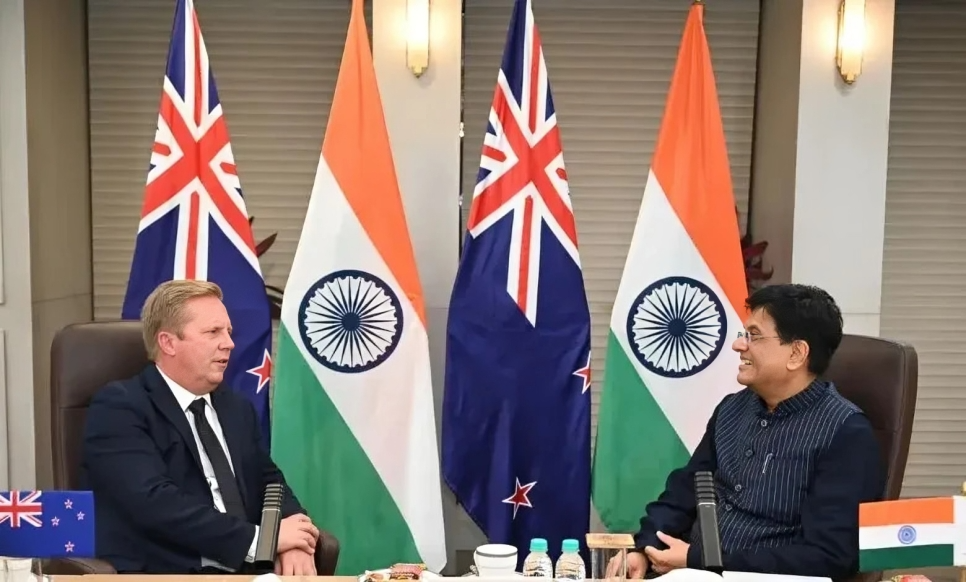
India and New Zealand have successfully concluded a comprehensive Free Trade Agreement (FTA), marking one of India’s fastest negotiated deals with a developed economy. Launched in March 2025 and concluded within the same year, this agreement is more than a trade arrangement. It represents a forward-looking partnership built on tariffs, investment, agricultural productivity, talent mobility and people-centric growth, providing Indian SMEs, entrepreneurs and service providers tangible pathways to expand into New Zealand and the wider Pacific market.
Unprecedented Market Access and Sectoral Opportunities
The FTA offers zero-duty access on all Indian export lines, while India has agreed to liberalise 70% of New Zealand’s tariff lines, covering 95% of bilateral trade. For Indian SMEs, this translates into enhanced competitiveness in labour-intensive sectors such as textiles, apparel, leather, footwear and handicrafts. Engineering goods, automobiles, and pharmaceutical exports will also benefit from streamlined customs procedures and regulatory alignment, opening doors for SMEs to integrate into regional supply chains rather than remain standalone exporters.
Services trade is equally transformative. India has secured commitments in 118 services sectors, spanning IT and IT-enabled services, professional services, tourism, construction, and audiovisual services. This presents high-value opportunities for SMEs and professional service providers seeking predictable market access and long-term engagement in New Zealand.
Human Capital and Talent Mobility
A defining feature of this FTA is its focus on people and talent. Indian students now enjoy post-study work rights of up to three years for STEM graduates and four years for doctoral scholars, enabling them to convert global education into practical experience. Skilled professionals can access dedicated Temporary Employment Entry visas with a quota of 5,000 slots, while an additional 1,000 Work and Holiday visas strengthen youth mobility and cross-cultural exchange.
For SMEs, these provisions are significant. They enable businesses to deploy skilled professionals efficiently, strengthen operational capabilities, and establish partnerships without being hindered by complex visa restrictions. Simultaneously, the agreement nurtures India’s soft power by facilitating talent exchange and global exposure for students and young professionals.
Agricultural Productivity and Innovation
Aligned with India’s long-term vision of Viksit Bharat 2047, the FTA goes beyond trade and investment to support agricultural productivity. Dedicated Centres of Excellence for kiwifruit, apples, and honey will focus on improving cultivation methods, post-harvest handling, supply chain performance, and sustainable practices. Knowledge transfer is paired with safeguards for domestic producers through quotas and minimum import prices, ensuring that Indian farmers benefit while local markets remain protected.
For SMEs engaged in agri-processing, food exports, or cold-chain logistics, these measures create an ecosystem for innovation and high-value market entry, allowing them to participate in sustainable, long-duration projects rather than opportunistic trade.
Investment, Manufacturing and Operational Efficiency
The agreement envisions USD 20 billion in investments over 15 years, encouraging industrial collaboration in manufacturing, infrastructure, services and innovation. Duty-free inputs for India’s manufacturing sector, such as wooden logs, coking coal and metal scraps, enhance cost competitiveness. Coupled with procedural harmonisation for customs, sanitary measures, and technical barriers, the FTA reduces operational friction and accelerates speed-to-market, particularly benefiting SMEs with limited working capital and global trade experience.
By facilitating smoother integration into New Zealand’s supply chains and service networks, SMEs can evolve from basic exporters to embedded participants in industrial ecosystems, enhancing resilience and long-term competitiveness.
Strategic Implications for Indian SMEs
Early engagement with FTA-backed sectors is critical for SMEs. Market diversification, integration into high-value supply chains, and alignment with compliance standards will determine which enterprises gain sustainable advantages. Those that adapt quickly stand to benefit from preferential customs treatment, regulatory predictability, and access to talent, whereas delayed engagement risks gradual exclusion from emerging industrial and service networks in New Zealand and the Pacific region.
This FTA also reflects India’s broader strategic ambitions in the Indo-Pacific, combining trade, investment and human capital mobility to support inclusive growth, skills development, and industrial resilience. For SMEs, this is an invitation to leverage policy certainty, integrate with global markets and expand their operational footprint in a future-ready corridor.
A Forward-Looking, People-Centric Partnership
The India-New Zealand FTA is not merely a trade agreement. It is a new generation economic partnership that balances zero-duty access, investment flows, talent mobility and agri-technology collaboration. For SMEs, entrepreneurs and professional service providers, it offers an unprecedented opportunity to scale operations, participate in sustainable projects and integrate into high-value global networks. Early adaptation and strategic engagement will enable Indian enterprises to transition from domestic players to competitive, globally integrated participants.