




A Risk & Governance Blueprint for India’s Electronics Manufacturing SMEs
By Parag Deodhar, Managing Director – Internal Audit, Global IT Audit Lead – Accenture
India’s electronics sector is undergoing one of the most rapid industrial transformations in its economic history. Electronics have already emerged as the country’s third-largest export category, and with sustained policy backing through initiatives such as the Production Linked Incentive scheme and the Electronics Components Manufacturing Scheme, industry projections suggest that India’s electronics production could approach $500 billion by 2030.
At the centre of this growth story lies a dense ecosystem of small and medium-sized enterprises. These companies form the backbone of supply chains that support mobile phones, automotive electronics, consumer devices and industrial equipment. Yet as factories scale production, adopt digital technologies and integrate more deeply into global supply chains, a structural challenge is emerging that receives far less attention than capacity expansion or export incentives.
Risk complexity is rising faster than governance maturity.
For many electronics SMEs, competitiveness has historically depended on operational efficiency, supplier reliability and disciplined cost management. But the next phase of industrial growth will be defined by something different: the ability to manage technology risk, cyber exposure and governance obligations in an increasingly interconnected manufacturing environment.
From assembly lines to connected factories
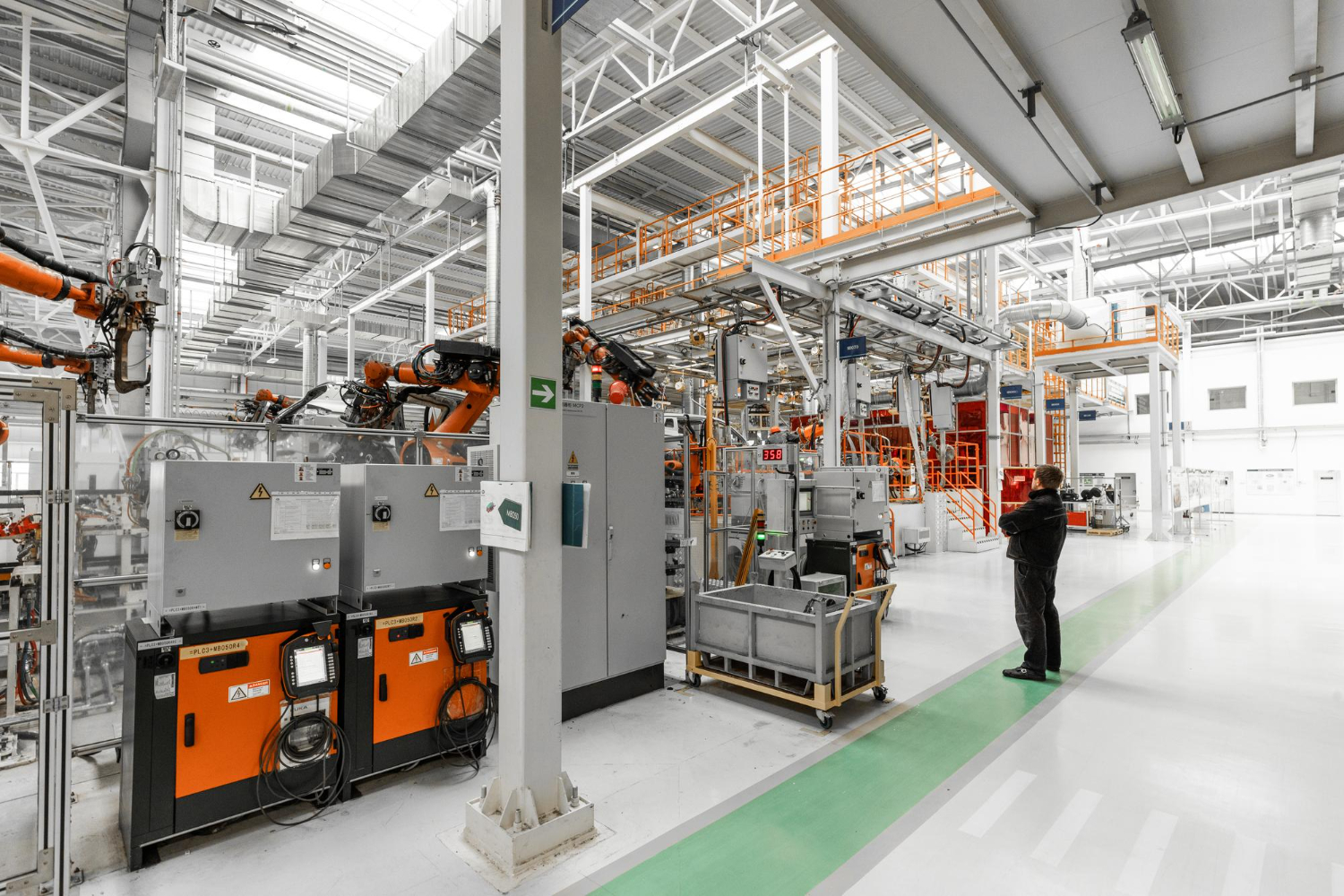
For decades, a large proportion of India’s electronics SMEs operated primarily as assembly units. Production machinery was typically isolated from enterprise IT systems and factory equipment often functioned within largely air-gapped environments. Risk management therefore focused on familiar operational concerns – production continuity, supplier reliability and financial stability.
Today that landscape is changing rapidly.
Many SMEs are moving up the value chain from basic assembly into more sophisticated activities such as printed circuit board assembly, embedded electronics manufacturing and full-turnkey production services. This transition is accompanied by the adoption of advanced manufacturing technologies including industrial Internet of Things sensors, robotics-enabled production lines, predictive maintenance systems and AI-driven quality inspection.
These technologies enhance efficiency and output, but they also introduce a new category of operational vulnerabilities. In many factories, cutting-edge robotics operate alongside legacy industrial control systems that were never designed to connect to external networks. The result is an infrastructure gap between modern digital manufacturing and ageing operational technology.
At the same time, organisational capabilities have not always evolved at the same pace. Many SME promoters are engineers-turned-entrepreneurs with deep product knowledge but limited exposure to enterprise risk frameworks. Finance teams remain focused on compliance, working capital management and cost optimisation, while formal governance structures such as risk registers, control assessments and business continuity planning remain underdeveloped.
The emerging frontier: OT and AI security
In earlier decades, cyber threats were largely associated with the theft of digital information: customer records, financial data or intellectual property. In modern manufacturing environments, however, the focus of attacks is increasingly shifting toward physical processes.
Operational technology systems such as programmable logic controllers, SCADA platforms and industrial sensors directly control production lines. Compromise of these systems can halt production or alter manufacturing processes in ways that affect product quality or safety.
For electronics manufacturers operating automated plants, these environments often contain several structural weaknesses: legacy controllers without encryption, limited network segmentation and insufficient visibility into machine-level activity. A successful ransomware attack targeting operational technology could therefore shut down entire production lines.
Artificial intelligence introduces an additional layer of complexity. AI is increasingly used for predictive maintenance, yield optimisation and automated inspection. Yet the adoption of these systems raises governance questions ranging from biased decision-making to the manipulation of models through adversarial attacks and the exposure of proprietary manufacturing data.
Compounding the challenge, attackers themselves are increasingly using generative AI tools to automate vulnerability discovery and craft sophisticated phishing campaigns.
The convergence of IT, OT and AI risks
In today’s digitally integrated factories, the boundaries between information technology, operational technology and AI systems are rapidly dissolving. This convergence creates complex risk pathways that traditional security models struggle to address.
Many industrial cyber incidents originate not in factory equipment but within corporate IT networks. A phishing email that compromises a workstation can provide attackers with an entry point into enterprise systems. From there, lateral movement into plant networks can eventually expose production systems.
Simultaneously, modern manufacturing increasingly relies on interconnected platforms linking enterprise resource planning systems, production lines, quality analytics and supply chain management tools. While this integration improves efficiency and visibility, it also significantly expands the attack surface.
As a result, governance frameworks must evolve beyond isolated cybersecurity controls toward integrated enterprise risk management structures. Global standards bodies, including the International Organization for Standardization and the National Institute of Standards and Technology, increasingly advocate such holistic approaches to managing technology and operational risk.
Rising regulatory expectations
Export-oriented electronics SMEs must also navigate a tightening global regulatory environment.
Companies handling data from international customers may need to comply with frameworks such as the European Union’s General Data Protection Regulation. In India, the Digital Personal Data Protection Act introduces new obligations around the collection and processing of personal information. Meanwhile, emerging European regulations, including the NIS2 Directive and the Cyber Resilience Act, are expected to impose stricter cybersecurity requirements across supply chains.
Domestically, the Indian Computer Emergency Response Team mandates incident reporting obligations and cybersecurity practices under the Information Technology Act. For manufacturers embedded in global supply chains, governance maturity is increasingly becoming a prerequisite for market access.
Governance as a commercial requirement
For many SMEs, governance has traditionally been perceived as an administrative burden. Increasingly, however, it is becoming a commercial necessity.
Global electronics manufacturers now routinely assess the cybersecurity and resilience posture of their suppliers. Companies unable to demonstrate adequate governance frameworks may struggle to secure high-value contracts. Cyber insurance providers are similarly tightening underwriting standards, often requiring evidence of network segmentation, incident response planning and formal risk governance before issuing policies.
In this environment, governance maturity delivers three strategic benefits: it strengthens organisational resilience, enhances export credibility and builds trust with investors, insurers and customers.
A pragmatic transformation roadmap
For most SMEs, governance transformation should not be approached as a single large-scale programme but as a phased process over a 24-36-month horizon.
The first phase involves establishing visibility: mapping technology assets across IT, operational technology and AI systems, conducting risk assessments and defining governance ownership at a senior level.
The second phase focuses on strengthening defences through network segmentation, supplier risk management, alignment with international standards and the introduction of governance oversight for emerging technologies.
The final phase centres on resilience: deploying monitoring systems capable of detecting abnormal machine behaviour, establishing business continuity capabilities and embedding risk reporting within board-level governance processes.
Leadership as the decisive factor
Ultimately, governance frameworks do not succeed through documentation alone. Their effectiveness depends on leadership commitment.
For promoters, this means recognising that risk management cannot be delegated entirely to consultants. For CFOs, it requires integrating risk considerations into capital allocation decisions. For CISOs and security leaders, it involves translating technical risks into operational consequences that business leaders understand.
Boards, meanwhile, must ask the questions that make governance tangible: What are the organisation’s most significant risks? Are existing controls working? And what would be the financial impact of a prolonged production disruption?
The next frontier of competitive manufacturing
India’s electronics manufacturing sector stands at a pivotal moment. Global demand, policy support and technical capability are converging to create unprecedented opportunity. Yet the ability of SMEs to capture this growth will increasingly depend on governance maturity.
In the emerging architecture of global supply chains, governance is no longer simply a compliance exercise. It is the institutional infrastructure that underpins trust, resilience and durable partnerships.
For India’s electronics SMEs, the message is becoming clear: risk governance is not a back-office function. It is a strategic capability that will shape the next phase of industrial competitiveness.
Disclaimer: Views expressed in the article are entirely the personal opinions of the author and do not reflect the views of Accenture, its subsidiaries or associated companies.