




Unpacking The Inequality in India’s Packaging Revolution
India’s packaging industry, projected to cross $70 billion by 2030 on the back of rising consumption and e-commerce penetration, is often held up as one of the country’s most dynamic manufacturing sectors. Yet beneath this headline growth lies a quieter structural strain: the widening gulf between the technological demands of large consumer brands and the capital constraints of the small and mid-sized converters who form the backbone of India’s supply chain.
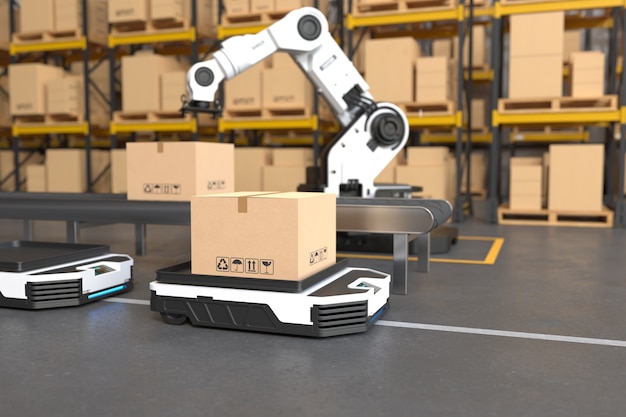
The gap is most evident in machinery investment. Modern packaging today demands a level of speed, precision and automation that was considered aspirational even a decade ago. High-colour gravure and flexographic presses, high-speed form–fill–seal lines, automated carton erecting systems and robotic palletisers have moved from optional upgrades to operational necessities.
According to the Indian Institute of Packaging (IIP), capital investment for a fully competitive flexible packaging line can now range from ₹5 crore to ₹25 crore, depending on configuration and level of automation. Even mid-tier imported presses typically cost between ₹1 crore and ₹5 crore, a figure that places them out of reach for thousands of SMEs who operate on sub-10% margins and limited credit access.
Domestic machinery manufacturers have attempted to fill this gap, but their offerings still trail European and Japanese equipment on consistency, registration accuracy and energy efficiency, critical parameters for brands with strict packaging specifications. The Federation of Corrugated Box Manufacturers of India (FCBM) notes that technology gaps directly contribute to higher waste ratios and lower throughput for small converters, eroding competitiveness in an industry where pricing pressure is relentless.
Compounding the challenge is the acceleration of technological obsolescence. FMCG, pharmaceutical and e-commerce companies are pushing aggressively towards recyclable laminates, mono-material structures, thinner films and traceability-enabled smart packaging. These transitions require new coating, lamination, inspection and digital printing systems. Investment cycles that once stretched over seven to ten years have compressed to three to five, leaving SMEs unable to recover machinery costs before the next design or regulatory shift arrives. For an industry that supplies sectors governed by FSSAI, Legal Metrology and global sustainability norms, the cost of falling behind is steep: missed orders, downgraded supplier status and shrinking margins.
Operational reliability has emerged as another pressure point. A significant portion of India’s packaging machinery, particularly advanced converting and finishing lines, is imported. When breakdowns occur, SMEs often contend with delayed spares, limited availability of trained service engineers and high replacement costs. In larger multi-line plants, such interruptions can be absorbed. For SMEs operating two or three machines, downtime can derail production schedules, damage customer relationships and jeopardise cash flow. The industry’s dependence on just-in-time delivery models amplifies these risks.
The result is a two-speed packaging economy. Well-capitalised firms continue to expand capacity, adopt Industry 4.0 solutions and cater to global supply chains. Smaller converters, meanwhile, face a narrowing set of options: defer investment, compromise on quality, or take on expensive financing that strains already thin balance sheets. Even credit schemes targeted at MSMEs have had limited impact, partly because packaging investments require long-term repayment structures that standard MSME lending rarely accommodates.
India’s packaging story is often told through the lens of market expansion, but the more pressing narrative concerns access: access to capital, technology and reliable service infrastructure for the SMEs who constitute the sector’s competitive base. Without stronger partnerships between OEMs, financial institutions and associations like IIP and FCBM, the industry risks entrenching structural disadvantages for its most numerous participants. Growth may continue, but it will be uneven and increasingly concentrated in the hands of those who can afford to modernise at the pace the market now demands.