




Logistics Is No Longer a Cost Line – It’s a Growth Lever for Indian SMEs
For decades, Indian SMEs have treated logistics as a necessary evil, an unavoidable cost to be minimised once production is complete. Freight rates were negotiated late, routes were chosen by habit and delivery timelines were absorbed as external constraints rather than strategic variables. That mindset is now obsolete. In a world of fragmented supply chains, volatile geopolitics and time-sensitive demand, logistics has moved from the back office to the boardroom. For Indian SMEs, it is no longer just a cost line; it is a growth lever.
The numbers already hint at the scale of the challenge and the opportunity. Logistics costs in India are estimated at around 13–14% of GDP, materially higher than the 8–9% typical of developed economies. For SMEs operating on thin margins, this differential can decide whether an export order is viable or not. Yet, the same statistic also signals headroom: even modest efficiency gains can translate into meaningful margin expansion and market access.
Globally, the relationship between logistics efficiency and trade competitiveness is well established. The World Bank’s Logistics Performance Index consistently shows a strong correlation between infrastructure quality, customs efficiency and export intensity. Countries that have invested in corridor-led logistics rather than isolated assets tend to punch above their weight in global trade.
Consider Vietnam. Over the past decade, it has transformed itself into a preferred manufacturing and export base not merely through labour competitiveness, but by aligning industrial parks with ports, improving hinterland connectivity and integrating customs processes. As a result, Vietnamese SMEs today participate in electronics, textiles and furniture exports with delivery reliability that meets global buyer expectations. Logistics did not just support growth; it enabled it.
Closer to home, the Gulf logistics hubs offer another lesson. The UAE’s Jebel Ali Port is not simply a port; it is the nucleus of a corridor ecosystem: free zones, multimodal connectivity, trade finance, customs facilitation and digital documentation. SMEs operating within such ecosystems gain speed to market, inventory predictability and access to re-export opportunities that would otherwise be unattainable.
The relevance for Indian SMEs is direct. Export competitiveness is no longer determined solely by factory gate pricing. Buyers increasingly evaluate landed cost, delivery certainty, carbon footprint and resilience to disruption. A shipment delayed by congestion, poor routing or documentation friction can erase months of margin discipline. Conversely, a well-planned logistics strategy can unlock entirely new markets without changing the product itself.
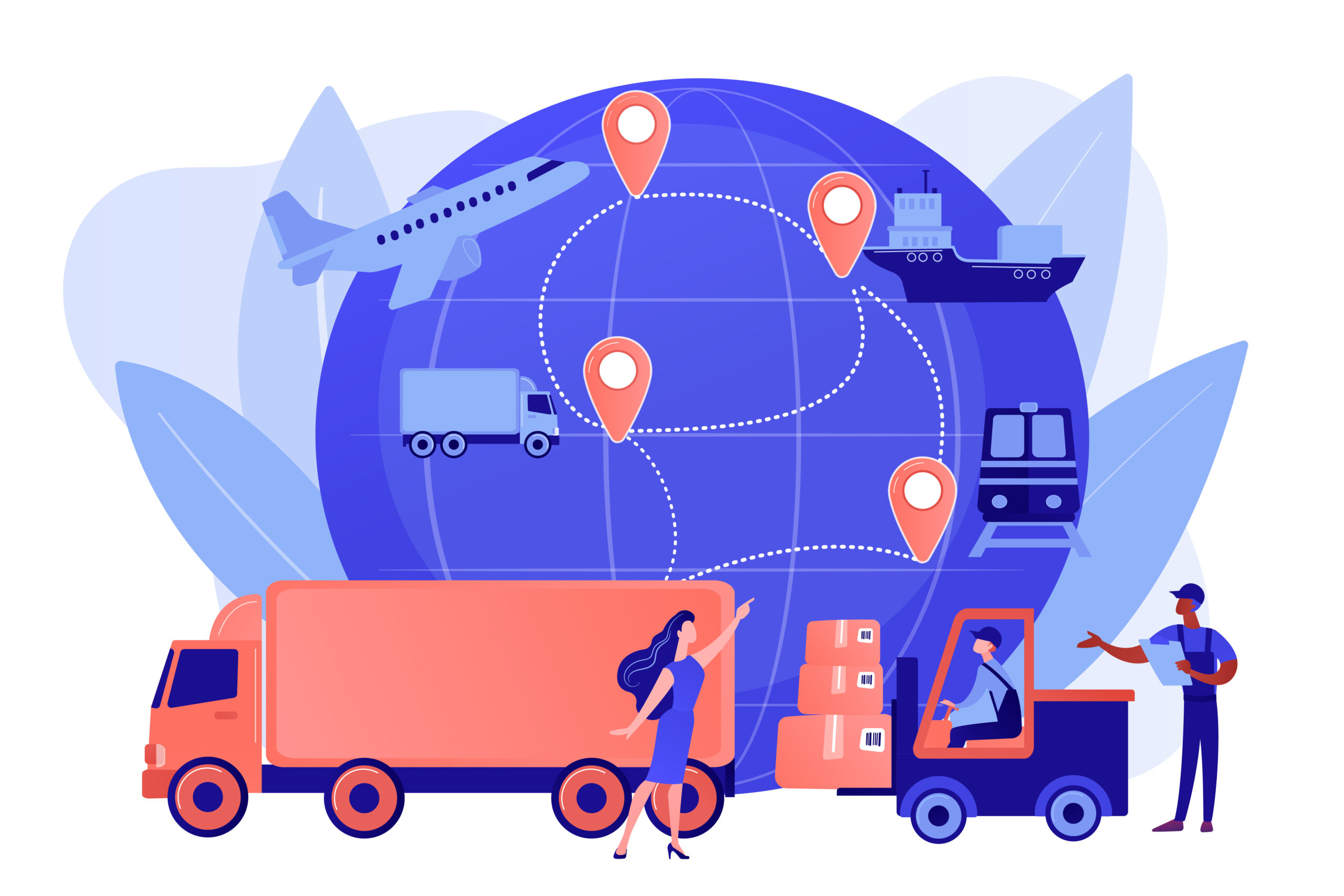
This is where corridor-level thinking becomes critical. Logistics efficiency does not emerge from isolated improvements like a better truck, a cheaper freight forwarder, or a one-off rate negotiation. It emerges when transport modes, infrastructure nodes and regulatory processes are aligned along a corridor. Road, rail, ports, inland waterways and air cargo must function as an integrated system rather than competing silos.
India has begun laying the foundations for this shift. Dedicated Freight Corridors, port modernisation, multimodal logistics parks and policy initiatives aimed at reducing dwell times are reshaping the physical landscape. But infrastructure alone does not create competitiveness. SMEs must adapt their own decision-making to take advantage of it.
Smarter routing is the first unlock. Many SMEs continue to default to familiar ports or routes even when alternatives offer lower congestion, faster turnaround or better connectivity to target markets. Corridor awareness, understanding which ports serve which geographies best, how rail can replace long-haul trucking, or when coastal shipping becomes economical, can materially alter cost structures. For time-sensitive exports, air–sea or rail–sea multimodal combinations can make the difference between winning and losing an order.
Multimodal planning also improves resilience. The pandemic and subsequent geopolitical disruptions exposed the fragility of single-route dependence. SMEs that had diversified logistics options, multiple ports, alternative modes, flexible warehousing, were better positioned to respond. In an era of climate-related disruptions and trade frictions, resilience is no longer a luxury; it is a prerequisite for sustained exports.
Another underappreciated lever is inventory strategy. Faster, more predictable logistics allow SMEs to shift from “buffer-heavy” models to leaner operations. Reduced inventory holding periods free up working capital, often a more powerful benefit than marginal freight savings. For export-oriented SMEs, this can ease one of the most persistent constraints: access to affordable finance.
Globally, digitalisation has amplified these gains. SMEs in Europe and East Asia increasingly use digital freight platforms, real-time tracking and data-driven demand forecasting to optimise routes and schedules. This visibility enables better coordination with buyers, fewer disputes and improved trust. Indian SMEs adopting similar tools are not just improving logistics; they are signalling professionalism to global customers.
There is also a strategic dimension that extends beyond individual firms. Corridor-led logistics fosters cluster competitiveness. When manufacturing clusters are aligned with efficient export corridors—supported by customs facilitation, warehousing, cold chains and last-mile connectivity—entire ecosystems benefit. SMEs gain access to shared infrastructure, service providers and market intelligence that would be prohibitively expensive to build alone.
This is why logistics must be reframed from a transactional expense to a strategic investment. For Indian SMEs aspiring to scale exports, the question is no longer “how cheaply can I ship?” but “how intelligently can I connect my factory to global demand?”
The February 27th Hyderabad edition of Cargo Corridors sits squarely within this inflection point. Hyderabad, with its proximity to manufacturing clusters, inland container depots, air cargo infrastructure and access to multiple port gateways, exemplifies the corridor logic. It is not about one mode or one node, but about orchestration.
As global trade becomes more fragmented and demanding, logistics will increasingly determine which SMEs scale and which stagnate. Those who embrace corridor-level thinking, integrating routing, modes, compliance and technology, will find that logistics is no longer a constraint on growth. It becomes the pathway to it.