



India-South Korea MSME Partnership: Translating Strategic Alignment into Industrial Opportunity
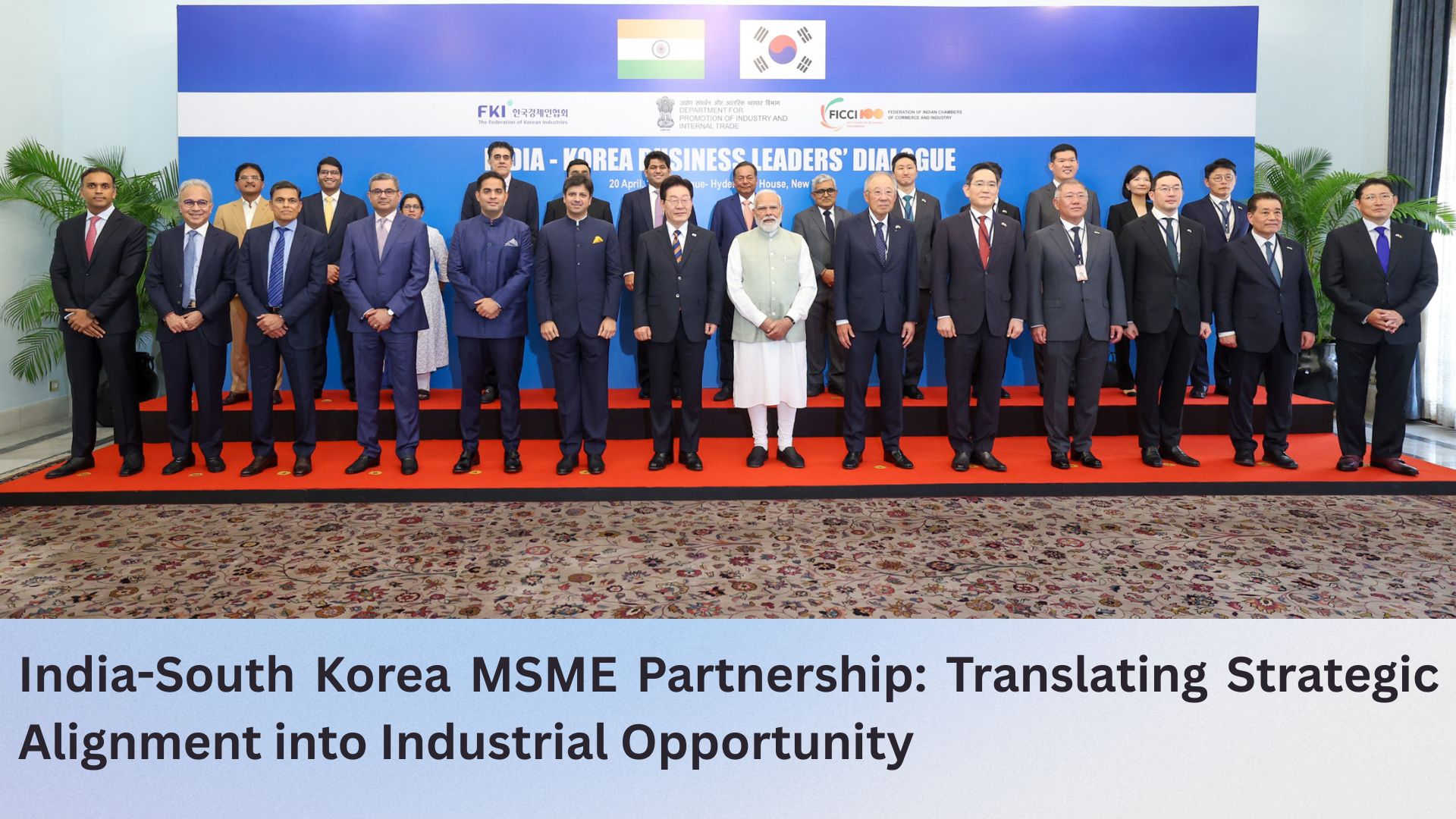
The recently signed Memorandum of Understanding (MoU) between India and the Republic of Korea (ROK) on MSME cooperation marks a structural shift in how bilateral economic partnerships are being designed. Rather than remaining confined to trade facilitation, the agreement reflects a deeper intent to integrate industrial ecosystems, strengthen supply chains, and embed MSMEs into global production networks.
At a time when global trade is undergoing recalibration driven by supply chain diversification and technological transformation, this partnership positions Indian MSMEs at the intersection of policy support and international collaboration.
Leadership-Level Convergence and Strategic Direction
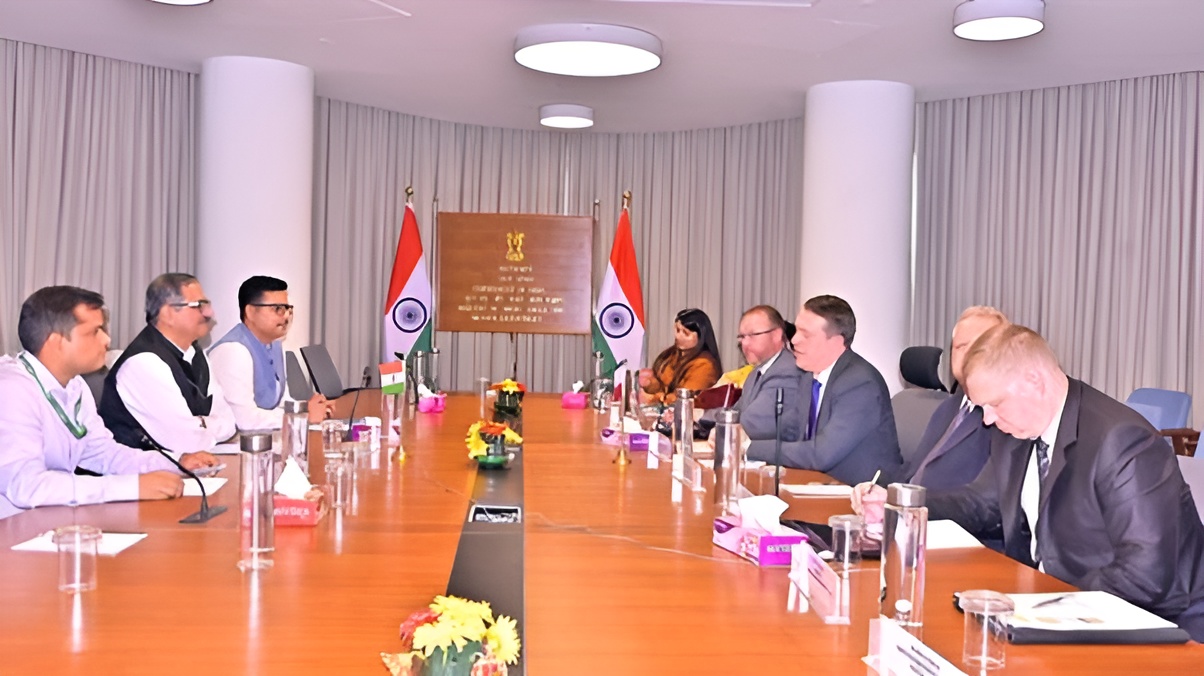
During the meeting between Prime Minister Narendra Modi and President Lee Jae Myung on 20 April 2026, both sides engaged in detailed discussions on strengthening cooperation across key sectors. Among the most consequential areas identified was collaboration in shipbuilding, shipping and maritime logistics, sectors that are increasingly central to trade competitiveness and economic resilience.
This engagement reflects a shift from high-level policy alignment to execution-oriented cooperation, where both government institutions and private sector participants are expected to play coordinated roles.
Maritime Sector as a Strategic Anchor for MSME Growth
India and South Korea bring complementary strengths to the maritime domain. India’s expanding economic footprint and growing trade volumes are driving the need for robust maritime infrastructure, while South Korea’s global leadership in shipbuilding and marine engineering provides a strong technological foundation.
Under India’s Maritime Amrit Kaal 2047 Vision, the maritime sector is being positioned as a critical enabler of economic growth and trade efficiency. The partnership with South Korea is expected to accelerate this trajectory by facilitating technology transfer, improving logistics systems and strengthening integration with global shipping networks.
For MSMEs, this alignment has direct implications. As maritime infrastructure expands, demand for components, engineering services and ancillary manufacturing is expected to rise, creating opportunities across multiple layers of the value chain.
From Policy to Projects: Building Shipbuilding Ecosystems
A central component of the collaboration lies in the development of large-scale shipbuilding clusters in India. Supported by incentives under the Shipbuilding Development Scheme and state-level industrial policies, these clusters are designed to create integrated manufacturing ecosystems.
South Korean firms have been invited to participate as technical and strategic partners, contributing expertise in advanced manufacturing, production engineering and operational efficiency. The involvement of companies such as HD Korea Shipbuilding & Offshore Engineering in proposed shipyard projects signals early movement in this direction.
This approach is significant for MSMEs because it shifts the opportunity from isolated contracts to ecosystem participation. Instead of operating as standalone suppliers, MSMEs can integrate into structured industrial clusters with sustained demand visibility.
Demand Visibility and Industrial Multiplier Effects
India’s planned acquisition of over 400 vessels, with an estimated value of ₹2.2 lakh crore, introduces a clear and long-term demand pipeline. Such visibility is rare in industrial policy and provides a foundation for capacity planning and investment decisions.
The implications extend beyond shipyards. Increased shipbuilding activity drives demand across a wide range of industries, including fabrication, equipment manufacturing, logistics and maintenance services. For MSMEs, this creates a multiplier effect, where growth in one sector stimulates opportunities across several others.
At the same time, efforts to upgrade existing shipyards through brownfield expansion are expected to enhance production capabilities and improve efficiency. The development of supporting infrastructure such as fabrication facilities further strengthens the industrial base, creating additional entry points for smaller enterprises.
Port Infrastructure and Trade Efficiency
The partnership also extends to port development and logistics integration through cooperation between India’s Ministry of Ports, Shipping and Waterways and South Korea’s Ministry of Oceans and Fisheries. India’s pipeline of port infrastructure projects, estimated at around $13.3 billion, reflects a sustained push to modernise cargo handling and improve connectivity.
Projects such as Vadhvan Port and other large-scale terminals are expected to enhance throughput capacity and reduce logistical bottlenecks. For MSMEs, improvements in port efficiency translate directly into lower transaction costs, faster export cycles and improved reliability in international trade.
This is particularly relevant in a global environment where delivery timelines and supply chain resilience are becoming as important as pricing.
Technology Integration and Advanced Manufacturing
A notable aspect of the India-ROK engagement is its emphasis on technology-led manufacturing. Collaborations involving entities such as Bharat Earth Movers Limited and Korean shipbuilding firms aim to develop next-generation maritime equipment, including automated and autonomous systems.
This signals a broader transition from labour-intensive manufacturing to technology-driven production. For MSMEs, the implication is clear. Competitiveness will increasingly depend on the ability to adopt advanced manufacturing techniques, improve quality standards and align with global benchmarks.
Skill Development and Workforce Advantage
The partnership also recognises the importance of human capital in sustaining industrial growth. Joint initiatives led by the Korea International Cooperation Agency in collaboration with Indian institutions are expected to enhance skill development in shipbuilding and maritime operations.
India’s expanding seafarer base provides an additional advantage, enabling closer integration with global maritime operations. For MSMEs, access to a more skilled workforce can improve productivity and support movement into higher-value segments.
Financial and Institutional Linkages
Another important dimension is the integration of financial and regulatory frameworks. The encouragement for Korean shipowners to utilise India’s GIFT IFSC platform reflects an effort to align industrial growth with financial innovation.
Such integration improves access to capital, reduces transaction friction and strengthens the overall investment environment. For MSMEs, these developments can translate into better financing options and stronger linkage with large-scale industrial projects.
From Opportunity to Execution
The India-South Korea MSME MoU represents a comprehensive framework that connects trade, technology, infrastructure and finance. Its significance lies not in the announcement itself, but in the execution pathways it creates.
For Indian MSMEs, the opportunity is substantial but demands a shift in approach. Success will depend on the ability to align with global standards, invest in capability building and actively participate in emerging industrial ecosystems.
As global trade continues to evolve, partnerships of this nature will play a decisive role in determining whether MSMEs remain peripheral participants or emerge as integral contributors to international value chains.