



Inside India’s Manufacturing Hubs: The Rise of Integrated Industrial Ecosystems
India’s manufacturing sector is no longer just about factories it is increasingly about ecosystems. As the country moves from a $3.7 trillion economy toward an ambitious $30-35 trillion vision by 2047, manufacturing is expected to expand its contribution from the current 16-17% of GDP to at least 25%. That shift cannot be achieved through incremental improvements. It demands a structural transformation and that transformation is unfolding through integrated manufacturing hubs.
A Shift From Cost To Capability
Globally, manufacturing competitiveness is being redefined. The old model centered on low-cost production is giving way to one focused on reliability, resilience and strategic indispensability. As production becomes more technology-intensive and system-dependent, companies are prioritizing stable, well-integrated environments over fragmented, cost-driven setups.
India’s response has been to rethink manufacturing not as isolated units but as connected systems, where infrastructure, logistics, policy support and supply chains operate in sync. This is where manufacturing hubs come in.
Reducing Friction At Scale
At the heart of these hubs is the concept of plug-and-play infrastructure, ready-to-use industrial environments that significantly reduce setup time and costs. Instead of navigating land acquisition, regulatory approvals and infrastructure gaps, firms can begin operations almost immediately.
This directly addresses one of India’s long-standing challenges: industrial friction. By providing shared utilities, logistics networks and compliance frameworks, hubs enable faster project execution and predictable timelines. The result is not just efficiency but also scalability, allowing firms to expand without being constrained by infrastructure bottlenecks.
Large integrated manufacturing hubs exemplify this model. These master-planned zones bring together anchor manufacturers and supplier ecosystems within a single location, creating economies of scale and enabling deeper value chain integration.
A Multi-Layered Ecosystem Approach
India’s manufacturing hub landscape is not uniform it is deliberately multi-layered, reflecting sectoral and regional diversity. It includes large integrated parks, sector-specific ecosystems, MSME clusters and corridor-linked nodes, each designed to address different production and logistics needs.
Sector-Specific Manufacturing Ecosystems
Certain industries require specialized infrastructure that cannot be replicated in generic industrial zones. India’s approach has been to build end-to-end sectoral ecosystems.
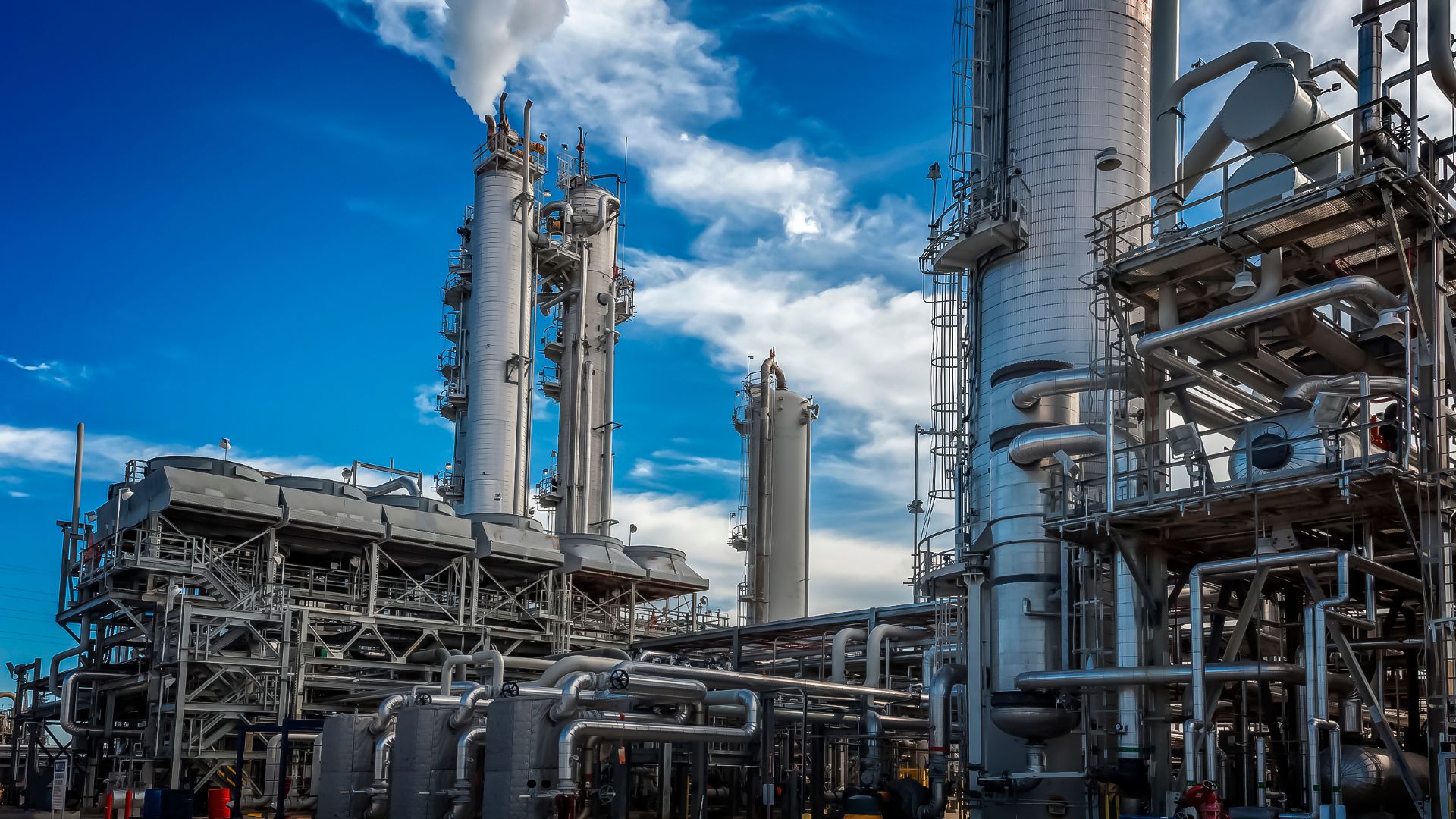
- The Bulk Drug Park Scheme is developing three parks with shared facilities such as solvent recovery and effluent treatment systems, improving efficiency and environmental compliance.
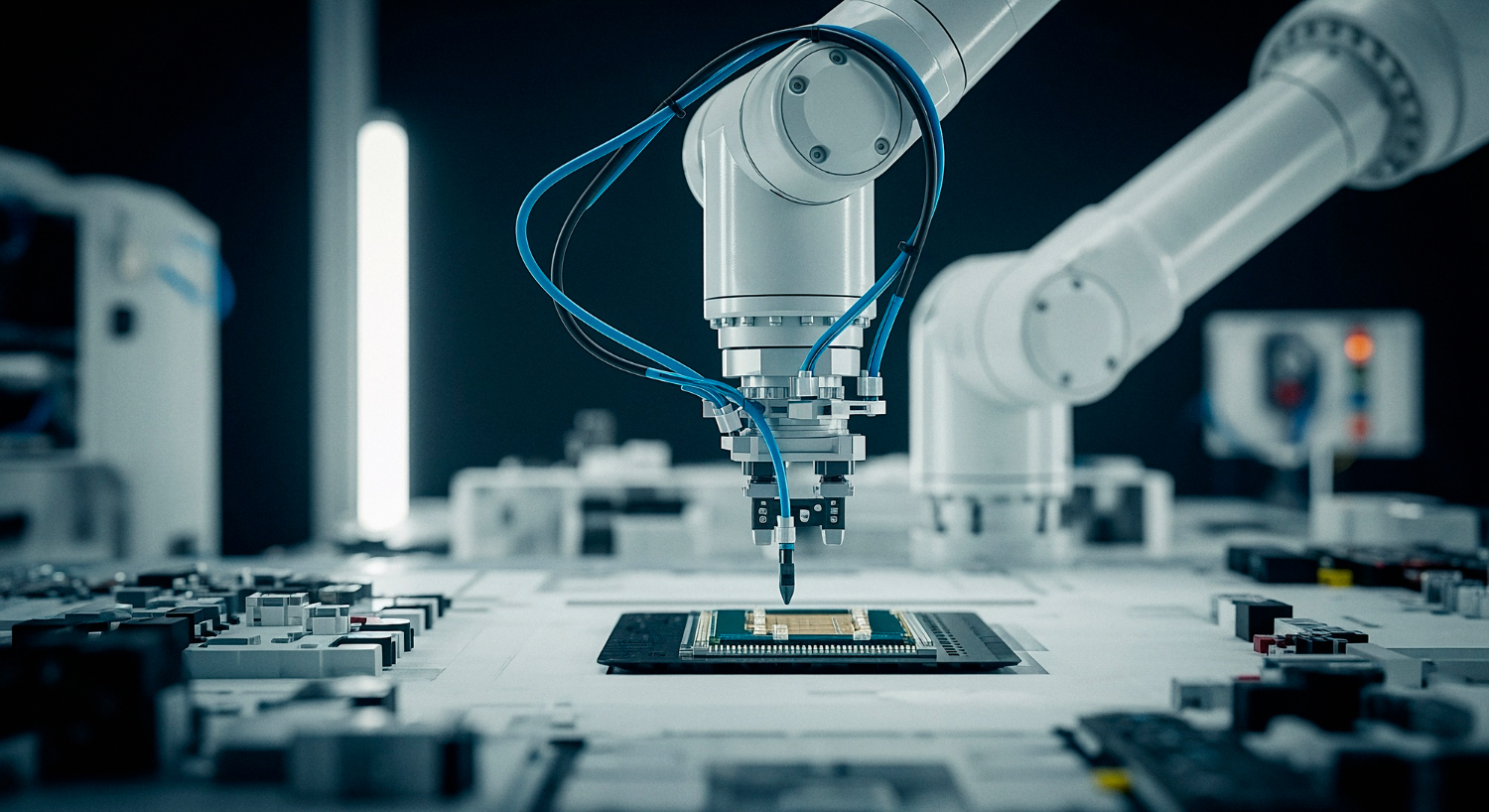
- Electronics and semiconductor manufacturing are being supported through initiatives like the Semicon India Programme and ECMS 2.0, covering fabrication, assembly and testing.
- The Biopharma SHAKTI initiative, with an outlay of ₹10,000 crore over five years, aims to position India as a global biopharma hub.
These ecosystems allow firms to operate across the entire value chain, enabling India to move beyond low-value manufacturing into higher-technology, higher-value segments. Notably, medium-and high-technology industries already account for 46.3% of manufacturing value added.
The Distributed Backbone
While large hubs dominate headlines, Micro, Small, and Medium Enterprises (msmes) remain the backbone of India’s manufacturing system. With over 7.47 crore enterprises, msmes contribute 35.4% of manufacturing output, 48.58% of exports, and 31.1% of GDP, while employing more than 32.82 crore people.
Cluster-based development is central to integrating MSMEs into the hub ecosystem. Through programs like the Micro & Small Enterprises – Cluster Development Programme (MSE-CDP), 580 projects have been approved, including 227 Common Facility Centres and 353 infrastructure projects.
These clusters are especially prominent in Tier-2 and Tier-3 cities, where local skills, supplier networks, and cost advantages create natural industrial ecosystems. They ensure that manufacturing growth is not concentrated but broad-based and inclusive.
Connecting The Dots
Manufacturing hubs do not operate in isolation. Their success depends on connectivity and this is where industrial corridors and smart cities play a critical role.
Under the National Industrial Corridor Development Programme (NICDP), 20 industrial smart cities have been approved across 7 corridors and 13 states, with four already completed, including Dholera in Gujarat and Shendra-Bidkin in Maharashtra.
Corridors such as the Delhi-Mumbai, Chennai-Bengaluru, Amritsar-Kolkata and Vizag-Chennai Industrial Corridors are designed to provide trunk infrastructure, freight connectivity and multimodal logistics.
These corridor-linked industrial nodes represent a shift toward system-level planning, where infrastructure is designed to serve entire regions rather than individual projects.
The Execution Challenge
If infrastructure is the backbone of manufacturing hubs, state capacity is the engine. The ability to aggregate land, provide trunk infrastructure, and coordinate approvals determines how effectively hubs function.
To address coordination challenges, initiatives like the PM Gati Shakti National Master Plan integrate data from 44 central ministries and 36 states, enabling synchronized planning and execution.
At the same time, public capital expenditure has increased sharply from ₹2 lakh crore in FY2014-15 to ₹12.2 lakh crore in FY2026-27 providing the financial foundation for large-scale infrastructure development.
This combination of digital coordination and financial commitment is gradually improving execution, though consistency across states remains a key factor to watch.
Preparing for scale
The Union Budget 2026-27 reinforces the hub-based strategy with targeted interventions:
- Three new chemical parks to strengthen cluster-based manufacturing
- Continued rollout of 7 PM MITRA textile parks
- Strengthening of MSME clusters and common facilities
- Investment in tool rooms, testing, and calibration infrastructure
- Expansion of PM Gati Shakti for integrated planning
- ₹10,000 crore allocation for Biopharma SHAKTI, including new nipers and over 1,000 clinical trial sites
These measures signal a clear intent: to build future-ready, scalable and resilient manufacturing ecosystems.
The Road Ahead
India is currently the third most sought-after manufacturing destination globally, a position that reflects both opportunity and expectation.
Integrated manufacturing hubs are not just infrastructure projects they are the foundation of a new industrial model. One that prioritizes coordination over fragmentation, ecosystems over isolated units and long-term competitiveness over short-term cost advantages.
The success of this model will depend on execution, especially at the state level. But if delivered effectively, these hubs could redefine India’s role in global value chains from a participant to a central, indispensable player in the manufacturing economy.