



Europe’s SME Playbook for Resilience: What Indian Businesses Must Learn Now
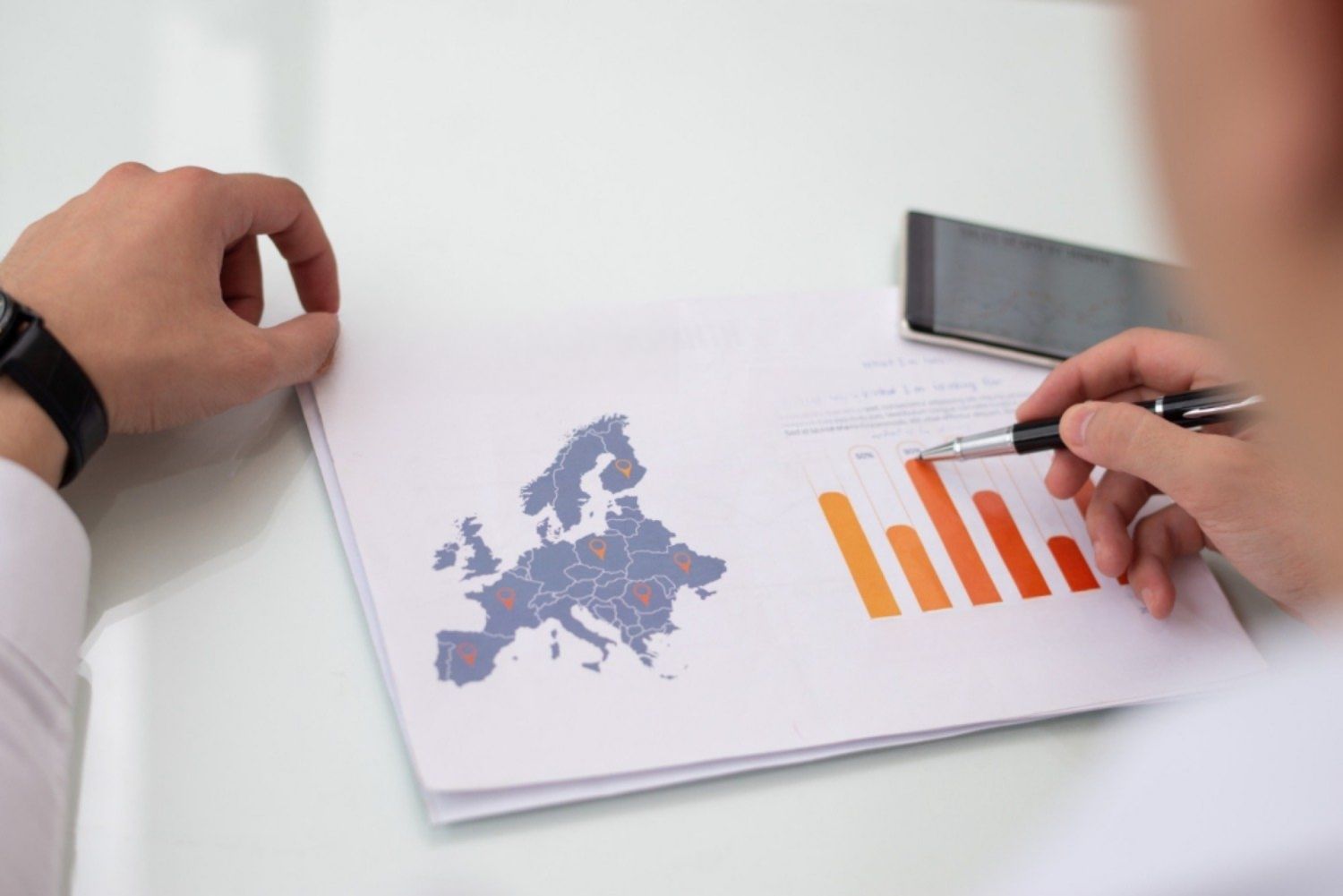
At a time when global business uncertainty is no longer episodic but structural, a new pattern is emerging across Europe’s small and medium enterprises. The Future Ready Business Report 2026 offers a data-backed view into how SMEs are not merely surviving disruption but systematically redesigning themselves for resilience. For Indian SMEs navigating similar pressures, the findings serve less as distant observation and more as a strategic blueprint.
The core insight is unambiguous: resilience is being engineered, not improvised.
Across Europe, 40% of SMEs identify economic conditions and rising costs as their primary challenge for the coming year, while 35% struggle to balance quality with growth. Talent remains a structural constraint, with 33% citing hiring and retention as a critical concern, closely followed by rising customer expectations (29%) and the accelerating pace of technological change (28%). These pressures are not dissimilar to those confronting Indian MSMEs, particularly in manufacturing, services and export-oriented sectors.
Yet the response from European firms signals a decisive shift in operating philosophy. Rather than retreating into cost-cutting cycles, 43% of SMEs are prioritising revenue and profitability expansion, while 35% are focused on improving operational efficiency. Notably, 34% are actively investing in new technologies, with an equal proportion emphasising cost and cash flow management. This dual focus on growth and discipline is where the first lesson for Indian SMEs becomes evident: resilience is not defensive, it is strategic.
A defining feature of this transition is the rapid institutionalisation of digital infrastructure. Over the past three years, European SMEs have strengthened their digital core through widespread adoption of digital payments, cybersecurity frameworks, and cloud technologies. Today, 53% operate on hybrid systems, while 26% are fully cloud-based. Belgium, in particular, stands out, with 34% of SMEs operating entirely on cloud infrastructure, the highest among surveyed markets.
This digital maturity is not incidental. It is directly linked to regulatory triggers such as e-invoicing mandates, which have evolved from compliance obligations into catalysts for broader transformation. More than 80% of Belgian SMEs complied with e-invoicing requirements on time, demonstrating how regulatory pressure, when aligned with digital capability, can accelerate structural change. For Indian SMEs, especially in the context of GST digitisation, e-invoicing expansion and ONDC-led digital commerce, the parallel is clear. Compliance can either remain a cost centre or become an entry point into efficiency and scalability.
The report further highlights the centrality of artificial intelligence in the next phase of SME evolution. While 75% of Belgian SMEs already use AI tools at least monthly, 50% plan to increase their AI investments in the coming year. However, the more revealing statistic is that 48% cite resistance to change as the biggest barrier to adoption. This underscores a critical insight often overlooked in technology discussions: the constraint is less about access to tools and more about organisational readiness.
For Indian SMEs, where family-led management structures and legacy processes often dominate, this finding carries significant weight. The transition to AI and automation will require not just capital investment but internal alignment, change management and workforce reskilling. The European approach of starting with low-complexity, high-impact use cases such as workflow automation, document processing and reconciliation offers a pragmatic pathway.
Another structural shift captured in the report is the redefinition of risk. As SMEs deepen their digital footprint, cybersecurity is emerging as a board-level priority. In Belgium, 54% of SMEs plan to strengthen cybersecurity measures in the coming year, recognising that increased cloud adoption and data centralisation create new vulnerabilities. The recommended move towards zero-trust architectures and vendor security audits reflects a maturing understanding of risk as systemic rather than isolated.
This is particularly relevant for Indian SMEs integrating into global supply chains, where cybersecurity is increasingly a prerequisite for participation. The lesson is: digital expansion without risk architecture is not growth, it is exposure.
Equally significant is the evolving approach to talent and operational capacity. With 48% of Belgian SMEs identifying talent shortage as their biggest challenge, outsourcing has emerged as a structural response rather than a tactical fix. As many as 43% outsource accounting functions, 30% payroll and 26% HR, with 74% reporting high loyalty to service providers. This indicates a clear shift towards focusing internal resources on core competencies while leveraging external expertise for specialised functions.
For Indian SMEs, often constrained by managerial bandwidth and skill gaps, this model offers a scalable alternative to in-house expansion. The implication is not merely cost efficiency but strategic focus.
Perhaps the most instructive insight from the report lies in the mindset underpinning these transitions. European SMEs are not adopting technology as an end in itself. Instead, they are deploying it as a means to achieve tangible outcomes: faster cash cycles, improved productivity, enhanced decision-making and better customer engagement. AI, in this context, is not positioned as a futuristic tool but as an operational enabler that automates repetitive tasks, accelerates workflows and allows human capital to focus on higher-value functions.
This pragmatic orientation is where the European experience holds its strongest relevance for India. As Indian SMEs confront rising input costs, tightening margins, and increasing regulatory complexity, the temptation to delay transformation remains high. However, the data suggests that delay may, in fact, be the costliest strategy.
The European trajectory indicates that resilience in the current decade will be defined by three converging capabilities: digital depth, operational flexibility, and risk intelligence. SMEs that integrate these dimensions into their core strategy are not only better positioned to withstand shocks but are also more likely to capture emerging growth opportunities.
For India’s SME ecosystem, which contributes nearly 30% to GDP and plays a critical role in employment and exports, the implications are immediate. The question is no longer whether to digitise, automate, or restructure. The question is how quickly and how strategically these shifts can be executed.