



India Emerges as Key Trading Partner for Kenya; Trade Grows to USD 4.31 Billion

When bilateral trade between India and Kenya touched USD 4.31 billion in 2025-26 up nearly 25% year-on-year it did more than mark a statistical milestone. It signalled the steady formation of a trade corridor that is becoming increasingly relevant for small and medium enterprises (SMEs) on both sides.
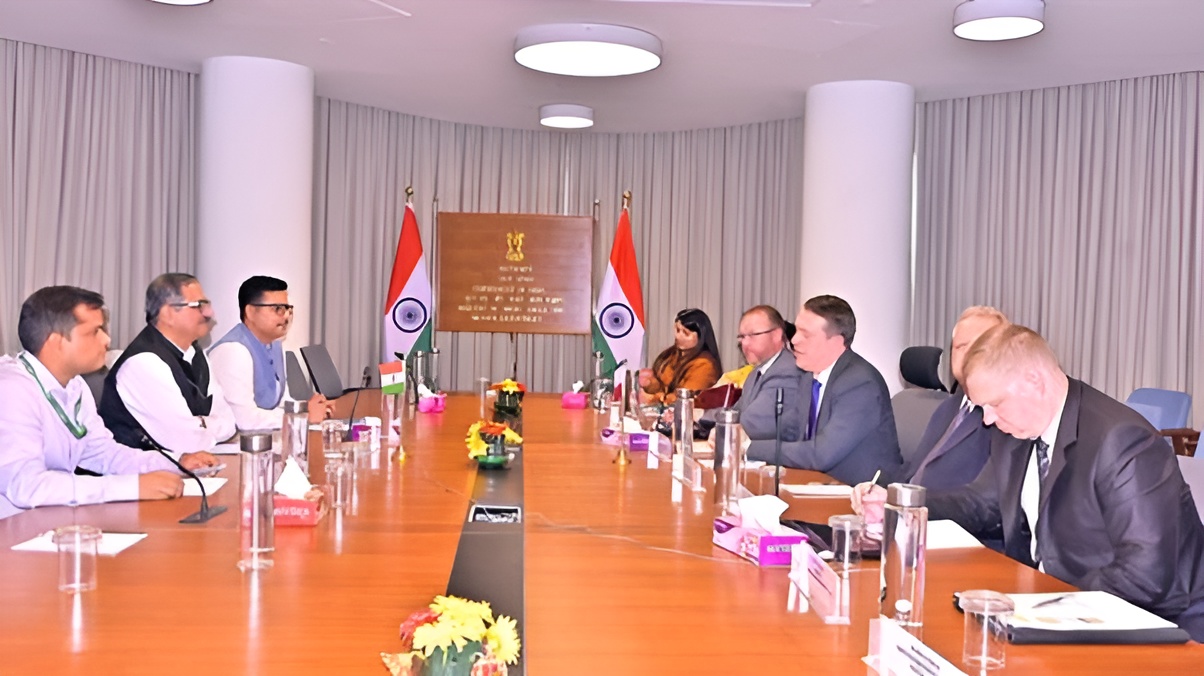
The 10th session of the India-Kenya Joint Trade Committee (JTC), held in Nairobi, reflects a partnership that is moving beyond conventional trade into a more structured, opportunity-driven economic relationship.
From Trade Volumes to Trade Depth
At first glance, the India-Kenya trade story appears straightforward: growing volumes, diversified sectors, and consistent engagement. But beneath the numbers lies a more important shift from transactional trade to ecosystem building.
India has long been a key supplier to Kenya, particularly in pharmaceuticals, machinery and refined petroleum products. Kenya, on the other hand, exports tea, horticultural products and raw materials to India. What is changing now is the intent to move beyond this traditional exchange and build deeper value chain linkages.
For SMEs, this transition matters. It creates space not just for exporting goods, but for participating in supply chains, partnerships and local market integration.
Standards, Customs and the Cost of Friction
One of the persistent challenges in cross-border SME trade is not demand it is friction.
Differences in product standards, delays in customs clearance and lack of information often discourage smaller businesses from entering international markets. The recent agreements between the Bureau of Indian Standards and the Kenya Bureau of Standards aim to address exactly this issue.
By aligning standards and conformity assessments, both countries are attempting to reduce uncertainty for exporters. Similarly, cooperation between the Central Board of Indirect Taxes and Customs and the Kenya Revenue Authority on pre-arrival customs information is designed to streamline clearance processes.
For SMEs, these may seem like administrative changes, but they directly impact time, cost and reliability three factors that determine whether a business can sustain cross-border trade.
Local Currency Trade: A Quiet Enabler
Another development that deserves attention is the growing discussion around local currency settlement.
With Kenyan banks opening Special Rupee Vostro Accounts (SRVAs) with Indian banks, there is a gradual move toward reducing dependence on third-party currencies for bilateral trade. While still at an early stage, this mechanism has the potential to simplify transactions, reduce currency risk and improve liquidity for businesses.
For SMEs operating with tight margins, even small reductions in transaction costs can make a meaningful difference. If implemented effectively, local currency settlement could lower entry barriers for smaller exporters and importers.
Sectoral Opportunities: Where SMEs Fit In
The India-Kenya corridor is not uniform it is sector-driven. And this is where SMEs find their strongest foothold.
In engineering and manufacturing, India is exploring expanded exports of automobiles, machinery and construction equipment. Participation in trade exhibitions and industry platforms in Kenya opens doors for smaller manufacturers to access new markets without establishing a full-scale presence.
Pharmaceuticals remain a cornerstone of the relationship. India’s strength in affordable generics aligns well with Kenya’s healthcare needs, creating opportunities not just for large firms but also for SME distributors, contract manufacturers and service providers.
Agriculture presents a more nuanced opportunity. While trade exists, it is often constrained by sanitary and phytosanitary regulations. Addressing these barriers could unlock greater participation for agri-based SMEs, particularly in processed and value-added segments.
In renewable energy, collaboration in solar and wind projects signals a future-facing dimension of the partnership. As Kenya continues to invest in clean energy, Indian SMEs in components, services and project support could find new avenues for engagement.
Digital and Financial Infrastructure: The Next Layer
Beyond physical trade, there is growing interest in digital collaboration.
Discussions around systems similar to India’s digital public infrastructure such as payment platforms and financial connectivity point to a longer-term vision of integrated economic engagement. While still evolving, such systems could make cross-border transactions more accessible, particularly for smaller businesses that lack sophisticated financial networks.
For SME communities, this represents a shift from traditional trade routes to digitally enabled commerce.
Capacity Building as a Strategic Lever
Trade relationships are often measured in volumes, but their sustainability depends on capability.
India’s offer of training programmes under initiatives like the Indian Technical and Economic Cooperation Programme reflects an understanding that skills, knowledge and institutional capacity are critical to long-term collaboration.
For Kenyan SMEs, access to technical training and sector-specific expertise can enhance competitiveness. For Indian businesses, it creates a more capable and reliable market ecosystem.
This two-way capacity building is often overlooked, but it plays a key role in strengthening trade corridors over time.
The Business-to-Business Bridge
While government agreements set the framework, it is business-to-business engagement that drives real outcomes.
Collaborations involving the Confederation of Indian Industry and the Kenya National Chamber of Commerce and Industry are creating platforms where companies especially SMEs can connect, explore partnerships and navigate market realities.
These interactions reduce information gaps, build trust and enable practical deal-making elements that formal agreements alone cannot achieve.
A Corridor Taking Shape
The India-Kenya trade relationship is not defined by scale alone. It is defined by direction.
What is emerging is a corridor that combines trade, standards alignment, financial integration, sectoral collaboration and capacity building. For SMEs, this is not just an export opportunity it is an entry point into a growing, interconnected economic space.
The real test will lie in execution. Agreements must translate into smoother processes, faster clearances and tangible business outcomes.
If that happens, the USD 4.31 billion milestone will not just represent growth. It will mark the beginning of a more inclusive and accessible trade ecosystem one where SMEs are not peripheral participants, but central players in the India-Kenya growth story.