




New Zealand — Small Market, Big Thinking: How Kiwi SMEs Go Global Early

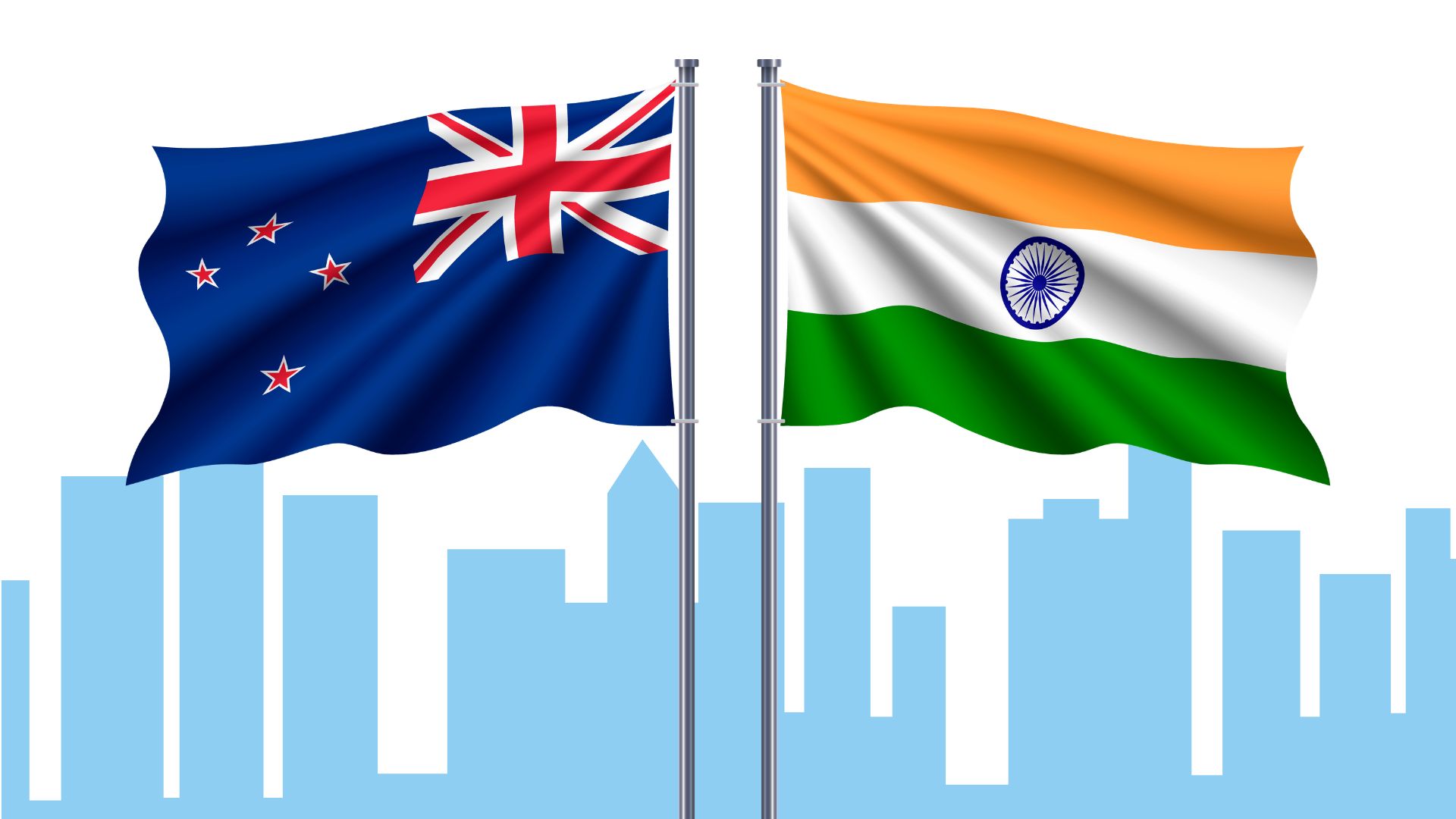
New Zealand’s economy presents an interesting paradox. It is geographically distant from most major markets, relatively small in domestic consumption scale and structurally dependent on global trade flows. Yet despite these limitations, the country has consistently produced internationally competitive SMEs across sectors ranging from agritech and food processing to software, advanced manufacturing, healthcare innovation, and sustainable products.
For Indian observers, the immediate temptation may be to dismiss New Zealand’s SME ecosystem as too small or too different for meaningful comparison. That would be a mistake.
What makes New Zealand particularly relevant is not the scale of its economy, but the mindset its SMEs are forced to adopt from inception. Unlike businesses in large domestic markets that can survive for years focusing almost entirely inward, New Zealand’s smaller enterprises often think internationally far earlier in their growth journey. Global orientation is not viewed as expansion. In many cases, it is viewed as necessity.
That distinction creates a fundamentally different entrepreneurial culture.
The Domestic Market Is Seen as a Launchpad, Not a Destination
One of the defining characteristics of Kiwi SMEs is their acceptance of market limitations at home. With a population of roughly five million, businesses quickly recognize that long-term scaling cannot rely solely on domestic demand.
As a result, many New Zealand SMEs are designed with exportability in mind from relatively early stages. Product quality, compliance standards, branding, logistics planning and international positioning often receive attention much earlier than one might expect from smaller companies.
This creates a subtle but important strategic discipline.
Businesses do not simply ask whether a product works locally. They ask whether it can compete internationally. That mindset influences packaging standards, operational consistency, sustainability positioning and digital readiness from the beginning.
Indian SMEs, particularly in sectors such as food processing, specialty manufacturing, SaaS, engineering services and sustainable consumer products, may find an important lesson here. Global ambition does not necessarily require massive scale at the outset. It often requires early alignment with international expectations.
Niche Specialisation Over Scale Obsession
Another striking feature of New Zealand’s SME ecosystem is its comfort with niche positioning.
Rather than attempting to dominate broad mass-market categories, many Kiwi SMEs focus on highly specialized segments where expertise, quality, and innovation matter more than volume alone. This has enabled smaller companies to compete globally despite limited domestic scale advantages.
Agritech firms developing precision farming solutions, premium dairy exporters focusing on traceability, sustainable packaging innovators, marine technology specialists and healthcare technology startups all reflect a broader pattern: specialization as a strategic advantage.
This differs meaningfully from the growth narrative often seen across emerging markets, where scale itself is frequently treated as the primary measure of success.
New Zealand’s experience suggests that smaller businesses can build durable global relevance through clarity of positioning rather than sheer size. In an increasingly fragmented global economy, niche capability may sometimes travel better than generalized scale.
For Indian SMEs operating in highly competitive domestic environments, this lesson carries particular relevance. Attempting to compete purely on cost or volume can become structurally difficult over time. Deep expertise in specific sectors or problem areas may create more sustainable differentiation internationally.
Trust, Quality and Country Reputation Matter
New Zealand also benefits from a strong global perception around quality, transparency, sustainability and regulatory credibility. While national branding alone does not guarantee business success, it significantly influences trust formation in international markets.
Kiwi SMEs often leverage this perception effectively.
Products are frequently positioned around authenticity, traceability, environmental responsibility and reliability. Whether in food exports, wellness products, technology solutions, or advanced manufacturing, reputation becomes an economic asset.
The broader insight for Indian SMEs is not necessarily about replicating New Zealand’s branding narrative directly, but about recognizing the growing importance of trust capital in global trade.
International buyers increasingly scrutinize supply chain transparency, product consistency, sustainability practices, and governance standards. Competitive advantage is gradually shifting beyond pricing alone.
India’s SME ecosystem already possesses enormous manufacturing depth and entrepreneurial energy. The next evolution may depend on how strongly businesses integrate quality assurance, credibility and long-term brand trust into export strategies.
Ecosystem Collaboration Is More Visible
New Zealand’s SME environment also demonstrates a relatively collaborative institutional ecosystem. Industry associations, export agencies, universities, innovation networks and government-linked trade support structures often work in closer alignment than businesses in larger economies might expect.
This reduces friction for smaller enterprises attempting international expansion.
Export readiness programmes, market-entry guidance, innovation grants and trade facilitation mechanisms help SMEs navigate global markets with greater confidence. More importantly, there appears to be cultural acceptance that SME internationalisation is a national economic priority rather than merely an individual business ambition.
For India, where SME potential remains enormous but fragmented, this offers an important policy and ecosystem insight. Scaling SME competitiveness may require stronger integration between industry bodies, financial institutions, export networks, technology ecosystems and policy frameworks.
The challenge is not entrepreneurial capability. India possesses that abundantly. The challenge is reducing the structural friction that slows SME globalisation.
Thinking Beyond Size
New Zealand ultimately offers an important reminder that economic influence is not always proportional to market size.
Its SMEs operate with an outward-facing mindset shaped by necessity, specialization, quality orientation and early global ambition. They do not wait to become large before thinking internationally. In many cases, international thinking is what allows them to become sustainable in the first place.
For Indian SMEs, particularly those entering an increasingly competitive and interconnected global economy, the lesson may be straightforward but significant.
The future may not belong only to the biggest businesses.
It may increasingly belong to those capable of thinking beyond the boundaries of their domestic market early enough, intelligently enough and consistently enough.