


Beyond Factory Floors: Why PwC Says India’s Next Manufacturing Revolution Will Be Won Through Intelligence, Not Scale
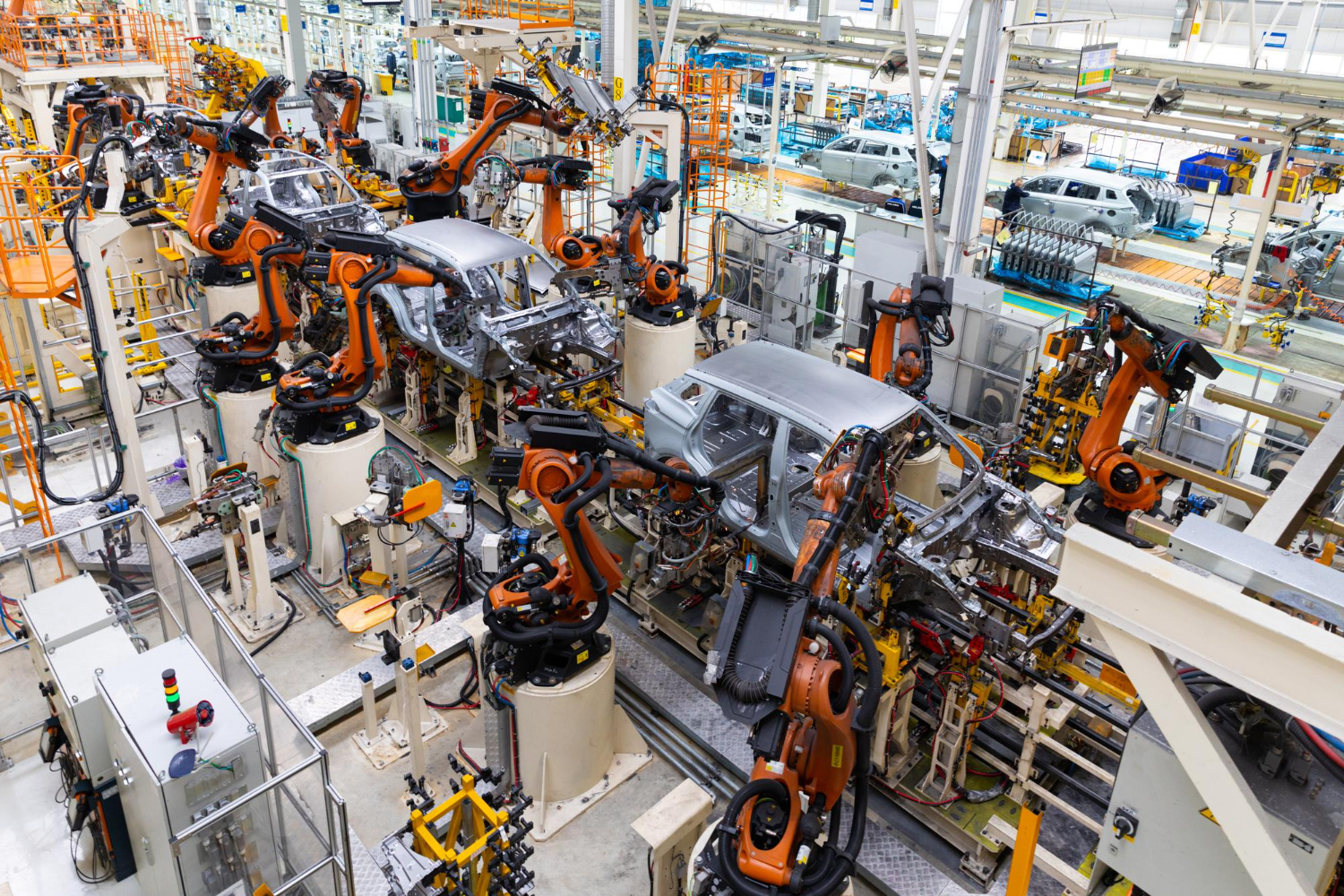
The most common metrics for measuring manufacturing competitiveness are production capacity, labour availability, capital investment and export volumes. Companies expanded factories, installed new machinery and optimised production lines to improve efficiency. Industrial success largely depended on building more and producing faster.
According to PwC’s latest report, Rewriting the Rules: The Next Chapter of Indian Industrial Manufacturing, the next phase of India’s industrial growth will not be determined by who owns the biggest factories or produces the largest volumes. Instead, competitive advantage is increasingly shifting towards companies that can integrate artificial intelligence, digital engineering, intelligent decision-making, workforce capabilities and ecosystem partnerships into a single operating model.
This represents a fundamental shift in manufacturing strategy. Technology is no longer viewed as an operational support function. It is becoming the core architecture through which industrial enterprises create value, improve resilience and compete globally.
Manufacturing Is Moving Beyond Physical Assets
India’s manufacturing ambitions have expanded considerably over the past decade. Initiatives such as Make in India, Production Linked Incentive (PLI) schemes, semiconductor investments and industrial corridor development have strengthened the country’s manufacturing base. Yet the PwC report argues that the next competitive leap will depend less on physical infrastructure and more on organisational intelligence.
The report identifies an emerging divide between companies that merely digitise individual processes and those that redesign their entire business around integrated digital capabilities. Future-ready manufacturers are increasingly building what PwC describes as an “intelligent core” a unified architecture combining enterprise data, AI, analytics and real-time decision systems that embeds intelligence into everyday workflows rather than limiting it to executive dashboards.
This shift enables businesses to anticipate disruptions, respond faster to changing market conditions and make higher-quality operational decisions across procurement, production, logistics and customer engagement.
Artificial Intelligence Is Becoming Manufacturing’s Strategic Engine
One of the report’s strongest findings is the growing strategic importance of Artificial Intelligence within industrial manufacturing. PwC’s survey found that 59% of Indian manufacturing executives identify AI as the technology most likely to drive their strategic priorities over the next five years. This places AI ahead of automation (49%), sustainable technologies (47%), Industrial Internet of Things (27%) and robotics (25%).
This ranking reflects a significant evolution in manufacturing priorities. Earlier waves of industrial automation focused primarily on improving production efficiency. AI, however, extends much further by enabling predictive maintenance, demand forecasting, intelligent scheduling, quality analytics and faster business decision-making.
Rather than replacing traditional manufacturing processes, AI is becoming the intelligence layer connecting design, production, supply chains and customer service into a continuous feedback loop.
Digital Engineering Is Creating New Revenue Models
The report also highlights a broader transformation in how manufacturers generate value. Traditionally, industrial companies earned revenue primarily through equipment sales. Increasingly, value is shifting towards lifecycle services supported by digital technologies.
PwC illustrates this through the example of an Indian engineering company that transformed pumps and motors into AI-enabled connected assets. By integrating Industrial Internet of Things (IIoT) platforms, machine learning and predictive analytics, the company moved beyond selling machinery to offering continuous remote monitoring, predictive maintenance and performance optimisation as subscription-based services.
The strategic implication is significant. Manufacturing competitiveness is no longer defined solely by product quality but by the ability to generate recurring value throughout the product’s operational life.
For Indian manufacturers, this represents an opportunity to diversify revenues while strengthening long-term customer relationships.
The Future Belongs to Manufacturing Ecosystems
Another recurring theme throughout the report is collaboration. PwC argues that no single manufacturer can capture emerging industrial opportunities independently. Innovation increasingly depends upon partnerships across engineering companies, automation providers, software developers, logistics firms, telecommunications operators and energy providers.
One case study describes how an automotive manufacturer collaborated with a telecommunications provider and an engineering technology company to deploy a private 5G network within its manufacturing facility. The result was faster software deployment across vehicles, simultaneous programming of onboard systems, AI-powered visual quality inspection and improved production efficiency.
Such examples reinforce an important message: manufacturing competitiveness is increasingly becoming ecosystem competitiveness.
For India’s vast network of MSMEs, engineering suppliers, industrial software firms and technology startups, this creates substantial opportunities to participate in larger manufacturing value chains.
Workforce Reinvention Is Becoming a Strategic Capability
Technology alone will not determine manufacturing success. The report repeatedly emphasises that workforce transformation must progress alongside technological investment.
PwC highlights examples of industrial companies redesigning traditional factory environments around Industry 5.0 principles, integrating role-based upskilling, digital literacy, employee wellbeing and sustainability directly into daily operations. Continuous learning is no longer treated as an HR initiative but as a core operating capability supporting digital transformation.
The report concludes that workforce reinvention is not an outcome of industrial transformation it is a prerequisite for achieving it.
This has particular relevance for India, where manufacturing expansion will increasingly require digitally skilled technicians, engineers and operational leaders capable of working alongside AI-enabled production systems.
Manufacturing Strategy Is Becoming Execution Strategy
While discussing India’s broader industrial outlook, PwC notes that the country’s Index of Industrial Production slowed to 4.1% in March 2026 before recovering to 5.1% in May 2026, reflecting the increasingly volatile operating environment facing manufacturers.
Against this backdrop, the report argues that sustainable competitiveness will depend upon reducing the gap between strategic ambition and operational execution. Businesses must integrate people, technology, processes and decision-making into a unified operating model capable of responding quickly to market disruptions.
In other words, manufacturing resilience is no longer built through production capacity alone it is built through organisational agility.
What This Means for Indian MSMEs
The report’s findings are particularly relevant for India’s MSME ecosystem, which forms the backbone of the country’s industrial supply chains.
Rather than viewing digital transformation as an expensive technology project, MSMEs should increasingly see it as a means of strengthening competitiveness. Investments in AI-enabled quality control, digital engineering, predictive maintenance, cloud-based manufacturing systems and workforce capability development can help smaller manufacturers integrate more effectively into global supply chains.
Equally important is collaboration. As larger manufacturers adopt ecosystem-based business models, MSMEs that position themselves as specialised technology partners, component suppliers or digital solution providers are likely to benefit from expanding industrial partnerships.
The next manufacturing opportunity may therefore lie not in building larger factories, but in becoming indispensable participants within connected industrial ecosystems.
PwC’s report makes one point unmistakably clear: India’s next manufacturing revolution will not be driven by machinery alone. It will be shaped by how effectively businesses combine technology, people, data, engineering and partnerships into integrated operating models.
The manufacturers that thrive over the coming decade are unlikely to be those producing the highest volumes. They will be those capable of making faster decisions, developing smarter products, building stronger ecosystems and continuously reinventing both their workforce and their business models.
In that sense, India’s manufacturing story is entering a new chapter one where competitive advantage is increasingly measured not by the size of the factory floor, but by the intelligence embedded within it.