



India Makes the Phones. Can It Now Capture More of the Value?
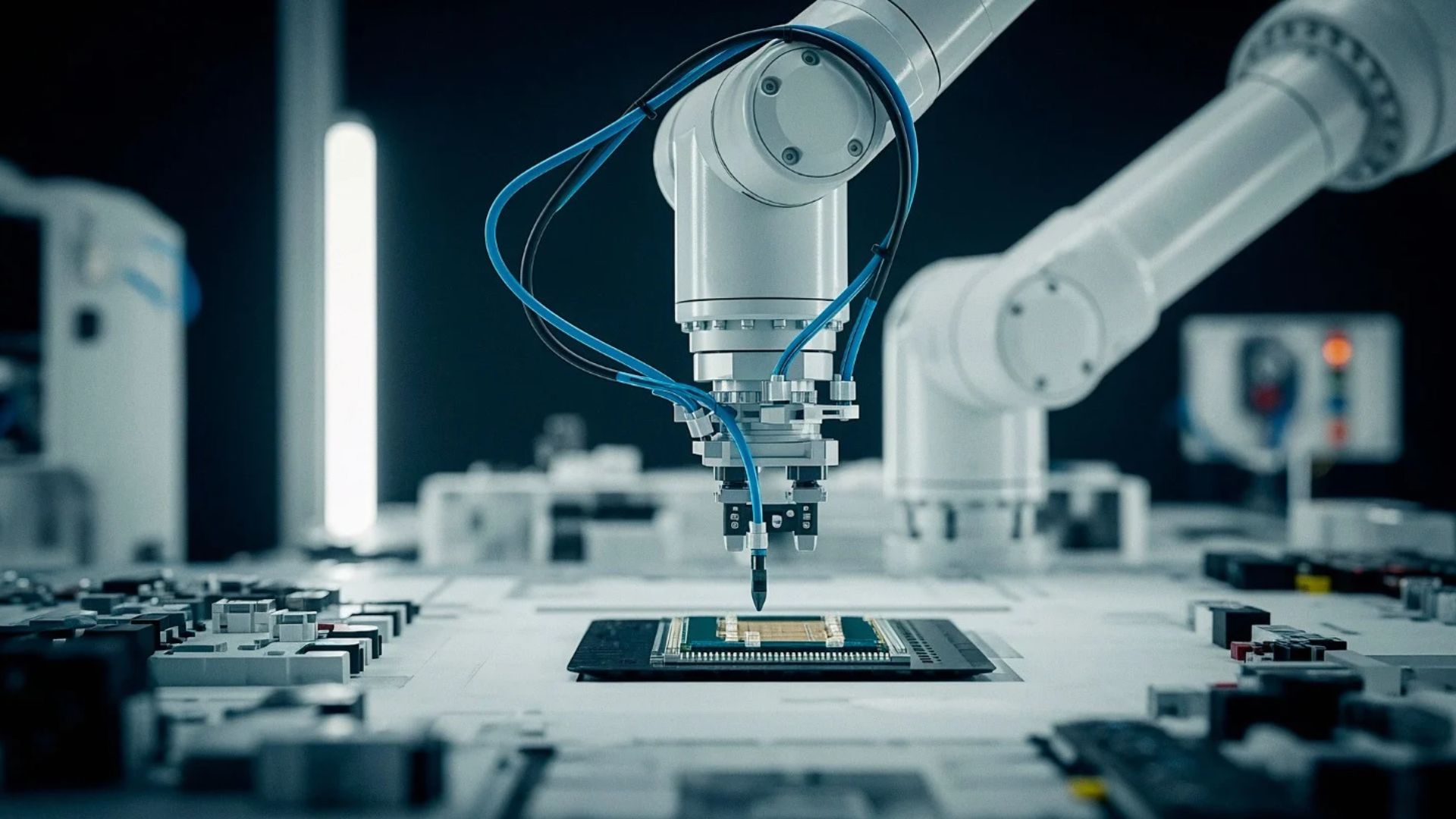
India’s mobile-phone manufacturing story has come a long way in a relatively short period. A decade ago, India depended heavily on imported handsets. Today, almost all mobile phones sold in the country are manufactured domestically and India has become the world’s second-largest mobile-phone manufacturing base by volume. Smartphones have also emerged as India’s largest individual export category.
That is a manufacturing success worth recognising. But there is another side to the story.
Making the phone is not the same as owning the value created by the phone. A smartphone assembled in India can still contain components, technologies, intellectual property and designs developed elsewhere. The factory may be in India, but a significant share of the economic value can sit elsewhere in the supply chain.
That is the gap the governments newly notified ₹62,500-crore Mobile Phone Manufacturing Scheme (MPMS) is trying to address. The five-year scheme, covering FY2026-27 to FY2030-31, goes beyond simply encouraging more handset production. It aims to increase domestic value addition, strengthen the component ecosystem and support Indian-owned brands, design, R&D and intellectual property.
The government’s own expectation is ambitious: cumulative mobile-phone production of around ₹39 lakh crore during the scheme period and approximately 60,000 direct jobs. But production numbers alone will not determine whether MPMS succeeds.
The more important question is whether India can move from being a large manufacturing location to a deeper manufacturing ecosystem.
India has already won the scale battle
The first phase of India’s electronics manufacturing push was largely about establishing scale. The Production Linked Incentive scheme for Large Scale Electronics Manufacturing helped attract investment from major manufacturers and EMS companies, expand production capacity and turn India into a significant export base.
According to government data, the PLI-LSEM scheme exceeded its production and export targets, while direct employment reached 1.85 lakh. Electronics manufacturing itself has expanded sharply over the past decade.
So, there is a reasonable case that the first phase of the policy worked. But scale brings its own question.
What happens when a country becomes very good at assembling a product but still depends heavily on other countries for many of the components and technologies that make that product valuable?
That is where the next phase becomes more complicated. The government’s latest figures put domestic value addition in India’s electronics manufacturing ecosystem at around 18-20%.
In other words, India has made considerable progress in producing the finished product. The larger opportunity now lies in capturing more of the value behind it.
The next battle is inside the phone
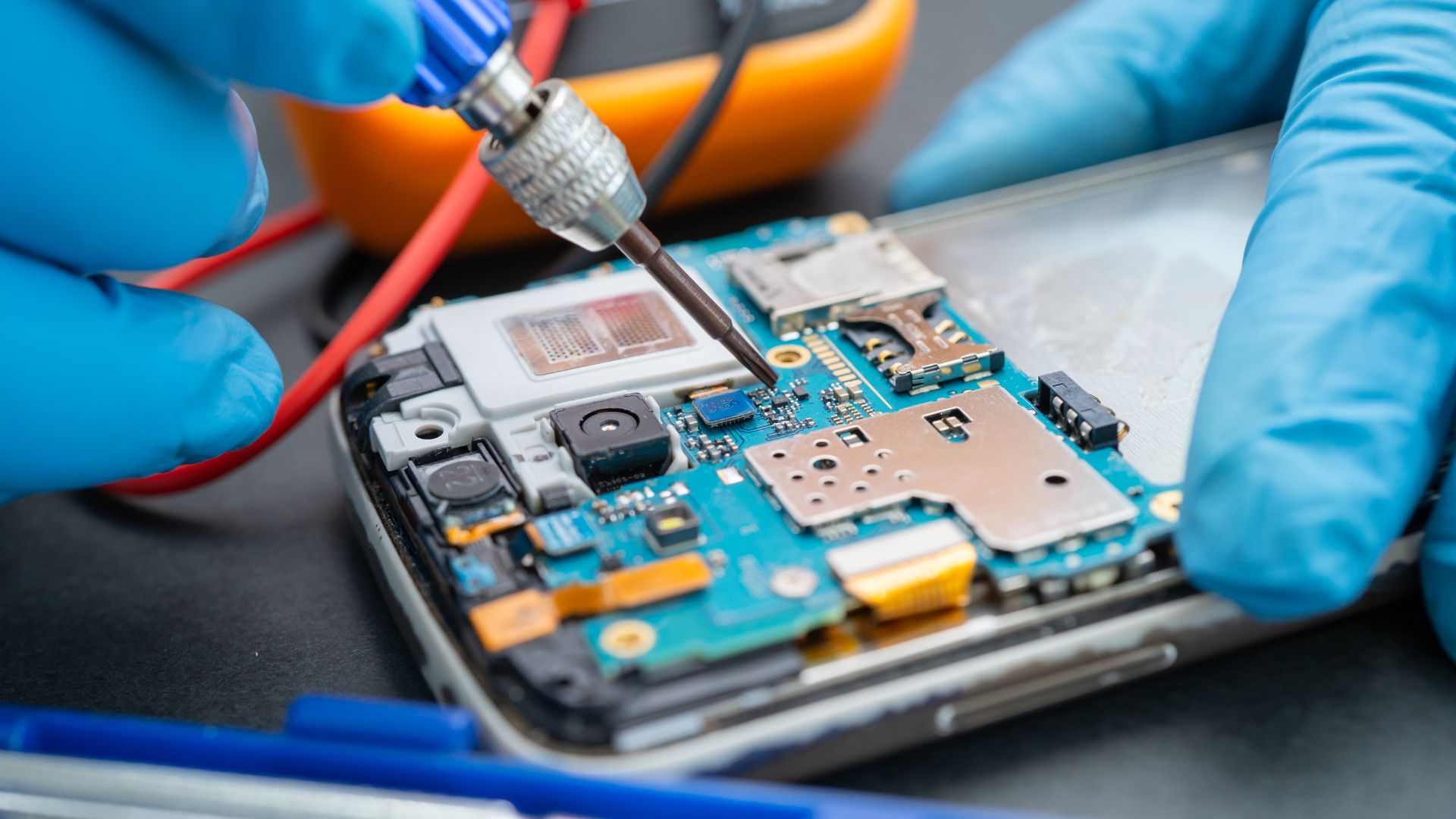
Look closely at a modern smartphone and the manufacturing challenge becomes clearer. There is much more to the product than the final assembly line.
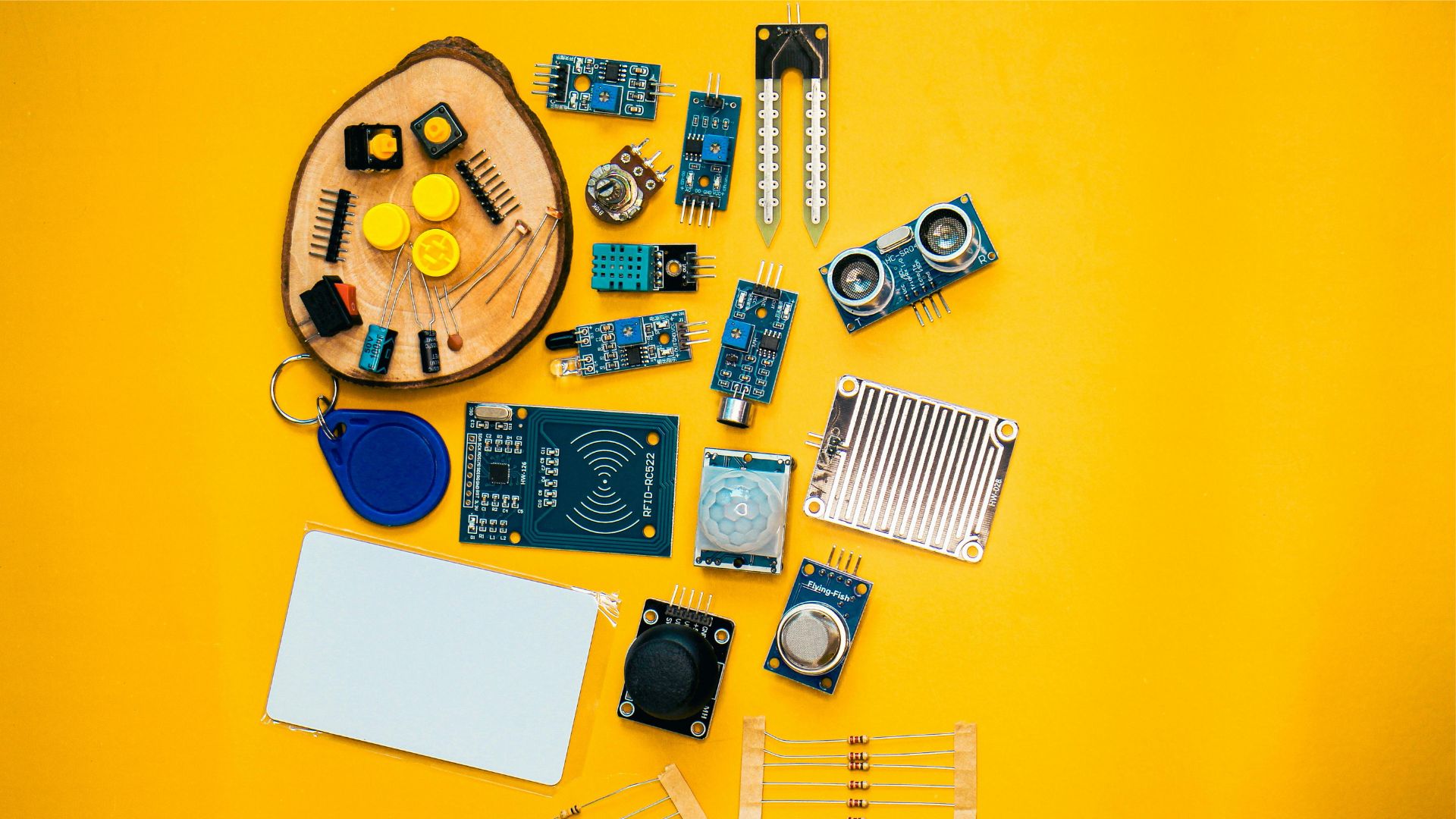
Displays, camera modules, memory, sensors, batteries, printed circuit boards, connectors, specialised materials and other sub-assemblies all form part of a much larger ecosystem. India has made progress in several of these areas, but it is still developing the depth and scale of the domestic supply chain.
This is why the government’s Electronics Component Manufacturing Scheme (ECMS) is an important part of the larger picture.
Recent approvals under ECMS have brought the total number of approved projects to 106, with proposed investment of more than ₹69,000 crore across 15 states. The projects cover areas such as camera and display modules, connectors, enclosures, materials, speakers, microphones, antennas and manufacturing equipment. The significance goes beyond the individual projects.
A country cannot build a globally competitive electronics industry around final assembly alone. It needs the companies that supply the factory. And building those companies takes time.
Localisation is desirable
On paper, increasing domestic value addition sounds straightforward. If a component can be made in India rather than imported, the country gains manufacturing activity, employment and potentially greater control over its supply chain. The commercial reality, however, is more demanding.
A domestic supplier must be able to compete on price, quality, consistency, technology, scale and delivery timelines. This is where India’s competition with established manufacturing ecosystems becomes particularly important.
China’s electronics strength, for instance, is not simply a consequence of lower manufacturing costs. It has built an enormous network of component suppliers, tooling companies, logistics providers, engineers and specialised manufacturers over several decades.
India is trying to build similar depth while simultaneously competing for global production. That means localisation cannot become an objective in isolation, the real objective has to be competitive localisation.
If a locally manufactured component costs considerably more or cannot meet the required quality and volume, an OEM will naturally be reluctant to replace an established global supplier simply because the component is domestic.
This is one of the realities that will determine how effective the next phase of India’s electronics policy becomes.
MPMS is trying to close that gap
The Mobile Phone Manufacturing Scheme attempts to give manufacturers another reason to develop domestic suppliers.
It provides an additional incentive of up to 1.5% for domestic sourcing of specified key components and sub-assemblies, subject to localisation conditions. The principle is simple.
If a manufacturer can receive additional support for sourcing components from within India, the economics of developing local suppliers become more attractive.
But the real test will come when the incentives meet the realities of the market: Can suppliers maintain consistent quality, scale production as demand grows, meet the stringent requirements of global smartphone manufacturers and remain commercially competitive when government support is no longer the deciding factor?
These are difficult questions, but they are important ones. Policy support can help create the first commercial opportunity. It is sustained competitiveness that turns that opportunity into an industry.
Where do SMEs fit into the picture?
This is perhaps one of the more interesting questions surrounding MPMS. The biggest manufacturers will naturally receive much of the attention because they operate at the scale required by the scheme.
For Target Segment 1 (TS1), companies including EMS manufacturers need a minimum turnover of ₹10,000 crore in FY2025-26. The Indian-brand segment (TS2) has a lower ₹1,000 crore threshold, along with requirements concerning Indian ownership, management control, IP, trademarks and domestic R&D and design. There is a clear rationale behind these thresholds. The government is looking for companies capable of investing heavily, manufacturing at scale and competing in international markets. But India’s supply chain is not made up only of companies of that size.
A specialised component manufacturer, tooling company, precision engineering firm or electronics supplier could be strategically important to a large OEM while having a turnover far below the scheme’s eligibility threshold.
That means many SMEs are unlikely to participate as direct beneficiaries. Their opportunity could instead come through the supply chain created by the beneficiaries.
And that may be where MPMS becomes particularly relevant for Indian SMEs. A large manufacturer sourcing locally can create opportunities for dozens or potentially hundreds of smaller companies supplying components, packaging, tooling, testing, logistics, automation and other services.
But there is a catch. Those SMEs will have to meet the standards of the customers they want to supply. That means investment in technology, certification, quality control, skilled people, working capital and production capacity.
For a smaller manufacturer, getting onto the approved supplier list may be the beginning of the journey rather than the end.
India needs more companies in the middle
One of the less visible requirements of a mature electronics ecosystem is a strong layer of mid-sized suppliers. India has large companies capable of investing thousands of crores. It also has a vast base of smaller enterprises.
What is often missing is the group in between companies that have moved beyond being small local vendors but have not yet developed the scale, technology or financial strength to become global suppliers. This is where the next opportunity could lie.
Companies involved in precision components, moulding, tooling, electronics assembly, testing, automation, specialised materials and other manufacturing services could potentially move up the value chain as domestic electronics production expands.
The recent ECMS approvals suggest that investment is beginning to move into several of these areas. But announcements and investments are only the first step.
The more meaningful test will be whether these companies eventually develop repeat customers, export capabilities, proprietary technology and the scale to compete without permanent policy support.
Then comes the bigger ambition: Indian brands
There is another part of MPMS that deserves attention. The scheme is not only trying to strengthen India’s manufacturing base. It is also trying to encourage Indian-owned mobile-phone brands.
For qualifying Indian brands, MPMS provides a 5% incentive, with an additional 3% for Indian design and R&D. The scheme also requires Indian ownership, domestic IP and trademark ownership, Indian management control and in-house design and R&D capabilities. This is a much harder ambition. India has already demonstrated that it can manufacture products for global brands, building a global brand of its own is an entirely different challenge.
A smartphone company needs much more than manufacturing capacity. It needs compelling product design, software capabilities, intellectual property, distribution, after-sales support and, perhaps most difficult of all, consumer trust. Government support can give an emerging brand additional resource to invest in these areas.
But it cannot guarantee market acceptance, consumers ultimately decide whether a product has earned a place in their hands.
The IP question could be the most important one
The government’s emphasis on Indian ownership of brands, intellectual property, design and R&D is significant. It suggests that the policy objective is gradually moving beyond “Made in India” towards something closer to “Designed, developed, owned and made in India.” That is a much more ambitious proposition.
A phone can be manufactured domestically without India controlling the underlying technology. True technological capability requires stronger domestic participation in areas such as product engineering, software, patents, component technology and design.
That is difficult to build, and it cannot be achieved through incentives alone. It requires universities, skilled engineers, research institutions, private-sector R&D, patient capital and companies willing to invest for the long term.
This is where MPMS will need to work alongside India’s broader electronics and semiconductor policies rather than operate as a standalone manufacturing incentive.
How should MPMS really be judged?
The success of MPMS should not be measured by production numbers alone. Over the next five years, the more meaningful indicators will be whether domestic value addition rises, Indian component suppliers scale into global supply chains, SMEs move up the manufacturing ladder and more technology, design and intellectual property are developed and owned in India.
Ultimately, the strongest measure of success will be whether companies become competitive enough to sustain growth beyond government incentives. Industrial policy can provide the initial push; long-term competitiveness has to come from the industry itself.
The next phase will be harder and more valuable
India has already demonstrated that it can manufacture smartphones at scale. The next challenge is to build the deeper ecosystem behind that success components, suppliers, engineering, design, R&D, intellectual property and Indian-owned brands.
For SMEs, this could be where the real opportunity lies. They may not be direct beneficiaries of MPMS, but greater domestic sourcing by large manufacturers could open new markets for Indian suppliers and help them move into higher-value segments.
India has learned to make the phone. The next challenge is to make more of what is inside it and capture more of the value that comes with it.