



The New Trade Order: Why India’s SMES Must Think Global from Day One
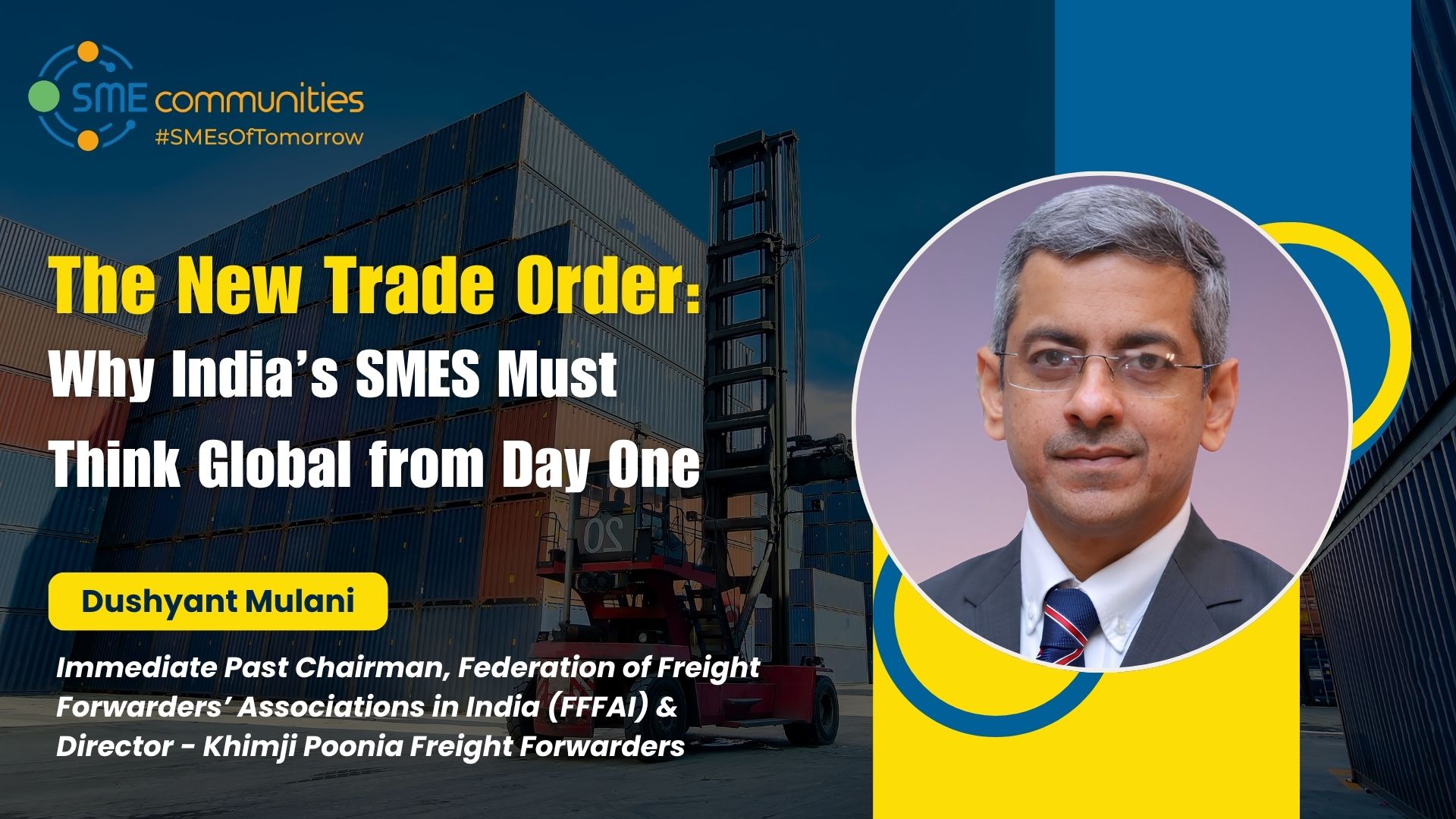
Exclusive Interview with Dushyant Mulani
Immediate Past Chairman, Federation of Freight Forwarders’ Associations in India (FFFAI) & Director – Khimji Poonia Freight Forwarders
As global trade undergoes one of its most significant realignments in decades, the rules of international commerce are being rewritten. Geopolitical shifts, supply-chain diversification, digitalisation and the search for resilient sourcing destinations are creating new opportunities for emerging manufacturing economies. For India, this moment extends beyond higher export volumes, it is an opportunity to redefine its position within global value chains.
At the heart of this transformation are India’s micro, small and medium enterprises (MSMEs), which contribute significantly to the country’s manufacturing output, exports and employment. Yet translating this potential into sustained global competitiveness will require far more than cost advantages. Quality, compliance, logistics efficiency, technology adoption and long-term customer trust are increasingly becoming the defining differentiators in international trade.
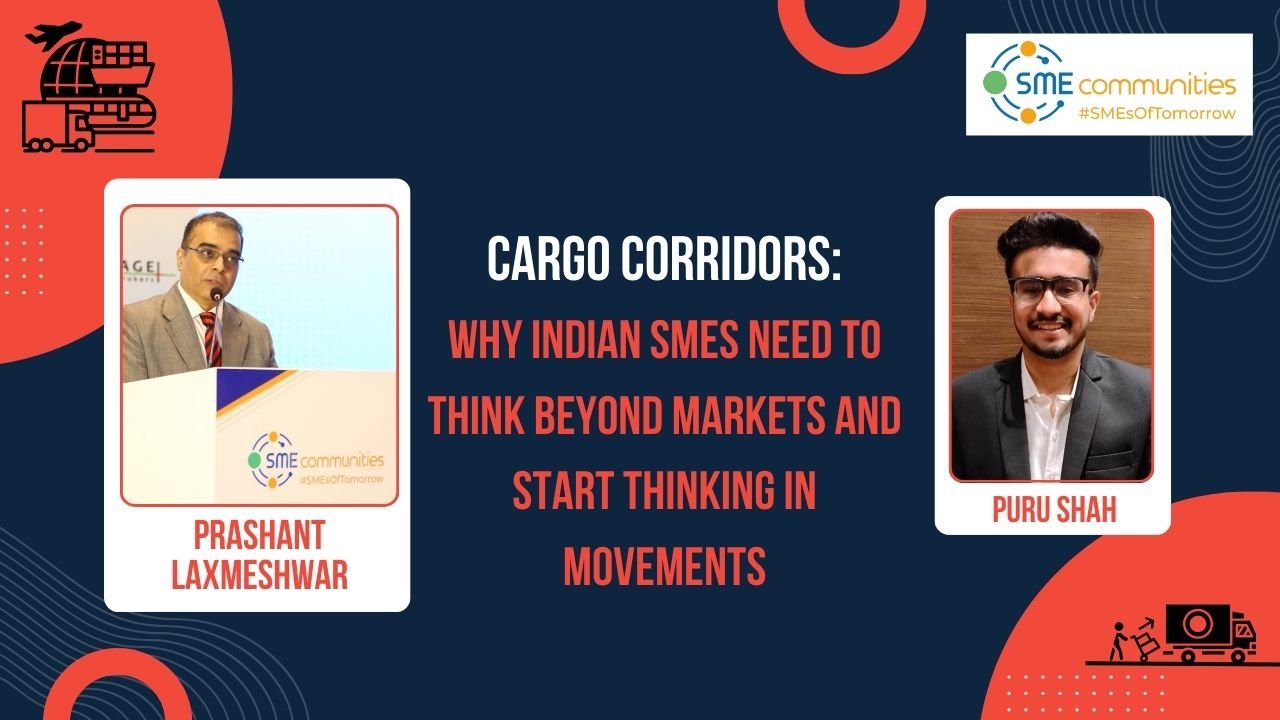
Few professionals have witnessed this evolution as closely as Dushyant Mulani, Immediate Past Chairman of the Federation of Freight Forwarders’ Associations in India (FFFAI) and Director at Khimji Poonja Freight Forwarders. Drawing on decades of experience across India’s logistics and export ecosystem, in his exclusive interview with Prashant Laxmeshwar, Founder at SME Communities, he shares his perspectives on how MSMEs can seize this pivotal moment, why logistics has emerged as a strategic business enabler, and what Indian enterprises must do to become trusted participants in tomorrow’s global supply chains.
The global trading landscape is undergoing one of its biggest transformations in decades, driven by geopolitics, supply-chain diversification and the China+1 strategy. Do you believe this presents India’s MSMEs with a once-in-a-generation opportunity, and what must businesses do today to become trusted partners in tomorrow’s global supply chains?
I firmly believe we are witnessing a defining moment for Indian MSMEs. Global businesses are no longer looking only for the lowest-cost supplier, they are looking for resilient, reliable and diversified supply chains.
India has the manufacturing capability, entrepreneurial spirit and policy momentum to emerge as a preferred sourcing destination. However, opportunity alone is not enough.
Our MSMEs must invest in quality, compliance, technology, sustainability and delivery excellence. They must think globally from the outset rather than treating exports as an extension of domestic business. The future will belong not to the cheapest exporter, but to the most dependable one.
Logistics was once viewed as a support function. Today, it is increasingly becoming a strategic differentiator. How can Indian MSMEs leverage modern logistics, digital trade facilitation and integrated supply chains not merely to reduce costs, but to strengthen their competitiveness in global markets?
Logistics today is about much more than moving cargo from one point to another.
It directly influences inventory efficiency, customer satisfaction, working capital and business agility.
With initiatives such as PM Gati Shakti, the National Logistics Policy and customs digitisation, India is creating an ecosystem where logistics can become a competitive advantage rather than a cost centre.
MSMEs that embrace digital documentation, shipment visibility and professional supply-chain planning will be better positioned to compete internationally.
Efficient logistics is no longer operational excellence; it is strategic excellence.
India has millions of MSMEs, yet only a relatively small proportion have built a sustained presence in international markets. From your decades of engagement with exporters, what are the biggest strategic blind spots that continue to prevent promising businesses from becoming successful global enterprises?
In my view, the biggest challenge is not manufacturing capability, it is preparedness.
Many MSMEs underestimate the importance of international standards, regulatory compliance, documentation discipline and long-term customer relationships.
Successful exporters build trust over years.
Another important aspect is professional guidance. Businesses should engage logistics experts, customs brokers and trade professionals much earlier in their export journey rather than at the final shipping stage.
Export success is a long-term strategic commitment, not a one-time transaction.
Wearing your hat as a Director at Khimji Poonja Freight Forwarders, you engage with exporters and importers on a daily basis. How have the expectations of Indian MSMEs evolved over the past decade, and what capabilities do you believe businesses must now develop to remain globally competitive in an increasingly digital and uncertain trading environment?
The expectations of MSMEs have changed dramatically.
A decade ago, the conversation was largely around customs clearance and freight costs. Today, businesses expect integrated logistics solutions that provide visibility, speed, compliance and strategic advice.
Global buyers also expect far greater transparency, sustainability and supply-chain resilience than ever before.
From my experience, the MSMEs that consistently succeed are those that invest in digitalisation, understand international compliance requirements and view logistics partners as strategic advisors rather than service providers.
The future belongs to businesses that build resilient supply chains rather than simply efficient ones.
As someone who has represented India’s logistics and trade ecosystem through periods of rapid change, what advice would you offer to the next generation of MSME entrepreneurs aspiring to build globally competitive businesses over the coming decade? What mindset will distinguish tomorrow’s winners?
My advice is simple: think globally from day one.
Do not define your business by geography.
Invest consistently in people, technology, compliance and relationships.
Global trade will continue to evolve because of technology, sustainability expectations and geopolitical shifts.
Businesses that remain agile, continuously learn and embrace change will always have an advantage over those that rely solely on scale.
India has set itself the ambitious goal of becoming a developed economy by 2047. In your view, what role will MSMEs play in achieving that vision, and what should government, industry and entrepreneurs collectively prioritise over the next two decades to transform India into a truly global manufacturing and export powerhouse?
India cannot become a developed economy without globally competitive MSMEs.
They are the country’s largest source of entrepreneurship, employment, innovation and economic resilience.
The next twenty years should focus on creating an ecosystem where MSMEs have access to world-class infrastructure, simplified regulations, digital trade capabilities, skilled talent and global market opportunities.
Government, industry associations and businesses each have a shared responsibility in this journey.
If we get this right, Indian MSMEs will not merely participate in global trade—they will shape its future and become one of the strongest pillars of Viksit Bharat 2047.
The SME Communities Perspective
Throughout this conversation, Dushyant Mulani presents a consistent message: India’s opportunity in global trade will not be determined by favourable geopolitical circumstances alone, but by the preparedness of its enterprises to compete on reliability, resilience and trust.
His observations underscore a broader reality confronting Indian MSMEs. In an increasingly interconnected world, export success demands a strategic commitment to quality, compliance, digital capabilities and integrated supply chains rather than a narrow focus on price competitiveness. Equally important is the willingness to embrace professional expertise and build enduring partnerships across the trade ecosystem.
As India advances towards its Viksit Bharat 2047 aspirations, globally competitive MSMEs will be central to that journey. Businesses that invest today in capability, agility and long-term competitiveness will be best placed not only to participate in global trade, but to help shape its future.