



Gujarat’s next manufacturing advantage will be built inside the factory
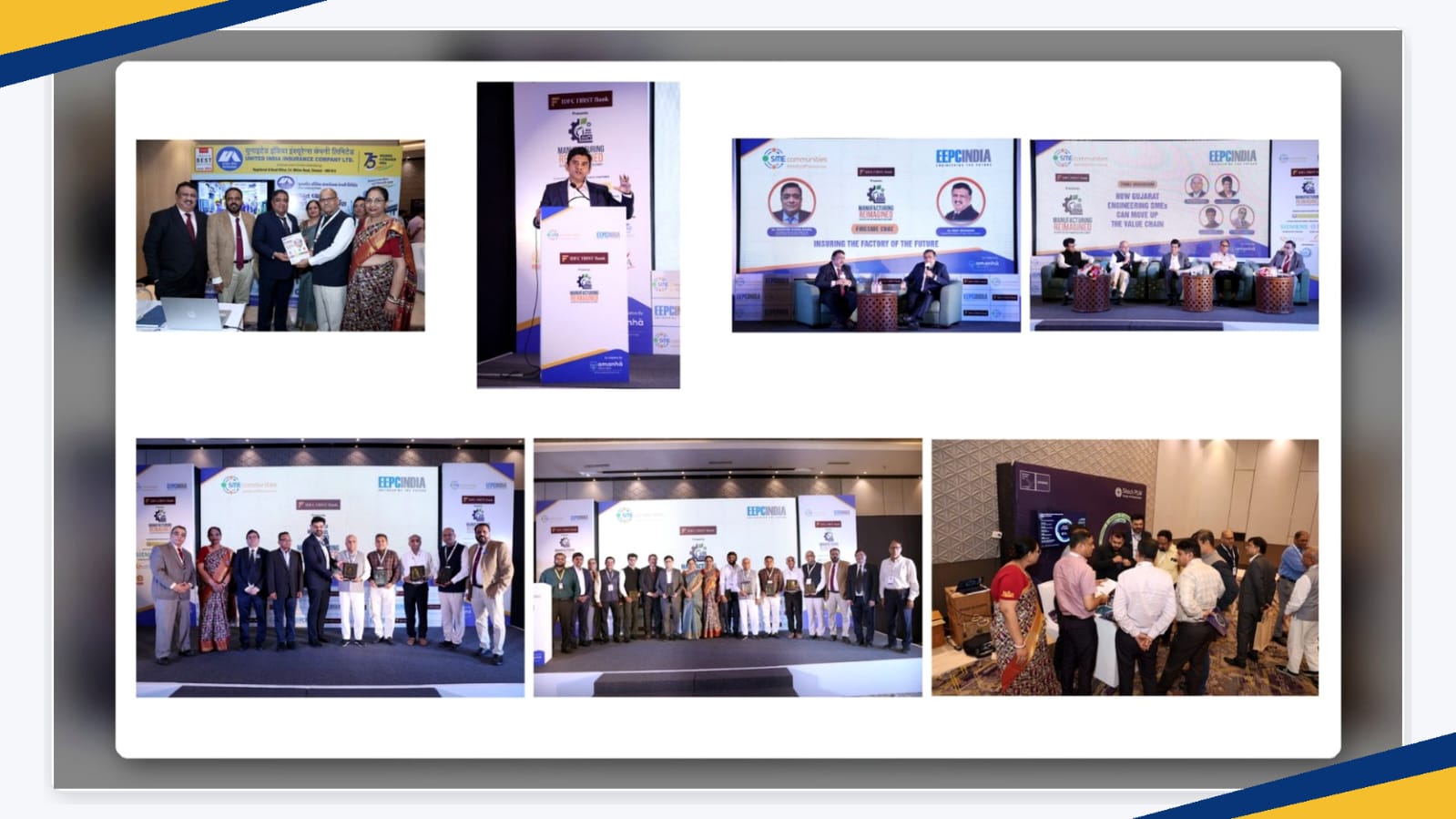
SME Communities and EEPC India bring manufacturing industry leaders together in Ahmedabad.
Ahmedabad: Gujarat has already established the scale of its manufacturing economy. The next test is more demanding: whether its engineering companies, particularly its SMEs, can convert that scale into a sustained advantage in productivity, technology adoption and global competitiveness.
That was the central proposition emerging from “Manufacturing Reimagined: The Next Decade of Indian Engineering Exports”, convened in Ahmedabad on September 18, 2026, by SME Communities and EEPC India, bringing together manufacturing entrepreneurs, industry associations, policymakers and specialists across banking, insurance, digital manufacturing, industrial AI, cybersecurity and global commerce.
The discussion came at an important point for Gujarat manufacturing.
The state’s factories accounted for 17.22 per cent of India’s factory-sector output in 2023–24, the highest share among Indian states, according to the Ministry of Statistics and Programme Implementation’s Annual Survey of Industries. Gujarat was also India’s second-largest state for engineering exports during April-January 2025-26, with exports of about US$7.2 billion and a 15.52 per cent share of the total covered in EEPC India’s state-wise analysis, based on DGCI&S data.
Its international industrial footprint is expanding too. Government data show exports from Gujarat’s special economic zones reached ₹3,00,793 crore in 2025-26, representing approximately 21 per cent of India’s SEZ exports. Investment in the state’s SEZs stood at ₹2,28,624 crore and employment had risen to more than 222,000.
The numbers establish Gujarat’s industrial weight. The Ahmedabad discussions focused instead on what must happen inside enterprises and factories if that position is to endure.
From manufacturing scale to manufacturing capability
Opening the conference, Prashant Laxmeshwar, Founder, SME Communities, argued that factory modernisation should not be treated as synonymous with buying more technology.
The emerging factory, he said, sits at the intersection of several decisions that manufacturers have traditionally considered separately: how they finance expansion, automate production, use data, manage energy, build workforce capability, protect themselves against physical and digital risks, and connect production capacity with international demand.
The implication is significant for SMEs. Modernisation is increasingly becoming an enterprise strategy rather than a capital-equipment decision.
In his welcome address, Mr. C. H. Nadiger, Regional Director, West, EEPC India, said that the Ahmedabad programme was deliberately structured around a series of interconnected questions: How will manufacturers finance the next investment cycle? How will industrial AI alter production economics? What new risks accompany connected factories? How should insurance respond to more complex manufacturing exposures? And, ultimately, how does a technologically stronger factory translate into a more competitive exporter?
“The next phase of Indian manufacturing cannot be defined simply by adding capacity. The more important question is the quality of that capacity how productive, intelligent, resilient, secure and globally connected our factories become,” said Mr. Nadiger
“Gujarat already has manufacturing scale and entrepreneurial depth. The opportunity now is to connect those strengths with the capabilities that will determine competitiveness over the next decade.”
Can Ahmedabad become an engineering hub for the world?
The global dimension of that challenge was taken up by Dr Rahul Singh, Joint DGFT, Ahmedabad, Ministry of Commerce & Industry, Government of India, in his keynote address, “Can Ahmedabad Become India’s Engineering Hub for The Globe?” The question goes beyond increasing export volumes.
As global supply chains evolve, engineering exporters are increasingly competing on reliability, quality, compliance, technology, delivery capability and the ability to integrate into sophisticated international value chains.
For Gujarat’s engineering SMEs, moving from being capable suppliers to becoming globally preferred suppliers will therefore require improvements both outside and inside the factory gate.
The discussion highlighted the importance of manufacturers understanding emerging trade opportunities while simultaneously investing in the productivity, quality systems, technology and organisational capabilities necessary to exploit them.
The broader message was clear: export ambition and factory modernisation can no longer be pursued as separate agendas.
Growth needs capital but capital increasingly needs visibility into the business
A second strand of the conference examined the financing of manufacturing transformation.
In his address, “Growth Capital for the Factory of the Future,” Anto Alan, Business Head – Business Banking & Agri, IDFC FIRST Bank, discussed the role of finance as manufacturers invest in capacity, technology and business expansion.
For manufacturing SMEs, modernisation often involves multiple capital requirements simultaneously: machinery, automation, digital systems, working capital, energy improvements and market expansion.
That makes the relationship between manufacturing companies and their financial institutions increasingly strategic.
The discussion pointed towards a broader evolution in SME finance. As businesses become more digitised and formalised, better operational and financial information can potentially improve the quality of conversations between manufacturers and lenders.
For manufacturers, the issue is consequently not capital alone, but capital aligned with a credible growth and modernisation strategy.
The intelligent factory changes the economics of competitiveness
Technology formed another central pillar of the Ahmedabad discussions.
Deepak Kumar Sinha, Industry Program Leader, Siemens Digital Industries Software, addressed “The Intelligent Factory – How Digital Manufacturing & Industrial AI will Redefine Competitiveness.”
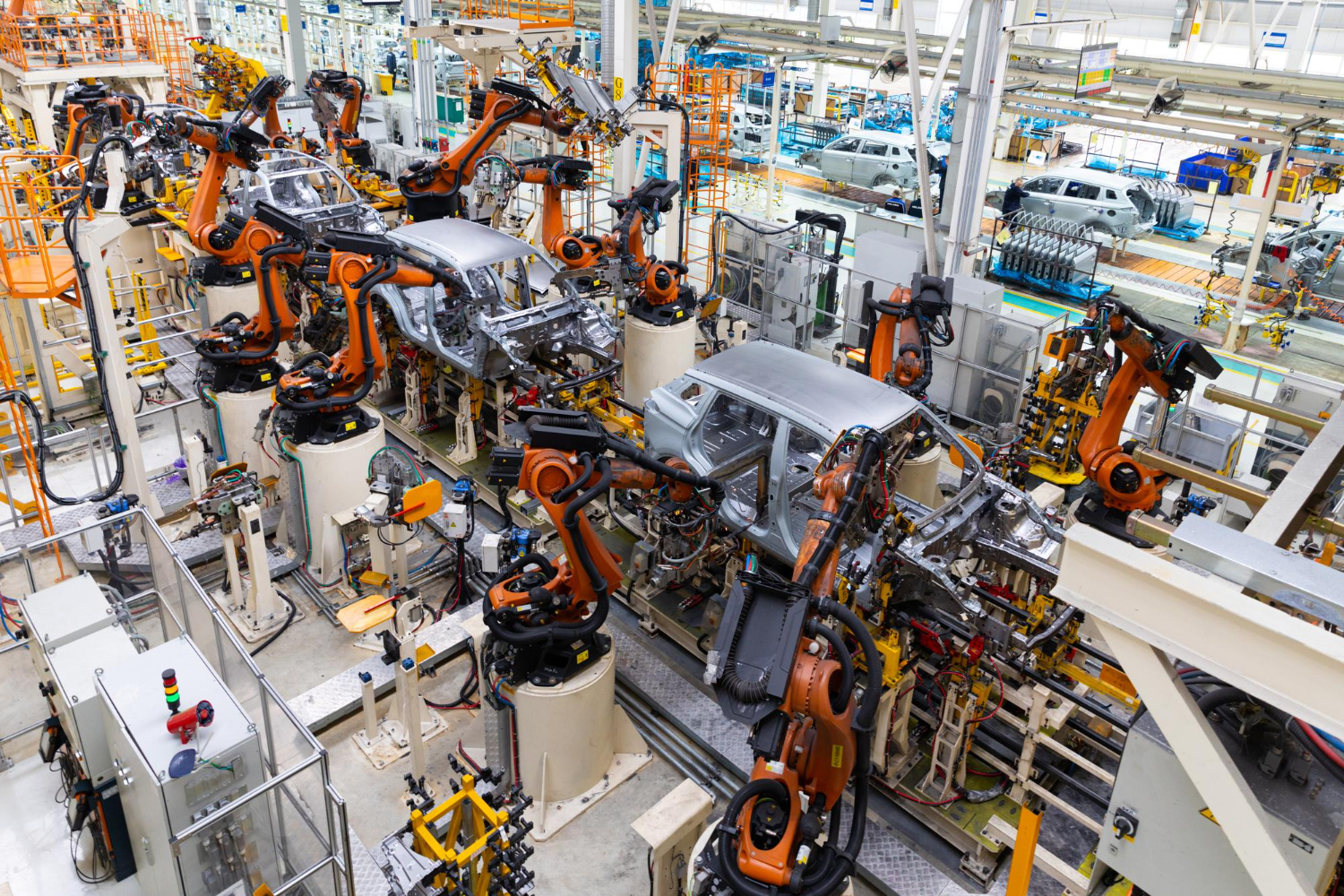
The significance of industrial AI lies not simply in automating individual tasks. Its larger potential comes from connecting engineering, design, production and operational data so that manufacturers can make better decisions across the industrial lifecycle.
Digital twins, connected engineering environments, simulation and industrial AI increasingly allow companies to test decisions virtually, identify inefficiencies earlier and extract greater productivity from physical assets.
For SMEs, however, the discussion also challenged the assumption that digital transformation must begin with an expensive, factory-wide technology programme. A more pragmatic path is possible: identify a commercially meaningful production problem, establish the relevant data and processes, demonstrate measurable value, and scale from there.
That approach turns digitalisation from an abstract technology ambition into a business case driven by productivity, quality, speed and competitiveness.
A smarter factory also creates a larger risk surface
But connected manufacturing introduces a paradox. Every additional connected machine, sensor, industrial control system and digital interface that makes a factory more intelligent can also expand its cyber exposure.
That issue was addressed by Ravindragiri Goswami, National Sales Head, Sattrix Information Security, in the session “Securing the Factory of the Future: Building Cyber Resilience into Smart Manufacturing.”
The distinction is particularly important in manufacturing because a cyber incident need not remain an IT problem.
In an increasingly connected industrial environment, cyber disruption can potentially become production disruption affecting plant availability, operations, supply commitments and ultimately revenues.
The implication for factory owners is that cybersecurity can no longer be considered only a responsibility of the IT department. As operational technology and information technology converge, cyber resilience increasingly becomes part of manufacturing resilience itself.
The Ahmedabad discussion therefore placed security alongside automation rather than behind it: the smart factory must increasingly be secure by design.
Insurance must evolve with the factory it protects
The changing nature of manufacturing risk was examined further in the fireside conversation “Insuring the Factory of the Future” between Bhupesh Sushil Rahul, Chairman & Managing Director, United India Insurance Company, and Dr Ravi Seshadri, Board Advisor & Global Risk Leader.
Traditional manufacturing risks have not disappeared. Fire, machinery breakdown, property damage and business interruption remain fundamental exposures.
But the modern factory is adding new layers: cyber risk, interconnected supply chains, technology dependence, sophisticated equipment and emerging operational vulnerabilities.
The discussion examined the need for insurance to evolve alongside these changes from being viewed primarily as a financial response after a loss towards becoming part of a broader framework of risk identification, mitigation, resilience and business continuity.
For SMEs in particular, the consequences of a major interruption can be disproportionate. A sufficiently severe event can affect not only an individual asset but cash flows, customer commitments and the ability to service growth capital.
That makes the relationship between investment, risk management and insurance considerably closer than it may first appear.
A factory prepared to invest for growth must also understand what could interrupt that growth.
The SME question: how does Gujarat move up the value chain?
Technology and finance ultimately have to translate into enterprise competitiveness.
That question was placed directly before Gujarat’s industrial leadership in the panel “How Gujarat Engineering SMEs Can Move Up the Value Chain.”
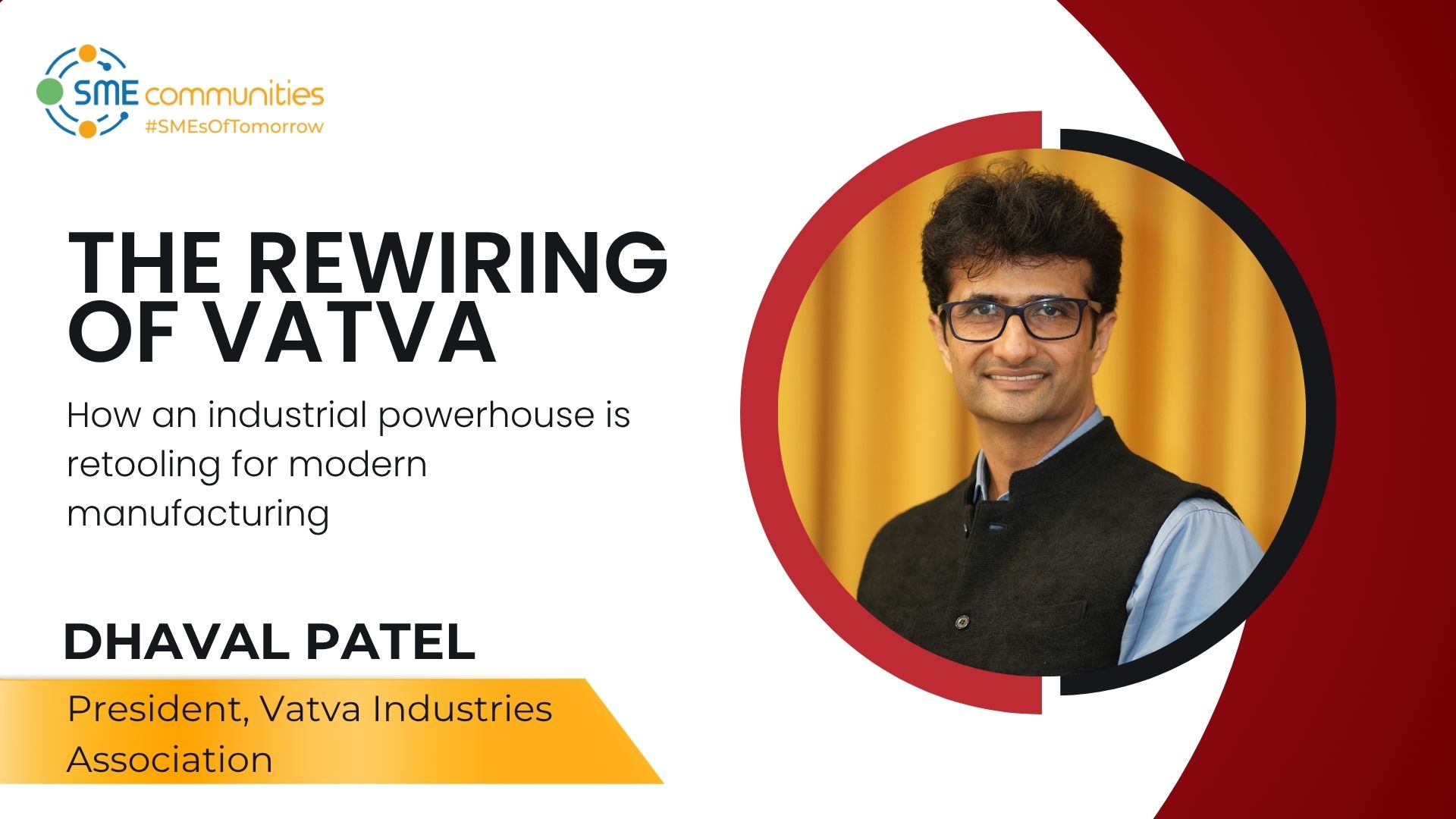
The discussion brought together Ashwinkumar Patel, President, Ahmedabad Engineering Manufacturers Association; Ajit Shah, President, Sanand Industries Association; Dhaval Patel, President, Vatva Industries Association; and Amrit G. Jalavadia, National Working Committee Member, EEPC India, moderated by Prashant Laxmeshwar.
Their perspectives reflected the diversity of Gujarat’s manufacturing ecosystem established industrial estates, rapidly developing manufacturing corridors, engineering entrepreneurs, exporters and companies that have themselves navigated different stages of industrial growth.
The central challenge identified was not whether Gujarat possesses entrepreneurial capability. It demonstrably does.
The harder question is how more SMEs progress from being vendors to value-added suppliers; from capacity-led businesses to capability-led businesses; and from domestic competitiveness to global relevance.
That progression requires several changes simultaneously: greater willingness to invest in technology; stronger managerial systems; workforce upskilling; attention to quality and compliance; deeper understanding of international customers; and a longer-term approach to capital allocation. It also requires an ecosystem around SMEs.
Industry associations, financial institutions, technology companies, insurers, government institutions and market-access platforms each address a different constraint. Factory modernisation accelerates when those interventions begin to work together.
Modernisation without markets is an incomplete equation
The final link in that chain is demand. Rahul Yadav, Associate Channel Manager, Alibaba, addressed “The Next Export Advantage: How Technology is Connecting Manufacturers to Global Demand.”
For manufacturers, particularly SMEs, digital commerce and technology-enabled market discovery are reducing some of the traditional barriers to identifying international customers. But access to a marketplace does not by itself create an export-ready enterprise.
Manufacturers must be able to support their proposition with product quality, competitive economics, certifications where required, reliable fulfilment and the organisational capacity to respond to customers across markets.
From Ahmedabad to a broader manufacturing conversation
The conference also included an Engineering Leadership Recognition segment acknowledging the contribution of local engineering industry leaders, followed by the vote of thanks from Sudhakaran Nair, Joint Director, EEPC India.
As the Ahmedabad discussions ultimately suggested, Gujarat’s next manufacturing advantage may not come simply from building more factories.
It may come from making every factory a better enterprise.
About SME Communities
SME Communities is an industry initiative focused on bringing together entrepreneurs, business leaders, domain specialists and institutions around the issues shaping the next phase of SME growth. Through industry dialogues, leadership conversations, knowledge initiatives and cluster-level engagements, the platform seeks to connect SMEs with ideas, expertise and ecosystems relevant to building the SMEs of Tomorrow.
About EEPC India
EEPC India is India’s engineering export promotion council, working with the country’s engineering industry to promote exports, facilitate international market access and strengthen the global competitiveness of Indian engineering enterprises.