



Beyond the Box: Why India’s First Maersk Container Signals a New Maritime Manufacturing Opportunity
For a nation that handles over 1.5 billion tonnes of cargo annually and aspires to become a global manufacturing powerhouse, India has historically occupied an unusual position in global trade. While Indian factories produce pharmaceuticals, automobiles, engineering goods, chemicals and increasingly electronics for international markets, much of the infrastructure that enables those goods to move across oceans has been manufactured elsewhere.
The shipping container is perhaps the most visible example of this paradox. Since the container revolution transformed global commerce in the second half of the twentieth century, container manufacturing has remained concentrated in a handful of countries, particularly China. As a result, India became one of the world’s largest users of containers without becoming a significant producer of them.
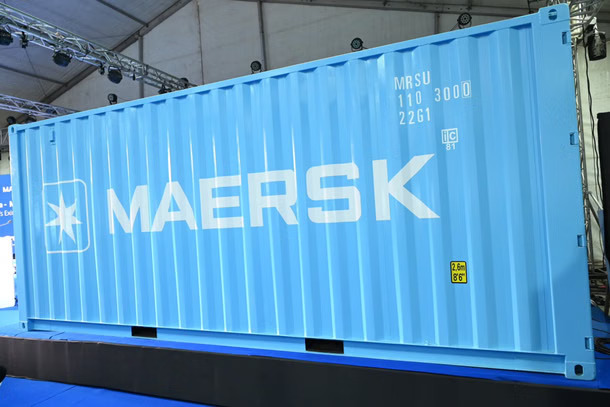
That reality began to shift last week when A.P. Moller-Maersk became the first international shipping line to procure an export-import container manufactured in India. While the order itself may appear modest, the significance lies in what it represents. For the first time, a global shipping major has validated India’s ability to manufacture one of the most standardized and quality-sensitive products in international trade.
Why Container Manufacturing Matters More Than Most People Realise
Containers are often perceived as simple steel boxes. In reality, they are critical pieces of global trade infrastructure that must meet rigorous international standards governing structural integrity, safety, durability and interoperability. A container produced in one country must be capable of moving seamlessly through ports, rail networks and shipping routes across the world.
Every year, millions of containers facilitate the movement of goods worth trillions of dollars. Without them, modern supply chains would simply not function. This is why container manufacturing is not merely a steel fabrication business; it is a strategic industry linked directly to trade competitiveness, logistics efficiency and supply-chain resilience.
The Covid-19 pandemic highlighted this importance. Global container shortages triggered shipping disruptions, delayed exports, inflated freight costs and exposed vulnerabilities in highly concentrated supply chains. Governments and corporations alike realised that excessive dependence on a limited number of manufacturing centres carried significant economic risks. Since then, diversification of maritime infrastructure manufacturing has become part of a broader conversation around economic security.
How India Quietly Built the Capability
India’s emergence in container manufacturing has not occurred overnight. It is the outcome of several parallel developments that have strengthened the country’s industrial ecosystem over the last decade.
Large-scale investments in steel production, improvements in logistics infrastructure, dedicated freight corridors, industrial corridors, and the expansion of manufacturing under initiatives such as Make in India and Atmanirbhar Bharat have collectively improved the country’s competitiveness. Indian manufacturers today are far more capable of meeting international quality standards than they were a decade ago.
The Maersk order reflects this evolution. The container manufactured by DCM Shriram Group successfully cleared stringent international tests covering stacking strength, lifting operations, racking resistance, floor load capacity and weatherproofing. These are not merely technical achievements; they demonstrate that Indian industry can increasingly compete on quality, precision and reliability rather than cost alone. For international customers, that distinction is often the difference between considering India as an alternative supplier and viewing it as a long-term manufacturing partner.
The Maritime Infrastructure Opportunity India Is Preparing For
The timing of this development is closely linked to India’s broader maritime ambitions.
The country is investing aggressively in port infrastructure through Maritime Vision 2030 and Maritime Amrit Kaal Vision 2047. The operationalisation of the Vizhinjam International Seaport in Kerala, the proposed mega transshipment hub at Great Nicobar, and the continued expansion of Cochin Port represent a strategic effort to increase India’s role within global shipping networks.
Historically, a significant portion of India’s containerised cargo has been transshipped through foreign ports such as Colombo, Singapore and Dubai before reaching international destinations. This resulted in revenue, logistics value and maritime services being captured outside India. New transshipment infrastructure aims to reverse that trend by positioning India as a regional maritime hub.
As container traffic grows through these ports, domestic demand for containers, maintenance facilities, repair services, logistics equipment and maritime manufacturing is expected to expand significantly. Container manufacturing therefore becomes part of a larger ecosystem rather than a standalone industry.
A New Opportunity for Indian Manufacturers and SMEs
One of the most important aspects of container manufacturing is the depth of its value chain. The finished container may be the final product, but its production depends on a network of steel processors, component manufacturers, coating suppliers, flooring material providers, welding specialists, engineering firms, logistics operators, testing agencies and certification bodies. This creates opportunities not only for large manufacturers but also for hundreds of SMEs operating across the supply chain.
India’s industrial clusters are particularly well positioned to participate. Engineering SMEs in Gujarat, Maharashtra, Tamil Nadu and Punjab already possess capabilities relevant to fabrication, metal processing and industrial manufacturing. As container production scales up, these businesses could become suppliers to a growing maritime manufacturing ecosystem.
This is precisely how successful manufacturing clusters evolve. The automotive industry created component suppliers. Electronics manufacturing created ancillary ecosystems. Container manufacturing has the potential to create a new industrial network linked directly to global trade.
Policy Support Could Change the Economics
The economics of container manufacturing are heavily influenced by scale, logistics costs and raw material availability. This is where government policy is expected to play a decisive role.
The proposed ₹10,000 crore Production Linked Incentive (PLI) framework for container manufacturing announced in the Union Budget 2026 signals the government’s intention to nurture domestic production. The objective is not simply import substitution but building globally competitive capacity capable of serving international markets.
If implemented effectively, the policy could encourage investments in specialised manufacturing facilities, improve economies of scale and make Indian-produced containers more cost competitive. More importantly, it could provide the certainty required for global shipping lines to diversify sourcing arrangements and establish long-term procurement relationships with Indian manufacturers.
From Cargo Nation to Maritime Nation
For decades, India’s maritime strategy focused primarily on moving goods. The emerging vision is considerably more ambitious. The country is no longer looking only at exports, ports or logistics in isolation. Instead, policymakers are attempting to build a complete maritime economy encompassing shipbuilding, port infrastructure, transshipment, logistics services, maritime finance, green shipping and now container manufacturing.
The first India-made Maersk container should therefore be viewed through that broader lens. It is not simply a manufacturing milestone or a procurement announcement. It is evidence of India’s growing ability to participate in the industrial ecosystem that supports global commerce itself.