



Beyond Trade: How the India-Japan Economic Corridor Could Reshape the Future of Indian SMEs
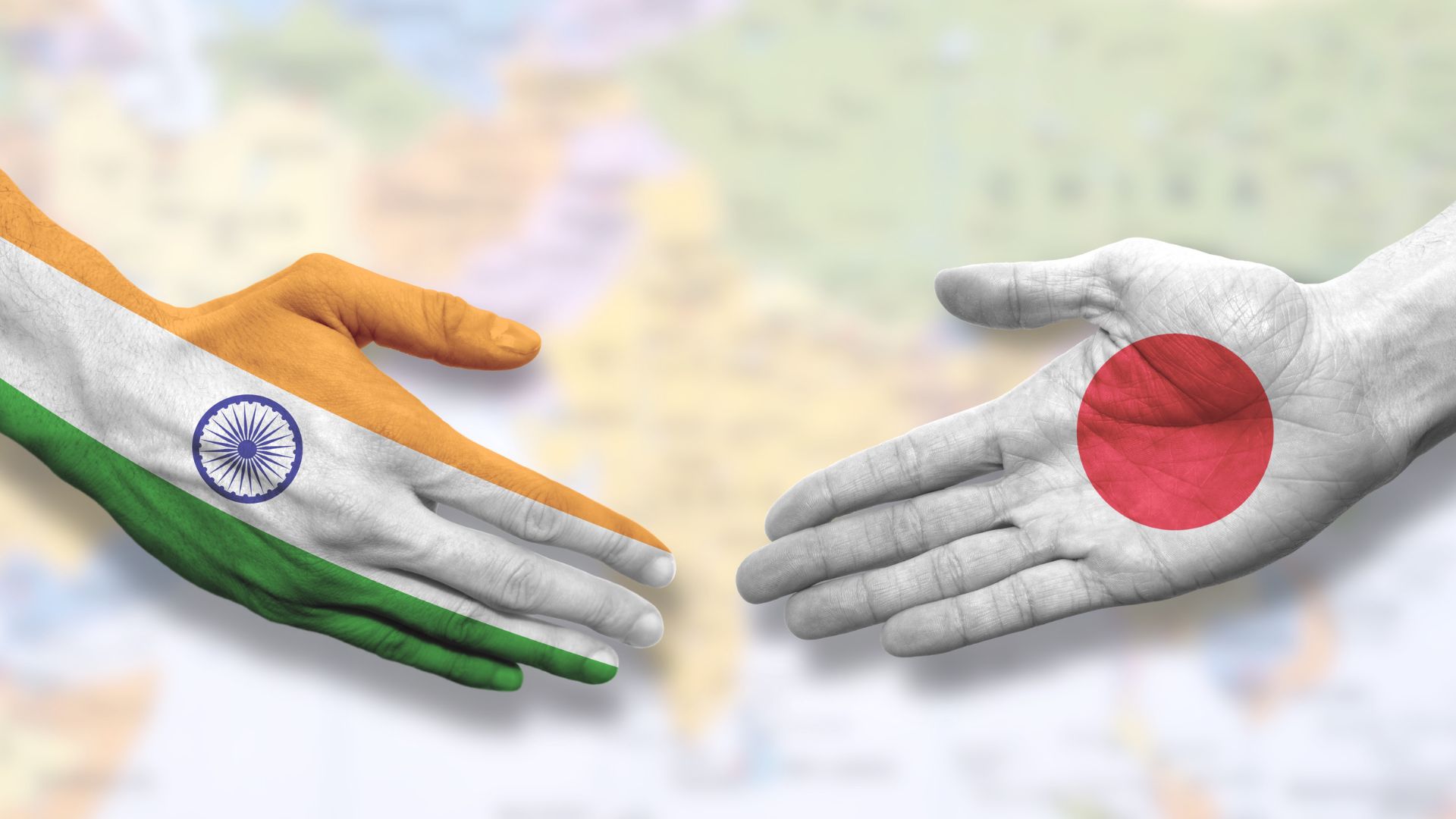
As the global economy undergoes one of its most significant transformations in decades, countries are increasingly being judged not merely by the size of their markets, but by their ability to attract investment, secure supply chains, foster innovation and build strategic economic partnerships. Against this backdrop, the outcomes of the recent India-Japan Annual Summit signal the emergence of a new phase in bilateral relations one that extends far beyond conventional trade and investment.
For decades, Japan has been among India’s most trusted economic partners. From financing landmark infrastructure projects such as the Delhi Metro and the Western Dedicated Freight Corridor to supporting industrial corridors and manufacturing ecosystems, Japanese capital has played a pivotal role in India’s development journey. Since 2000, Japan has invested over USD 43 billion in India, while more than 1,400 Japanese companies have established operations across sectors ranging from automobiles and engineering to electronics and logistics. Bilateral trade today exceeds USD 25 billion annually, and both nations are pursuing an ambitious target of mobilising 10 trillion Yen (approximately USD 67 billion) in investments.
Yet the latest summit suggests that the relationship is evolving into something far more strategic.
A Partnership Shaped by a Changing Global Order
The world that shaped traditional trade relationships is rapidly changing. Supply-chain disruptions triggered by the pandemic, semiconductor shortages, geopolitical conflicts, energy security concerns and increasing economic fragmentation have forced governments and businesses alike to rethink how global commerce operates.
In response, India and Japan have placed economic security at the centre of their partnership.
The India-Japan Joint Declaration on Economic Security reflects a shared understanding that future economic resilience will depend on securing access to critical technologies, strategic resources and trusted supply chains. The declaration prioritises collaboration across sectors such as semiconductors, critical minerals, artificial intelligence, clean energy, pharmaceuticals and advanced digital infrastructure.
This marks a notable shift in the nature of bilateral cooperation. The focus is no longer limited to expanding trade volumes. Instead, both nations are working to build resilient economic ecosystems capable of supporting long-term competitiveness in an increasingly uncertain global environment.
For Indian SMEs, this transition creates opportunities that extend well beyond exports. It opens the door to participation in the industries and value chains that are likely to define global growth over the next two decades.
Artificial Intelligence Takes Centre Stage
Among the numerous agreements announced, the India-Japan partnership on Artificial Intelligence stands out as particularly significant.
The two countries have elevated their cooperation to a strategic research and development partnership spanning the entire AI ecosystem from semiconductors, data centres and computing infrastructure to model development, cybersecurity, governance frameworks and talent exchange.
The scale of this opportunity is difficult to ignore. Global AI investments are expected to surpass USD 1 trillion by the end of this decade, while India’s AI economy is projected to contribute hundreds of billions of dollars in additional economic value over the coming years.
What makes the India–Japan framework distinctive is its emphasis on creating a safe, secure, trustworthy and human-centric AI ecosystem. The collaboration encompasses not only technological innovation but also AI governance, cybersecurity, responsible deployment and international standards.
Several institutional partnerships underscore this commitment. Collaborations involving IIT Bombay, BharatGen Technology Foundation, Japan’s National Institute of Informatics, SarvamAI and Preferred Networks aim to accelerate innovation in Large Language Models (LLMs), AI infrastructure and advanced research applications.
Equally important is the commitment to strengthen human capital. Japan has reaffirmed its objective of attracting 500 highly skilled Indian AI professionals by 2030, highlighting the growing strategic value of India’s technology talent pool.
For SMEs, the implications are profound. AI is rapidly transitioning from a specialised technology to a core business capability, enabling organisations to improve productivity, optimise operations, strengthen customer engagement and unlock new growth opportunities.
Building the Industries of the Future
Beyond AI, the summit produced a series of agreements aimed at strengthening cooperation in sectors that are expected to drive the next wave of industrial growth.
The Memorandum of Cooperation on Batteries seeks to establish resilient and sustainable battery supply chains, a critical requirement as electric mobility and renewable energy adoption accelerate worldwide. The global battery market is expected to exceed USD 400 billion by 2030, creating substantial opportunities across manufacturing, materials, engineering and recycling.
Similarly, the Next Generation Mobility Partnership broadens cooperation across automotive manufacturing, railways, aviation, shipbuilding, logistics and urban infrastructure. By positioning India as a hub for “Make in India for the World” exports, the initiative aims to strengthen India’s role within global manufacturing networks.
The pharmaceutical and medical devices agreement is equally significant. With India already supplying nearly 20 percent of the world’s generic medicines, deeper cooperation on Active Pharmaceutical Ingredients (APIs), Key Starting Materials (KSMs) and healthcare innovation could enhance supply-chain resilience while opening new avenues for investment and technology transfer.
The focus on critical minerals further reflects the strategic nature of the partnership. As demand for lithium, cobalt, rare earth elements and other critical resources continues to rise, cooperation in geological exploration and mineral development could play a crucial role in supporting future battery, semiconductor and renewable-energy ecosystems.
Why SMEs Could Be the Biggest Beneficiaries
Perhaps the most important aspect of the India-Japan partnership is its explicit recognition of the role SMEs play in economic development.
India’s MSME sector contributes nearly 30 percent of GDP, generates close to 45 percent of exports and supports more than 110 million jobs. Yet many small and medium enterprises remain disconnected from high-value global supply chains.
The launch of the India-Japan SME Forum is therefore more than a symbolic gesture. It reflects a recognition that resilient supply chains are ultimately built through networks of specialised suppliers, technology providers, manufacturers and service companies.
As Japanese investments expand into advanced manufacturing, clean energy, semiconductors, pharmaceuticals and digital technologies, Indian SMEs will have opportunities not only to serve domestic markets but also to integrate into international production ecosystems.
This represents a shift from participation at the margins of global commerce to becoming an integral part of it.
A Strategic Corridor for the Next Decade
The India-Japan Economic Corridor is best understood not as a trade initiative, but as a long-term strategic growth platform.
At a time when nations are competing for capital, technology and industrial relevance, India and Japan are creating a framework that combines investment, innovation, supply-chain resilience and economic security. The partnership aligns closely with broader regional objectives, including the development of trusted Indo-Pacific supply chains and diversified manufacturing ecosystems.
The industries targeted by the partnership artificial intelligence, semiconductors, batteries, critical minerals, mobility, pharmaceuticals and clean energy are not merely sectors of current interest. They are the industries that will shape the global economy for decades to come.
The success of the corridor will ultimately depend on how effectively businesses, institutions and policymakers translate strategic intent into commercial outcomes. If executed successfully, the India-Japan Economic Corridor could become one of the most influential economic partnerships in Asia and one of the most important growth catalysts for India’s SME sector in the decade ahead.