


India’s $100 Billion Chip Market in Focus as IESA Gets New Chairperson, Executive Council
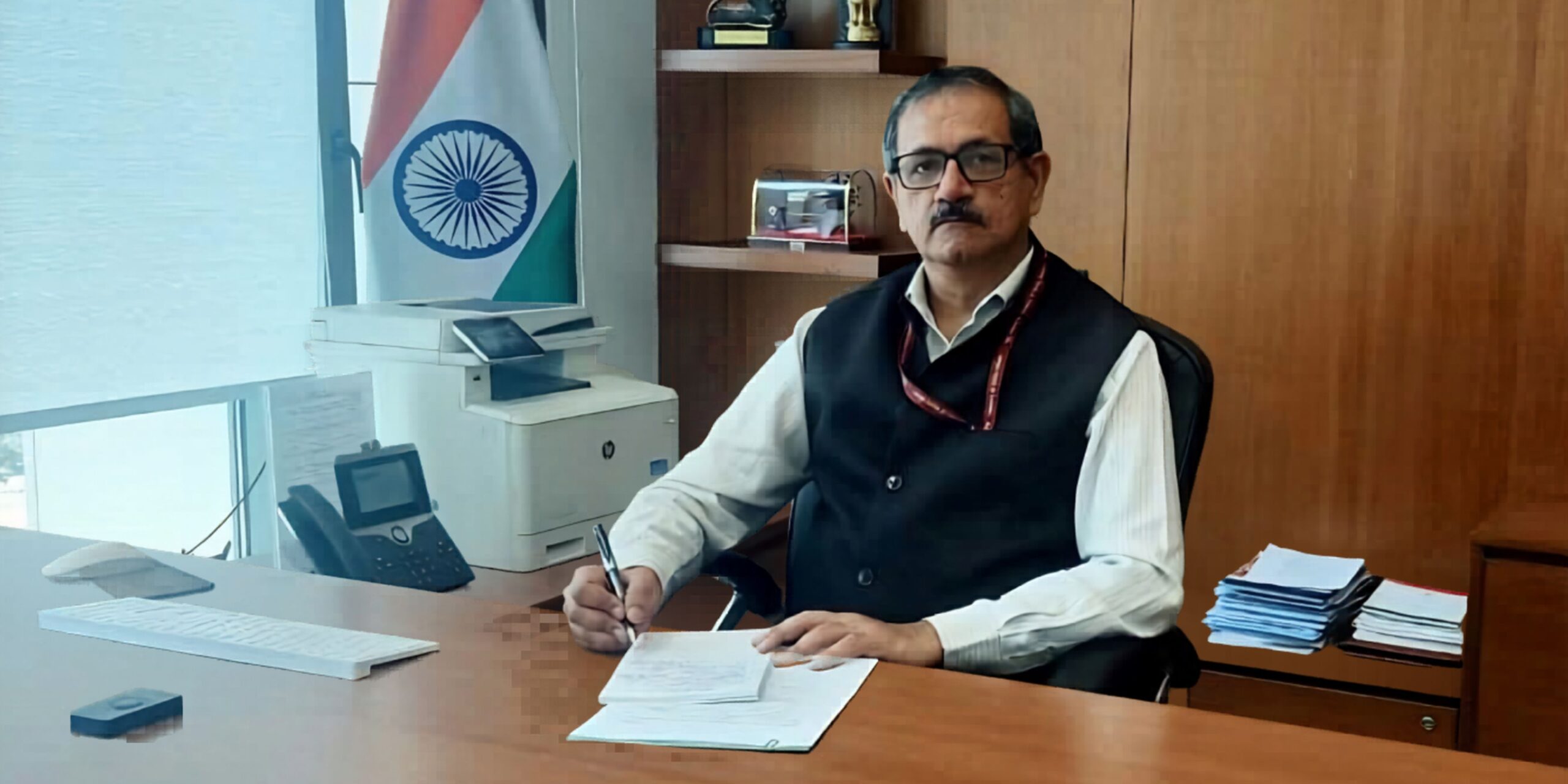
In a significant development for India’s electronics and semiconductor ecosystem, India Electronics and Semiconductor Association has announced the appointment of Navin Bishnoi as Chairperson for FY2026-27. The announcement was made during the association’s Annual Members Meet in Bengaluru, which saw participation from over 200 industry leaders.
Bishnoi, currently AVP and India Country Manager at Marvell Technology, brings more than 25 years of global experience across semiconductor design, EDA and infrastructure silicon. His career spans leadership roles at IBM, Freescale Semiconductor, Cadence Design Systems and Texas Instruments, with expertise across AI, cloud, networking and automotive technologies.
In his first remarks as Chairperson, Bishnoi positioned India at a critical inflection point, stating that the country is transitioning from “semiconductor ambition to large-scale execution.” He emphasized that IESA’s immediate focus will be on enabling time-bound outcomes across the value chain, spanning design, manufacturing, OSAT and supply chain resilience. The intent, he noted, is to convert policy momentum into measurable industry outcomes.
New Executive Council Reflects Full-Stack Ecosystem Representation
The newly constituted Executive Council (EC) for FY2026–27 brings together leadership from across the semiconductor value chain, including design, manufacturing, equipment and systems.
Key members include Pradeep Kumar Vajram (7Rays Semiconductors), Sudhir Naik (N Cube Semicon), Anand Kumar (STMicroelectronics India), Hitesh Garg (NXP), Dr. Hemang Shah (Applied Materials), Sundeep Gupta (Qualcomm), Raghu Panicker (Kaynes SemiCon), Vivek Tyagi (Analog Devices India), and Akshay Aggarwal (MediaTek), along with Ashok Chandak (President, IESA) and Ruchir Dixit (Siemens EDA).
This broad-based representation signals a deliberate push towards ecosystem-level coordination at a time when India is scaling both design capabilities and manufacturing infrastructure.
From Policy Push to Industrial Scale Execution
According to Ashok Chandak, India’s semiconductor journey has entered its most decisive phase, with tangible progress now visible across multiple fronts. These include the commercial rollout of OSAT/ATMP facilities, the announcement of ISM 2.0, and accelerating approvals under electronics manufacturing schemes.
IESA reiterated its role as a catalyst in driving ecosystem integration, strengthening trusted supply chains, expanding global partnerships, and enabling innovation-led growth.
The association also acknowledged the policy support extended by the Ministry of Electronics and Information Technology, which has played a central role in advancing India’s semiconductor and electronics manufacturing ambitions.
A $100 Billion Opportunity in Sight
India’s semiconductor consumption market is projected to reach $103 billion by 2030, supporting a broader electronics manufacturing opportunity estimated at $400 billion. This growth is being driven by strong domestic demand, global supply chain realignment, and sustained policy interventions.
With the transition to ISM 2.0, the focus is now shifting towards deepening capabilities across fabrication, ATMP/OSAT, and supply chain ecosystems. IESA’s new leadership is expected to play a pivotal role in aligning stakeholders and accelerating execution.
Strategic Signal
The leadership transition at IESA comes at a time when India is no longer positioning itself merely as a design hub, but as an emerging full-stack semiconductor ecosystem. The emphasis is clearly moving from intent to implementation, with outcomes now being measured in capacity, capability and global competitiveness.