




Beyond Tariffs: Why the India-Oman CEPA Could Become a Strategic Export Corridor for Indian SMEs
Trade agreements are often evaluated through the lens of tariff reductions. Yet the most consequential agreements tend to reshape something far more important: market access, supply-chain positioning and long-term commercial geography.
The India-Oman Comprehensive Economic Partnership Agreement (CEPA), which came into force on June 1, 2026, deserves to be viewed through that broader lens.
At first glance, the headline figures are impressive. The agreement provides duty-free access for 99.38 per cent of India’s exports by value, covering over 98 per cent of Oman’s tariff lines. But reducing the agreement to tariff liberalisation alone risks missing its larger strategic significance.
For Indian businesses, particularly SMEs, the CEPA is not simply about selling more products into Oman. It is about securing a stronger position within a rapidly evolving trade corridor connecting South Asia, the Gulf and East Africa.
At a time when global supply chains are being reconfigured by geopolitical uncertainty, trade fragmentation and manufacturing diversification, Oman is increasingly emerging as a strategic logistics and commercial gateway. The CEPA positions Indian exporters to benefit from that shift.
Why Oman Matters Beyond Its Domestic Market
Oman is often overshadowed by larger Gulf economies such as the UAE and Saudi Arabia. Yet from a trade and logistics perspective, its strategic importance continues to grow.
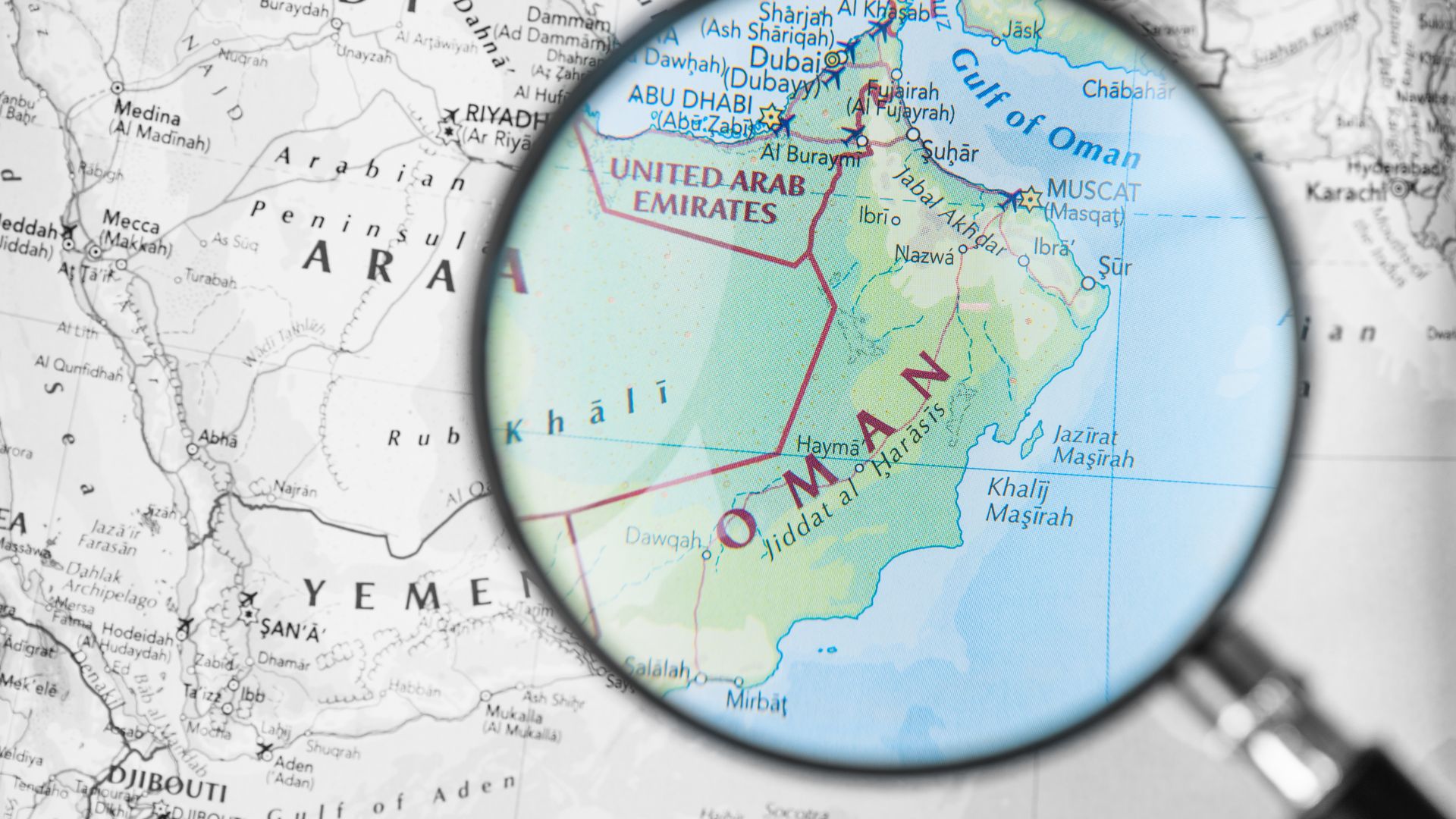
Located at the intersection of major maritime routes, Oman provides direct access to Gulf markets while serving as a gateway into East Africa, one of the fastest-growing consumer regions globally. Its ports at Sohar, Duqm and Salalah have steadily evolved into important logistics hubs connecting Asia, the Middle East and Africa.
Traditionally, many SMEs viewed Gulf countries primarily as destination markets. Increasingly, however, they are becoming regional distribution platforms. Businesses establishing commercial relationships in Oman are not merely targeting Omani consumers; they are positioning themselves within broader regional supply chains.
This shift is particularly important as companies worldwide seek alternative sourcing networks and more resilient trade routes amid growing geopolitical volatility.
Bilateral trade between India and Oman reached USD 11.18 billion in FY 2025-26, up from USD 10.61 billion a year earlier. The CEPA creates the framework to deepen that relationship significantly over the coming decade.
The Real Winners are India’s SME Exporters
While large corporations are expected to benefit, the agreement may prove especially valuable for India’s export-oriented SME ecosystem.
The biggest opportunities are likely to emerge in sectors where Indian manufacturers already possess scale, technical capability and cost competitiveness but have historically faced tariff-related disadvantages.
Engineering goods, marine products, processed foods, pharmaceuticals, gems and jewellery, textiles, footwear and automotive components stand among the immediate beneficiaries.
For SMEs operating in highly competitive export markets, even modest tariff reductions can influence procurement decisions and supplier selection. The elimination of import duties of up to 5 per cent across multiple categories provides Indian exporters with an immediate pricing advantage. Engineering goods illustrate this potential clearly.
India exported engineering products worth approximately USD 876 million to Oman during FY 2025-26. With tariffs removed and infrastructure spending continuing across the Gulf region, engineering exports are projected to rise substantially over the coming years. For manufacturing clusters across Gujarat, Maharashtra, Tamil Nadu, Punjab and Haryana, the agreement could create new opportunities across machinery, industrial equipment, fabricated products, electrical systems and automotive components.
Similarly, India’s marine products sector gains full duty-free access into Oman, strengthening competitiveness in a region where seafood consumption continues to expand. Coastal SME exporters from Andhra Pradesh, Kerala, Tamil Nadu and Gujarat stand to benefit from deeper integration into Gulf food supply chains.
The gems and jewellery sector also enters the agreement from a position of strength. Oman currently imports over USD 1 billion worth of gems and jewellery annually, while India’s share remains relatively small. The removal of duties creates a significant competitive advantage for Indian exporters against suppliers from competing markets.
The Compliance Story May Be Bigger Than the Tariff Story
One of the most underappreciated aspects of the CEPA lies in regulatory simplification.
For many SMEs, export growth is often constrained less by tariffs and more by compliance complexity. Repeated inspections, certification requirements, customs delays and non-tariff barriers frequently increase costs and reduce competitiveness.
The India-Oman CEPA addresses several of these friction points.
Oman’s acceptance of certificates issued by India’s Export Inspection Council (EIC) is particularly significant. The move reduces duplicative testing requirements and accelerates market entry for exporters.
Similarly, recognition of India’s organic certification and halal certification frameworks provides greater predictability for agricultural and food exporters.
Dedicated chapters covering sanitary and phytosanitary measures (SPS) and technical barriers to trade (TBT) establish mechanisms for transparency, regulatory cooperation and dispute resolution.
For SMEs, these provisions can be just as valuable as tariff reductions because they directly influence transaction costs, clearance timelines and operational certainty.
A Major Opportunity for India’s Pharmaceutical Industry
Perhaps the most strategically important breakthrough under the agreement relates to pharmaceuticals.
India already enjoys a strong reputation as a global supplier of affordable medicines, but regulatory approvals often remain a major hurdle in international markets.
Under the CEPA, pharmaceutical products approved by regulators such as the USFDA, EMA, UK MHRA and Australia’s TGA will qualify for significantly accelerated market authorisation processes in Oman.
For Indian pharmaceutical companies, particularly mid-sized manufacturers seeking Gulf expansion, this could materially reduce time-to-market and compliance costs.
With Oman’s pharmaceutical market projected to grow from approximately USD 303 million in 2025 to nearly USD 474 million by 2031, the opportunity extends beyond exports to longer-term healthcare partnerships and investment.
Services Trade Gains New Momentum
The agreement’s services chapter may ultimately prove even more consequential than its goods provisions. Oman has committed market access across 127 services sub-sectors, representing one of the most comprehensive services offers extended by any Gulf Cooperation Council nation.
This opens new possibilities for Indian professionals across information technology, engineering, healthcare, education, financial services, consulting and construction.
Importantly, the agreement provides clearer mobility pathways for business visitors, independent professionals and intra-corporate transferees.
For India’s knowledge economy, the CEPA expands opportunities not only for companies but also for skilled professionals seeking access to Gulf markets.
Market Access Is Not Market Penetration
Despite the optimism surrounding the agreement, businesses should avoid assuming that tariff benefits alone guarantee export success.
Indian SMEs will still need to invest in distribution networks, buyer relationships, product quality, certification readiness and local market understanding. Export financing, trade-risk management and logistics planning will remain critical.
A Strategic Piece of India’s Larger Trade Ambition
The India-Oman CEPA arrives at a time when New Delhi is steadily expanding its network of trade partnerships through agreements with the UAE, Australia, the United Kingdom and other strategic markets.
Viewed collectively, these agreements are helping build a broader architecture aimed at strengthening India’s integration into global value chains while supporting the country’s ambition of becoming a leading manufacturing and export economy.
More importantly, it reflects a growing recognition that future trade competitiveness will depend not only on production capability but also on access to trusted trade corridors, resilient logistics networks and predictable regulatory environments.
The CEPA offers a chance to participate in a larger commercial geography that stretches well beyond Oman itself.