



India’s FTA Opportunity: Making Global Trade Work for SMEs
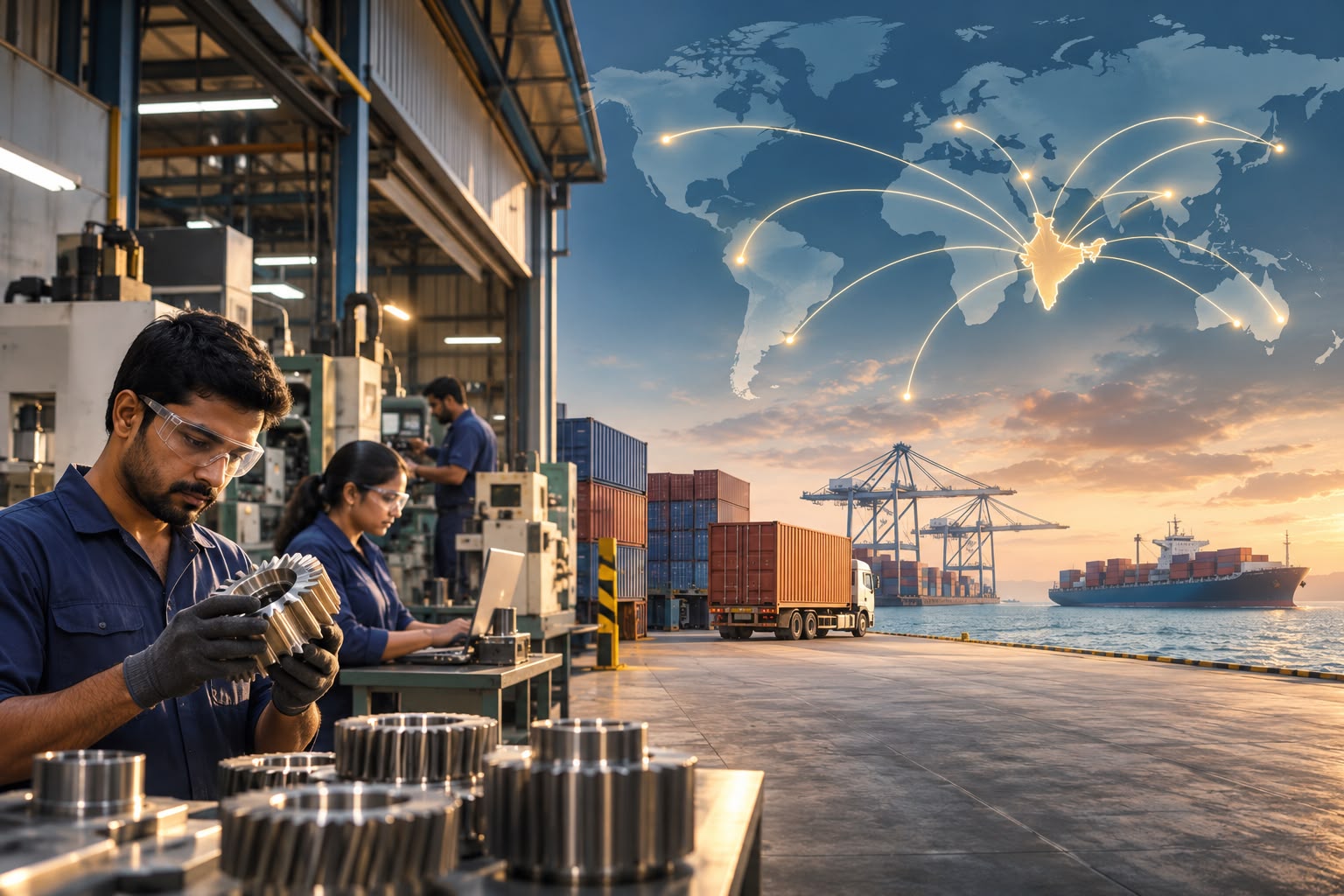
India’s expanding network of free trade agreements is opening new possibilities for exporters. The next opportunity lies in translating preferential market access into practical commercial advantages for smaller enterprises.
India’s trade diplomacy is entering an ambitious new phase. Agreements with the United Arab Emirates, Australia, the United Kingdom, Oman and the European Free Trade Association, alongside progress with the European Union and other trading partners, are reshaping the country’s access to international markets.
For Indian small and medium enterprises, this represents more than a reduction in customs duties. It offers an opportunity to diversify export destinations, enter global supply chains and compete in markets previously constrained by tariffs and regulatory complexity. Yet the economic value of these agreements will increasingly depend on what happens after they are negotiated.
The next frontier of India’s trade strategy is making FTAs easier for businesses to understand, access and utilise.
From market access to market opportunity
Free trade agreements create commercial possibilities, but their benefits are rarely automatic.
An engineering manufacturer in Coimbatore, a textile exporter in Tiruppur or a pharmaceutical supplier in Ahmedabad may enjoy preferential tariff access under an agreement. Turning that advantage into additional orders requires knowledge of applicable tariff schedules, product classifications, origin requirements and destination-market standards.
For established exporters, these are familiar considerations. For smaller enterprises entering international markets, they can appear daunting. This presents an opportunity to complement trade negotiations with a stronger ecosystem of export facilitation.
Country-specific market intelligence, sectoral guidance and accessible advisory support could help enterprises identify where preferential access translates into genuine commercial advantage.
Learning from earlier agreements
India’s experience with ASEAN, Japan and South Korea offers useful lessons. These agreements expanded trade relationships and strengthened access to important Asian markets, although the benefits have varied considerably across industries.
Import growth has sometimes exceeded export expansion. Yet imports of machinery, components and intermediate goods can also improve the competitiveness of Indian manufacturers. The more useful measure is whether trade agreements help enterprises improve productivity, develop higher-value products and participate more deeply in international supply chains.
The newer generation of agreements provides an opportunity to incorporate these lessons into implementation strategies.
Making preferential access simpler
One important area is utilisation. Industry estimates suggest that only around 20–30 per cent of eligible Indian exports use available FTA preferences, although comprehensive agreement-wise utilisation data remains limited.
The opportunity is substantial. Rules of origin, certification requirements and customs documentation are essential safeguards within preferential trading arrangements. But navigating them need not become an unnecessarily complicated exercise.
Digital certificates of origin, simplified procedures and better integration between customs systems and export-support platforms can reduce administrative costs. A particularly useful intervention would be a unified digital interface through which an exporter could enter a product classification, identify applicable FTA benefits, understand origin requirements and access relevant documentation.
For smaller exporters, such practical assistance could be as valuable as the tariff concession itself.
Building export-ready enterprises
FTAs also create an opportunity to strengthen India’s industrial capabilities.
Preferential tariffs improve market access, but sustained export competitiveness depends on product quality, manufacturing efficiency, certifications, delivery reliability and customer relationships. This is particularly relevant to engineering, chemicals, textiles, food processing and other sectors with substantial SME participation.
Export promotion councils, industry associations and government agencies could work more closely to develop sector-specific FTA readiness programmes. These might combine market intelligence, buyer identification, standards compliance, logistics advisory and export-finance support.
The objective should be to help promising domestic manufacturers become consistent international suppliers.
The role of financial institutions
Banks and trade-finance providers have an important opportunity to participate in this transition. New export markets bring unfamiliar buyers, longer payment cycles, currency exposures and documentation requirements.
Accessible working-capital facilities, export credit insurance, receivables financing and foreign-exchange risk management can help smaller enterprises pursue opportunities with greater confidence. Financial institutions could also use emerging trade corridors to develop specialised export-support propositions for SME clusters.
Such initiatives would connect India’s trade diplomacy with the financial capabilities required to convert orders into sustainable business.
The next chapter of India’s trade ambition
India’s expanding FTA network is an important foundation for a more diversified and globally integrated export economy. The challenge now is to make its benefits increasingly visible at the enterprise level.
That requires collaboration between policymakers, export promotion bodies, financial institutions, logistics providers and industry associations, alongside greater preparedness among SME promoters themselves. The most meaningful indicators of success will be growing participation by first-time exporters, wider utilisation of preferential tariffs, stronger export margins and deeper integration into international value chains.
India has made significant progress in opening global markets to its enterprises. The next achievement will be making those markets easier for Indian SMEs to do business in.