


Beyond Bilateral Trade: Tajikistan’s Rising Role in India’s Eurasian Economic Vision
In international economic relations, the true significance of a partnership is not always reflected in the size of bilateral trade. Some relationships derive their value from geography, strategic positioning and the opportunities they unlock across wider regions. The evolving partnership between India and Tajikistan belongs firmly in this category.
At first glance, the numbers appear modest. India’s exports to Tajikistan stood at approximately US$58.12 million in FY2025-26, registering a healthy 27.23% year-on-year increase. Services exports from India reached nearly US$123.89 million in 2024, while Tajikistan’s services exports to India stood at US$37.56 million. Compared with India’s trade relationships with major economies, these figures remain relatively small.
Yet focusing solely on trade statistics risks overlooking a much larger geopolitical and geoeconomic story unfolding across Central Asia.
As global supply chains are being reconfigured, geopolitical competition intensifies and nations seek greater economic resilience, Tajikistan is assuming growing relevance within India’s broader strategy for Eurasian connectivity, regional integration and long-term economic security.
The relationship is therefore increasingly about far more than bilateral commerce. It is about corridors, connectivity, strategic access and India’s evolving role across one of the world’s most consequential geopolitical regions.
Central Asia’s Strategic Return
For much of the post-Cold War era, Central Asia remained largely outside mainstream economic discussions. Rich in natural resources yet constrained by geography, the region often remained overshadowed by developments in East Asia, Europe and the Gulf. That reality is changing rapidly.
The growing importance of energy security, critical minerals, alternative supply chains and regional connectivity corridors has restored Central Asia’s strategic relevance. Increasingly, the region is being viewed not merely as a collection of individual markets but as a critical bridge connecting South Asia, Europe, Russia, China and the Middle East. Within this landscape, Tajikistan occupies a unique position.
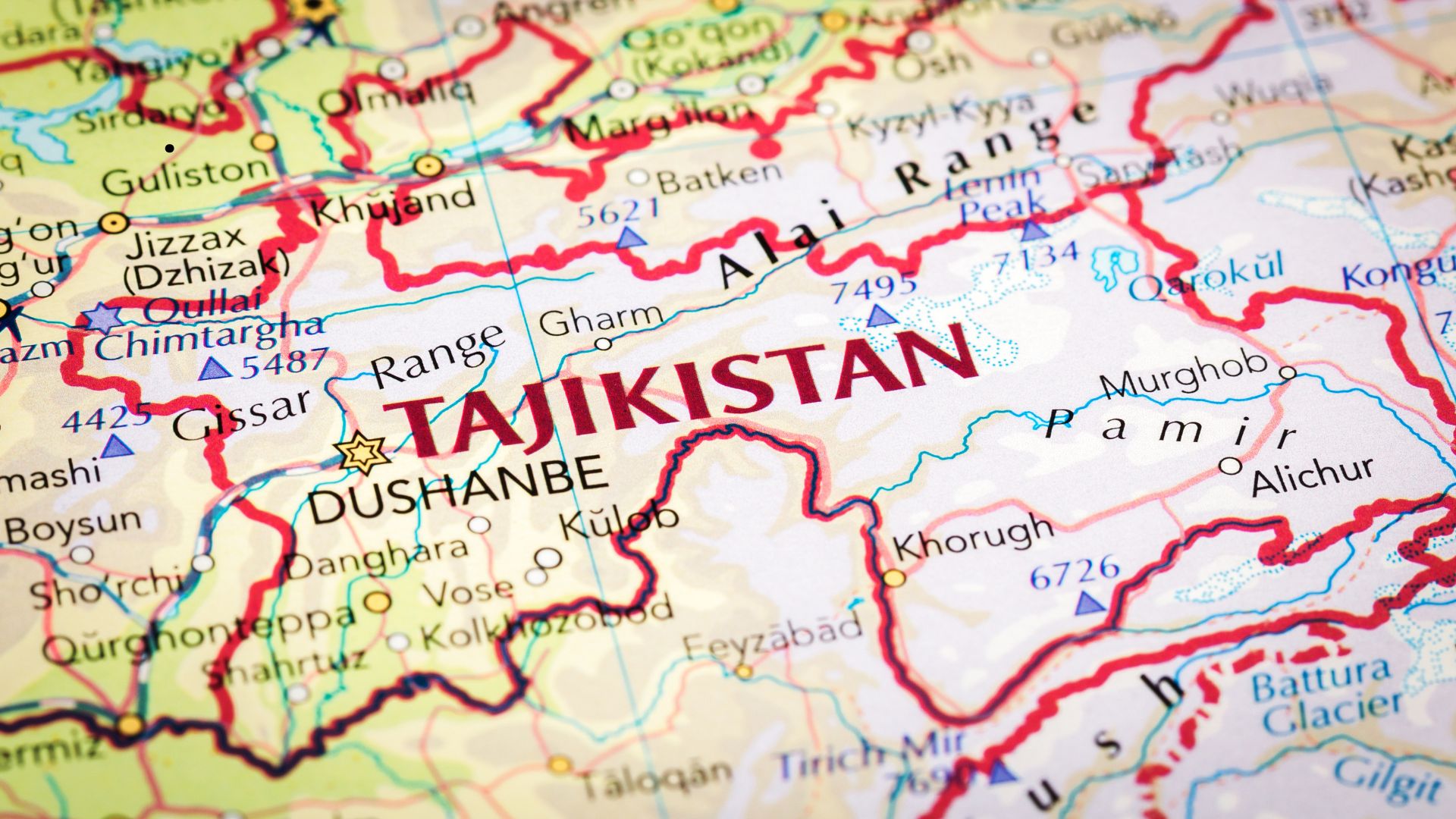
Bordering Afghanistan, China, Kyrgyzstan and Uzbekistan, the country sits at the intersection of multiple trade and transit routes that are likely to shape future Eurasian commerce. For India, whose historical and civilisational connections with Central Asia stretch back centuries, Tajikistan represents both a partner and a gateway.
The challenge historically has not been diplomatic goodwill. It has been geography.
The absence of direct overland connectivity has constrained India’s economic engagement with Central Asia despite strong political relations. Today, however, emerging transport corridors are beginning to alter that equation.
Connectivity as Economic Statecraft
The most important dimension of the India-Tajikistan relationship may ultimately be connectivity.
The pandemic, Red Sea disruptions, geopolitical conflicts and supply-chain bottlenecks have fundamentally changed how governments view trade networks. Efficiency alone is no longer sufficient. Resilience has become equally important.
In response, India has invested heavily in alternative connectivity frameworks designed to reduce concentration risks and create new routes into Eurasia.
The development of Chabahar Port in Iran and India’s support for the International North-South Transport Corridor (INSTC) reflect this strategic vision.
Stretching approximately 7,200 kilometres, the INSTC is expected to reduce freight costs by nearly 30% and shorten transit times by as much as 40% compared with traditional routes passing through the Suez Canal. More importantly, it creates a viable pathway linking India with Central Asia, Russia and Europe through diversified trade corridors.
For Tajikistan, improved connectivity offers greater access to maritime trade and global markets. For India, it provides access to a broader Central Asian region of more than 75 million people while reducing dependence on a limited number of trade routes.
In an era increasingly defined by economic uncertainty, connectivity is becoming a form of strategic insurance.
From Healthcare Diplomacy to Economic Partnership
Among the strongest pillars of India-Tajikistan economic engagement is healthcare.
Indian pharmaceutical products have established a strong reputation across Central Asia due to their affordability, quality and reliability. Pharmaceuticals currently represent the largest component of India’s exports to Tajikistan, alongside products such as pulses, tea, medical instruments, dairy-processing machinery, refrigeration equipment and Ayurvedic products.
The significance of this relationship extends beyond trade.
Healthcare has emerged as a powerful instrument of diplomacy. Nations that contribute to healthcare access often strengthen institutional trust, long-term partnerships and people-to-people connections.
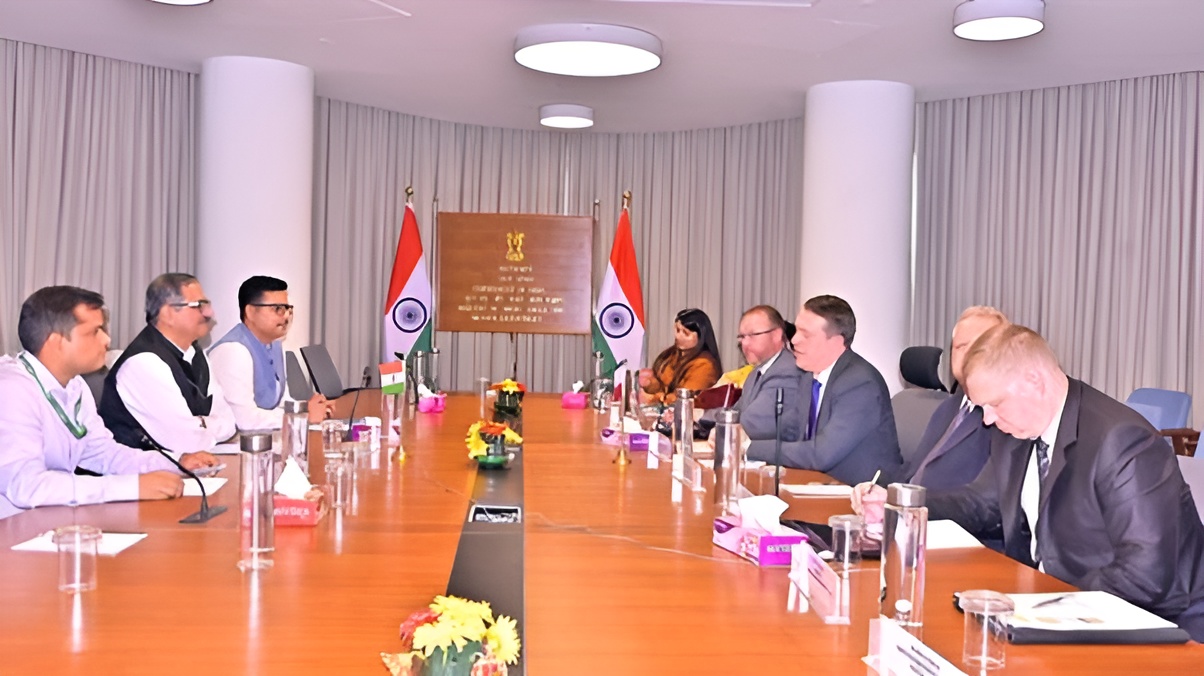
Recognising this opportunity, both governments recently identified pharmaceuticals as a priority sector during the 12th India-Tajikistan Joint Commission meeting, with discussions focusing on regulatory cooperation, faster product registrations and stronger business-to-business engagement.
As healthcare systems across Central Asia continue to modernise, opportunities are likely to expand into diagnostics, telemedicine, medical devices, healthcare infrastructure and professional training.
The Emerging Critical Minerals and Energy Equation
Perhaps the most strategically important opportunity lies in sectors that remain relatively under-discussed.
The global transition toward electric mobility, renewable energy, advanced manufacturing and artificial intelligence is dramatically increasing demand for critical minerals and strategic resources.
Central Asia possesses significant reserves of minerals, metals and energy resources that are becoming increasingly important to industrial competitiveness.
Tajikistan itself holds one of the world’s largest untapped hydropower potentials. Estimates suggest that only a fraction of its available hydroelectric capacity has been fully utilised. At the same time, the country possesses considerable mineral resources that could become increasingly relevant as global industries seek diversified sourcing options.
For India, which is pursuing ambitious goals in renewable energy, battery manufacturing, electronics production and advanced industrial capabilities, resource diversification is becoming a strategic necessity.
This explains why discussions between both countries now extend beyond traditional trade into hydropower, renewable energy, mining, critical minerals, technology cooperation and industrial development.
Opportunities for Indian Businesses
For Indian enterprises, particularly SMEs, Tajikistan represents an underexplored market with growing potential.
Promising sectors include:
- Pharmaceuticals and healthcare products
- Engineering goods and industrial machinery
- Renewable energy technologies
- Food processing and agricultural equipment
- IT and digital services
- Education and skill development
- Tourism and hospitality
- Textiles and light manufacturing
Many of these sectors align directly with India’s established strengths.
The challenge is often not capability but awareness. Compared to larger export destinations, Central Asia remains outside the strategic focus of many Indian businesses despite offering meaningful long-term opportunities.
Looking Beyond Trade Statistics
Viewed purely through the lens of present trade volumes, India-Tajikistan commerce may appear modest.
Viewed through the lens of strategic geography, connectivity and Eurasian integration, the picture looks very different.
As India strengthens alternative trade corridors, diversifies economic partnerships and expands its presence across Eurasia, Tajikistan’s importance is likely to grow disproportionately relative to its current share of trade.
The real significance of the relationship lies not in what it represents today, but in what it could enable tomorrow: deeper access to Central Asia, stronger participation in emerging transport corridors, enhanced resource security and greater Indian engagement across a region that is regaining global strategic relevance.
History repeatedly demonstrates that nations which successfully combine geography, diplomacy, connectivity and economic vision often shape the trade routes of the future.
For India, the growing partnership with Tajikistan reflects precisely such a long-term strategic calculation.
The relationship is no longer merely about bilateral trade. It is increasingly about India’s place in the emerging economic architecture of Eurasia.