



Nuclear Power, Industrial Power: Where India’s MSMEs Fit Into the 100 GW Ambition
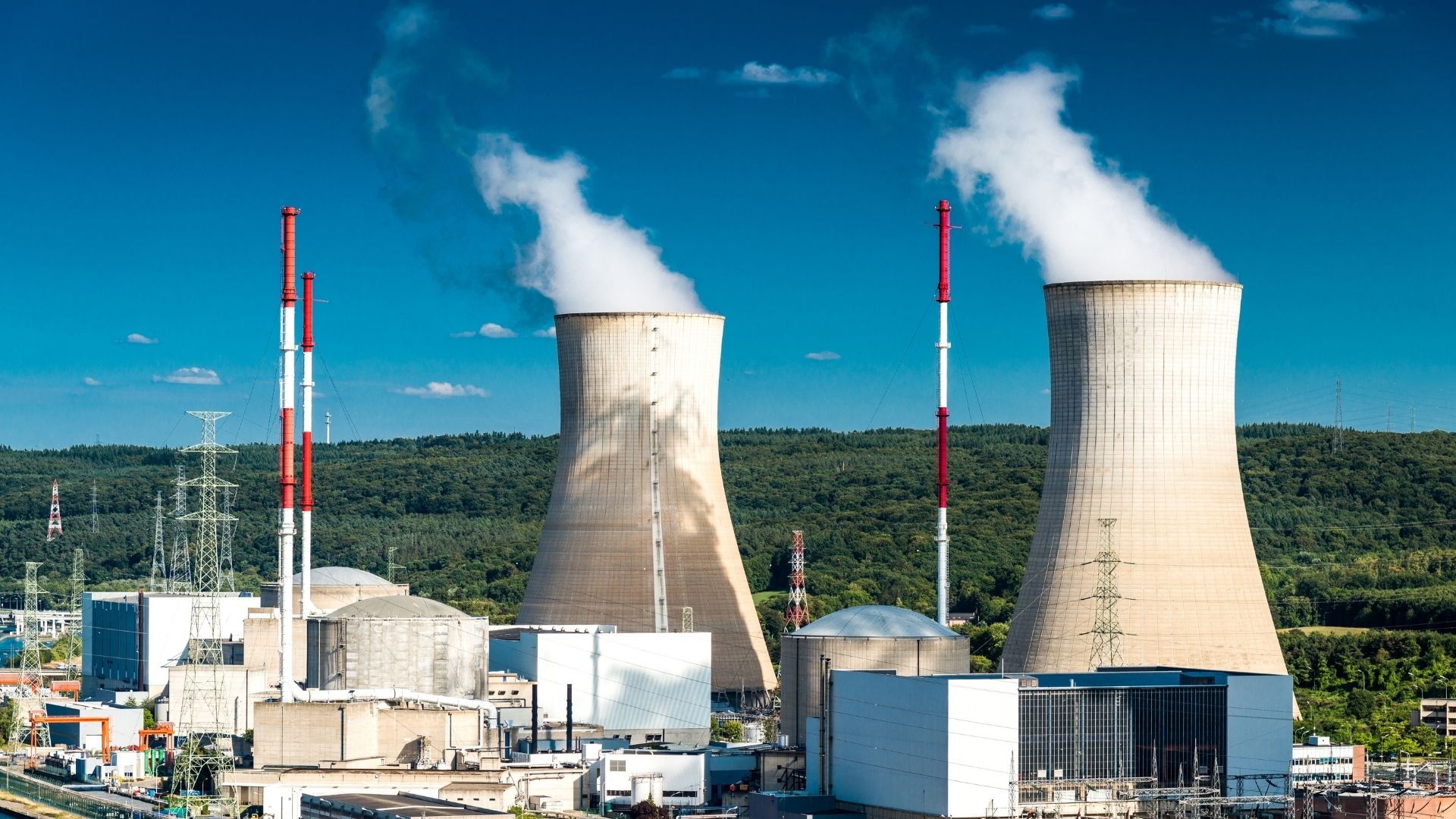
Something significant is taking shape in India’s nuclear sector, and the clearest indication may not be coming from a reactor site. It is coming from the country’s expanding network of uranium-supply relationships.
In recent months, India has deepened its engagement with Australia, Canada and Uzbekistan on uranium supplies, adding to a much wider network of nuclear-fuel relationships that already includes Kazakhstan, Russia, Argentina, Namibia and other countries. The developments are striking not because India is importing uranium, which it has done for years, but because of the scale and geographic diversification of the relationships now being built. Australia brings access to one of the world’s largest uranium resource bases. Canada brings a long-established nuclear industry and long-term fuel capability. Central Asian producers such as Kazakhstan and Uzbekistan add another important source of supply. Together, these relationships point towards a deliberate attempt to construct a diversified nuclear-fuel portfolio.
The timing is equally important. India is simultaneously preparing for a dramatic expansion of nuclear power, with the government targeting 100 GW of installed nuclear capacity by 2047, compared with 8.78 GW currently. Nuclear power presently accounts for only around 3 per cent of India’s electricity generation, but its role is expected to become considerably larger as the country seeks to meet rising electricity demand while progressing towards its long-term net-zero objective.
Seen in that context, India’s uranium diplomacy is not simply a series of commodity agreements. It is part of the foundation being laid for the next phase of India’s energy strategy.
The logic is relatively straightforward. A country cannot plan to multiply its nuclear capacity without securing the fuel required to operate that fleet. India’s domestic uranium resources and production capacity have historically been insufficient to eliminate the need for imports, making overseas supply relationships an important component of its nuclear programme. The diversification now underway therefore serves a broader purpose: reducing the risk that India’s nuclear expansion becomes constrained by the availability, price or geopolitical accessibility of nuclear fuel.
But securing uranium is only one part of the equation. What India ultimately does with that fuel is the more consequential question.
From energy security to a 100 GW nuclear ambition
India’s decision to pursue 100 GW of nuclear capacity by 2047 represents a fundamental change in the scale of its nuclear ambitions. The immediate target is to take installed capacity to around 22 GW by 2031-32 as reactors already under construction are commissioned. Beyond that, the expansion will require a sustained programme of new reactor construction, greater participation from industry and a much broader supporting ecosystem.
The government’s roadmap is significant for another reason. India’s nuclear expansion is no longer being conceived entirely as an undertaking of the traditional public-sector nuclear establishment. Around 46 GW of the proposed 100 GW capacity is expected to come through other public-sector entities, state governments, private companies and joint ventures.
That is an important shift because nuclear power has historically operated within a highly controlled institutional framework. The next phase is expected to bring a wider range of commercial and industrial participants into the sector.
The SHANTI Act, 2025 is central to that transition. By establishing a new statutory framework for wider participation in nuclear power, the legislation has the potential to change not only who generates nuclear electricity but also the industrial ecosystem that develops around nuclear projects.
For the MSME sector, this is where the story becomes particularly interesting.
A nuclear power plant is generally viewed as a large infrastructure asset, requiring enormous capital, sophisticated technology and specialised institutional capabilities. Yet the plant itself represents only the visible end of an extensive industrial supply chain. Beneath the reactor developer and major engineering companies sits a network of manufacturers and service providers supplying components, systems, materials, engineering expertise, testing, maintenance and technology.
As India’s nuclear programme expands, the size and sophistication of this underlying ecosystem could expand with it.
The opportunity is larger than the reactor
The most immediate opportunity for Indian MSMEs is likely to emerge in engineering and manufacturing.
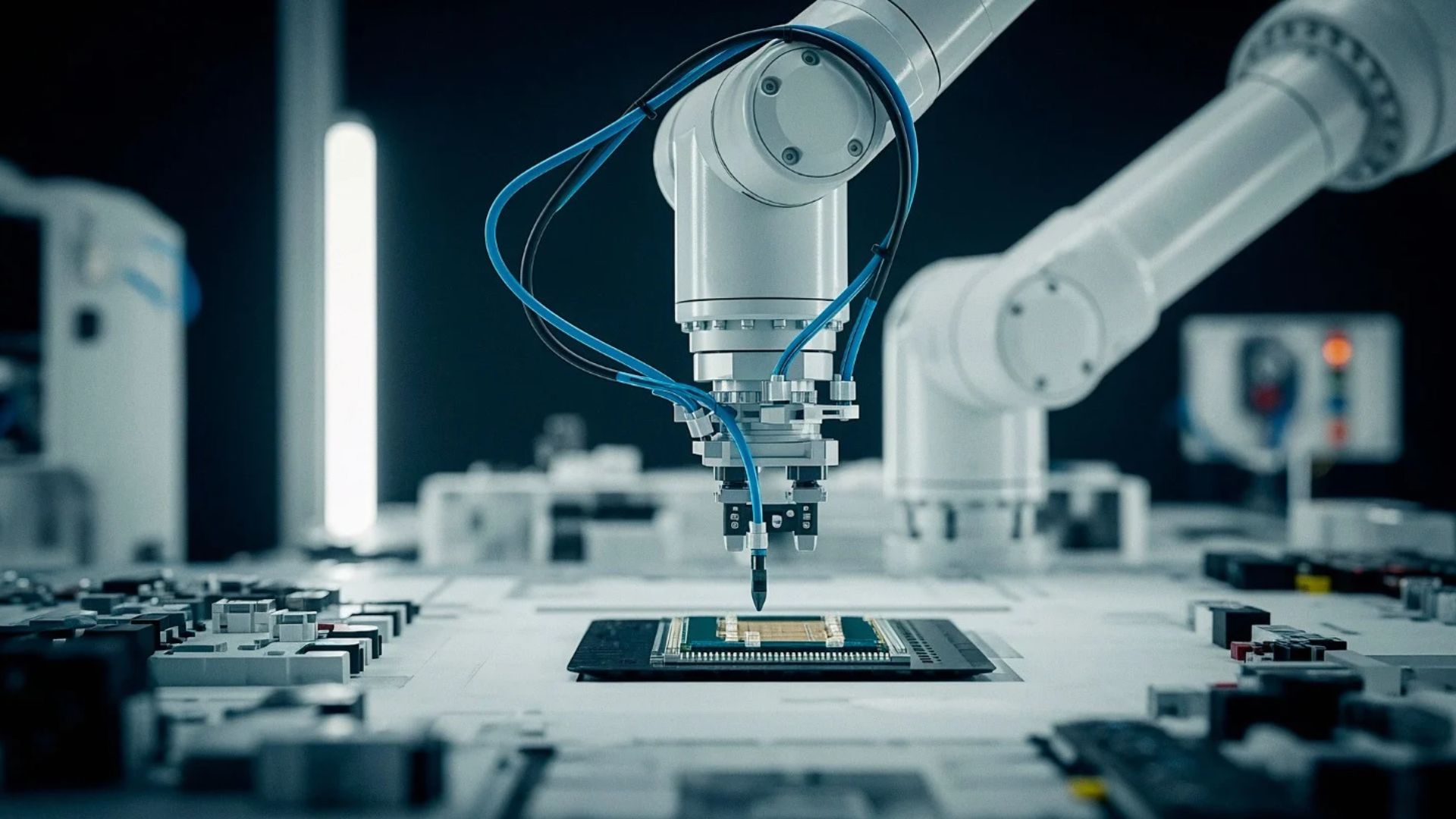
A reactor requires a vast range of components and systems, many of which depend on capabilities that Indian industry already possesses in some form. Precision machining, fabrication, specialised welding, electrical equipment, instrumentation, valves, pumps, cables, sensors, control systems, specialised materials and industrial automation are only some of the areas in which domestic suppliers could potentially participate.
The opportunity, however, is not simply about producing more components. It is about moving a section of India’s manufacturing base into a much higher standard of industrial production.
Nuclear manufacturing places an unusually high premium on precision, reliability and traceability. A supplier must be able to demonstrate not merely that a component has been manufactured, but that the material used, the process followed, the measurements taken and the quality checks performed can all be documented and verified. The tolerance for inconsistency is extremely low because the consequences of failure in a nuclear environment are fundamentally different from those in most conventional industrial applications.
For India’s MSMEs, that creates a demanding entry barrier. It also creates an opportunity for technological upgrading.
A company that invests in advanced machining, metrology, material traceability, welding qualification, quality assurance and testing to meet nuclear-sector requirements is not merely becoming a nuclear supplier. It is developing capabilities that can potentially be applied across aerospace, defence, advanced manufacturing and other high-specification industries.
This is why the nuclear opportunity should not be measured simply in terms of the number of vendors that enter the sector. Its greater significance could lie in the capabilities that Indian suppliers develop while trying to qualify for it.
The result could be a gradual shift from an MSME ecosystem built predominantly around cost competitiveness towards one increasingly defined by precision, reliability and specialised engineering.
A supply chain that will extend beyond engineering
The industrial ecosystem created by India’s nuclear expansion is also likely to extend beyond conventional manufacturing.
As nuclear facilities become more digitally integrated, the sector’s requirements will increasingly encompass industrial software, automation, data systems, predictive maintenance and cybersecurity. Nuclear facilities depend on highly specialised operational technologies and control systems, making the integrity of their digital infrastructure an important component of overall plant security.
This creates a potential market for Indian technology companies specialising in operational technology security, industrial control systems, secure communications, monitoring and cyber-risk management.
The same principle applies to maintenance and lifecycle services. Nuclear reactors are designed to operate for decades, which means that the economic opportunity surrounding a facility does not end when construction is completed. Inspection, maintenance, component replacement, calibration, monitoring, software and cybersecurity can generate demand throughout the operating life of the asset.
For MSMEs, this is an important distinction. The nuclear opportunity is not necessarily a one-time construction opportunity. It can become a long-duration industrial relationship.
The SMR opportunity could widen the market
The emergence of Small Modular Reactors could make this industrial opportunity even more relevant.
India is developing indigenous SMR technologies, including the 220 MWe Bharat Small Modular Reactor and the 55 MWe SMR-55, with the government targeting the development and operationalisation of at least five indigenous SMRs by 2033. These technologies are being considered for applications including captive power for energy-intensive industries, brownfield sites and locations where conventional large-scale nuclear deployment may not be suitable.
For Indian industry, the significance of SMRs extends beyond reactor technology.
If smaller nuclear units eventually become commercially viable for industrial applications, they could alter the energy equation for some manufacturing businesses. Industries where electricity availability, reliability and carbon intensity are increasingly important could potentially gain access to a stable source of low-carbon power.
This creates a two-sided opportunity for MSMEs. Some businesses could participate in manufacturing and servicing the nuclear ecosystem, while others could eventually become consumers of the electricity generated by it.
The broader industrial implication is therefore significant. Reliable nuclear power could support the competitiveness of energy-intensive manufacturing, while the manufacturing of nuclear equipment could itself create a new source of demand for specialised Indian suppliers.
India’s fast-breeder programme adds another dimension
The significance of India’s nuclear strategy becomes clearer when its uranium diplomacy is considered alongside its indigenous reactor programme.
In April 2026, India’s 500 MWe Prototype Fast Breeder Reactor at Kalpakkam achieved first criticality, a major milestone in the country’s three-stage nuclear programme. The achievement followed decades of indigenous research and development in fast-reactor technology.
Fast-breeder reactors occupy a particularly important place in India’s nuclear strategy because they are designed to extract greater value from nuclear fuel resources. India’s three-stage programme was conceived around the country’s distinctive resource position and the long-term objective of making greater use of thorium.
The international history of fast-breeder technology has been far from straightforward. Several countries invested heavily in the technology but eventually scaled back or discontinued major programmes because of technical, economic, regulatory and safety challenges. India, however, continued to pursue the technology as part of a long-term national strategy shaped by its own resource constraints.
The PFBR is therefore important not merely because it represents another addition to India’s nuclear capacity. It represents an attempt to develop a more resource-efficient nuclear fuel cycle through indigenous technological capability.
That makes the relationship between India’s uranium diplomacy and its fast-breeder programme particularly interesting. The two are not competing strategies. They address different stages of the same challenge.
India needs access to uranium to expand its current reactor fleet. At the same time, it is investing in technologies intended to use nuclear fuel more efficiently and expand the available fuel base over the longer term.
In simple terms, India is attempting to secure the fuel it needs today while developing technologies that can reduce the resource constraints of tomorrow.
Uranium diplomacy is becoming supply-chain diplomacy
This helps explain why India’s recent uranium agreements deserve attention beyond the energy sector.
Australia, Canada, Kazakhstan, Uzbekistan, Russia, Argentina and other partners represent different sources within a diversified international supply network. Such diversification matters in an increasingly uncertain global environment, where strategic commodities can be affected by geopolitics, sanctions, trade restrictions, transportation disruptions and changing diplomatic relationships.
India’s approach is increasingly resembling the supply-chain strategies it has adopted in other strategic sectors: diversify sources, develop domestic capabilities and reduce excessive dependence on any single geography. Uranium is therefore becoming part of a broader energy-security equation.
The country’s objective is not simply to import more uranium. It is to ensure that fuel availability does not become the limiting factor in an ambitious nuclear expansion programme.
But the ultimate measure of this strategy will not be the number of uranium agreements India signs. Nor will it be the number of reactors it builds.
The more consequential question will be how much of the industrial capability surrounding those reactors India is able to develop domestically.
The real test is localisation
India’s nuclear expansion presents an unusually large opportunity for domestic manufacturing, but opportunity alone does not guarantee participation.
The nuclear industry operates with demanding standards for quality, safety, certification and traceability. Many MSMEs that possess strong engineering capabilities may still need substantial investment before they can qualify as nuclear suppliers. Financing, technology access, certification infrastructure, specialised skills and vendor-development programmes will therefore become increasingly important.
This is where the policy ecosystem will matter. If large nuclear companies, public institutions and government agencies can create effective pathways for capable MSMEs to upgrade their processes and qualify as suppliers, the economic impact of the nuclear programme could extend far beyond the handful of companies directly involved in reactor construction.
India has already demonstrated the ability of its MSME sector to integrate into sophisticated supply chains in automobiles, aerospace, defence and electronics. Nuclear manufacturing could become another frontier, although one where the qualification cycle is longer and the standards are considerably more demanding.
The companies that begin preparing for that opportunity early may therefore have an advantage. Investments in precision engineering, quality systems, advanced materials, testing, traceability, automation and cybersecurity could position Indian suppliers for a market that is still emerging but potentially enormous.
Beyond reactors
India’s nuclear expansion is ultimately a story about more than electricity.
The uranium agreements being negotiated across continents are laying the foundation for fuel security. The 100 GW target provides the scale. The SHANTI Act is creating the framework for wider participation. The fast-breeder programme represents an indigenous attempt to overcome long-term resource constraints. And the emerging ecosystem of manufacturing, engineering, technology and services could determine how much of the economic value created by this expansion remains within India.
For the MSME sector, that may be the most important part of the story.
The country’s nuclear opportunity will not be measured only in gigawatts. It will also be measured in the number of Indian companies that can meet nuclear-grade standards, the depth of the domestic component ecosystem, the technologies that can be developed locally and the supply-chain resilience that can be built around the programme. India may be importing uranium from around the world. The larger industrial ambition is to ensure that an increasing share of everything built around that uranium is made in India.