




The Box Behind Global Trade: Why India’s Container Manufacturing Push Matters for Its MSME Economy
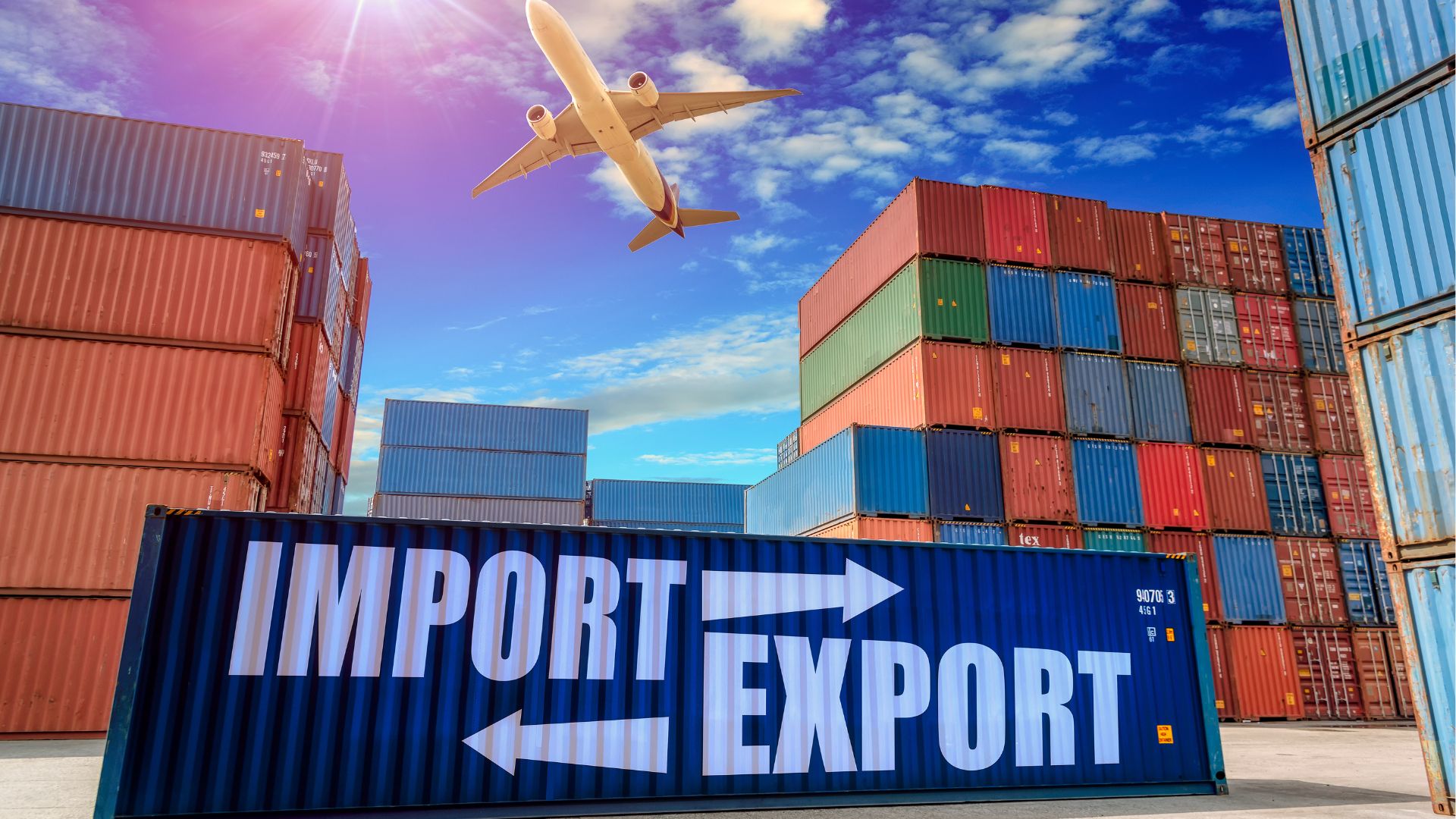
A shipping container is one of the least glamorous pieces of global trade infrastructure. At its simplest, it is a standardised steel box designed to move cargo seamlessly between ships, ports, railways and trucks.
Yet for a country seeking to expand manufacturing, increase exports and strengthen supply-chain resilience, that box is becoming strategically important.
More than 80% of global merchandise trade by volume is transported by sea, making maritime transport fundamental to international commerce. But geopolitical tensions, disrupted shipping routes, freight-rate volatility and changing trade patterns have exposed vulnerabilities that exist between the factory and the final market.
For India, this raises a question that goes beyond logistics: should a country seeking a larger role in global trade remain dependent on imported equipment to move its own goods?
The Government’s push to establish domestic container manufacturing capability suggests that the answer is increasingly no. The ₹10,000-crore Container Manufacturing Assistance Scheme (CAMS) announced in Budget 2026-27 is intended to establish a globally competitive container manufacturing industry in India. Its significance, however, should not be measured simply by how many containers the country eventually produces. The larger opportunity lies in building a value chain in which Indian MSMEs can participate as component suppliers, engineering partners, service providers and eventually exporters.
India’s Container Story Did Not Begin in 2026
India’s container-manufacturing journey is relatively recent when viewed against the country’s post-Independence trade history.
For decades, India expanded its manufacturing and EXIM economy without developing a significant, established domestic industry for manufacturing EXIM containers at scale. Containers required for the country’s international trade were largely sourced from the global market.
That gap became more visible as India’s trade volumes expanded. The country was becoming increasingly integrated into global commerce, while an important piece of the physical infrastructure required to move that trade remained dependent on external supply.
Domestic container manufacturing received a more significant push around the COVID-19 period. The National Shipping Board has identified 2020 as an important turning point, when container manufacturing in India received a “significant push” and companies began receiving orders from the Container Corporation of India (CONCOR).
CONCOR subsequently sought to develop India as a “Container Manufacturing Hub”. Its 2021-22 annual report records efforts to identify indigenous manufacturers and procure containers under the broader Atmanirbhar Bharat initiative.
The effort expanded over the following years. A Lok Sabha response stated that CONCOR had placed orders for 20,890 containers with Indian manufacturers since 2021, of which 14,607 had been delivered by November 2024.
The trajectory is therefore more nuanced than saying India only recently learned to manufacture containers. The capability existed, but it had not evolved into a significant, established industry at scale. What has changed in recent years is the degree of policy attention, commercial demand and strategic importance attached to that capability.
The current policy push is consequently about moving from limited domestic production towards a commercially viable and globally competitive industry.
The Container Is Becoming a Strategic Manufacturing Asset
For years, the shipping container was primarily viewed as a logistics asset something shipping lines bought, leased, repositioned and deployed across trade routes. Global disruptions have changed that perspective.
The availability of physical logistics assets can influence the efficiency and cost of moving goods just as significantly as ports, vessels and digital systems. When trade routes shift or cargo flows become unbalanced, shortages or poor positioning of containers can create additional pressure across supply chains.
For India, this becomes increasingly relevant as EXIM volumes grow and domestic manufacturers integrate more deeply into international production networks.
A container shortage may not stop a factory from producing, but it can prevent its products from reaching an overseas customer on schedule. Container availability is therefore becoming part of export competitiveness.
The manufacturing initiative represents a shift from simply consuming global logistics infrastructure towards developing greater domestic capability in one of the physical assets that supports international trade.
From Import Dependence to Manufacturing Capability
The objective should not be viewed simply as replacing every imported container with an Indian-made one. The larger ambition is to establish the scale, cost competitiveness, quality standards and supplier depth required for a sustainable industry.
The scheme announced in the Union Budget provides support for new manufacturing facilities, expansion of existing units, operational competitiveness, testing infrastructure, skilling and capacity building. But a container factory does not operate in isolation.
Its production requires steel, fabricated structures, corner castings, flooring, coatings, welding systems, machinery, testing, inspection, maintenance and industrial services. This is where India’s existing MSME manufacturing base can become strategically relevant.
The Real Make-in-India Opportunity Is Beneath the Container
The finished container may come out of a specialised manufacturing facility, but its production can generate business opportunities across a much wider industrial network.
A precision engineering SME could supply specialised components. A fabrication company could manufacture structural parts. A coatings manufacturer could develop corrosion-resistant solutions. Other businesses could provide welding equipment, industrial machinery, testing, maintenance or logistics services. This makes the opportunity larger than the container itself.
India’s manufacturing landscape is already characterised by industrial clusters and specialised smaller enterprises. If container production expands, these capabilities could increasingly connect with a new strategic industry.
For MSMEs, this could create a pathway to greater domestic value addition and participation in global supply chains not merely through the production of the finished container, but through the components and services required to manufacture and operate it.
Why International Standards Matter
The first India-manufactured EXIM container unveiled in July 2026 provides an important indication of where this journey is heading.
Produced for global shipping major A.P. Moller-Maersk, the container was manufactured in accordance with internationally recognised ISO specifications and the International Convention for Safe Containers (CSC), allowing it to be deployed within global shipping networks. Maersk subsequently placed an order for another 1,000 India-manufactured containers with an Indian manufacturer.
The significance lies less in the unveiling itself and more in the commercial validation it represents. India is beginning to demonstrate that it can manufacture containers to the standards required by a global shipping company.
For MSMEs, that distinction is important. Entry into such supply chains requires more than manufacturing capacity. Quality consistency, certification, traceability, delivery reliability and adherence to global procurement standards become equally important.
Container manufacturing could therefore become another route through which Indian MSMEs move from serving domestic industrial customers towards becoming integrated suppliers to global companies.
The Container Push Is Part of a Larger Maritime Strategy
Container manufacturing is also emerging alongside a wider transformation of India’s maritime infrastructure.
In February 2026, the Government moved forward with the Bharat Container Shipping Line (BCSL), aimed at building greater domestic capability in container shipping. This creates a broader picture.
Container manufacturing strengthens the equipment layer. Domestic shipping capability strengthens the vessel layer. Port and terminal expansion strengthens the infrastructure layer. Multimodal connectivity improves the movement layer. And digital logistics platforms strengthen the visibility and coordination layer.
Together, these initiatives point towards a larger objective: developing greater domestic capability across the infrastructure that supports India’s participation in global trade.
Where MSMEs Fit into the Strategy
For India’s SME ecosystem, the important question is not simply how many container factories will be established. It is how many Indian businesses can become part of the value chain created around them.
Container manufacturing can generate demand across metal fabrication, components, industrial automation, coatings, testing, maintenance and logistics. But entering these supply chains will require SMEs to strengthen quality systems, technology adoption, certification, traceability and production consistency.
Large global customers also tend to impose stringent vendor qualification, delivery and financial requirements. For smaller businesses, meeting these standards may require investment in both technology and organisational capability.
That challenge is also an opportunity. If policy-led manufacturing demand encourages SMEs to upgrade their processes and capabilities, the benefits can extend beyond the container industry. Businesses become better positioned to supply larger domestic manufacturers and participate in international value chains.
The policy impact can therefore be measured not only in factories and production capacity, but also in the capabilities built among the enterprises surrounding those factories.
Resilience Is About Reducing Dependency, Not Eliminating It
Domestic container manufacturing will not insulate India from global supply-chain shocks. Steel prices will continue to fluctuate, machinery and certain inputs may remain internationally sourced, freight rates can rise and geopolitical disruptions can still affect trade routes.
The objective is therefore not complete self-sufficiency. It is to reduce a strategic dependency while increasing India’s ability to respond when global supply conditions change.
If India can manufacture internationally compliant containers competitively and maintain adequate domestic capacity, it gains another layer of flexibility within its logistics system.