




₹69,548 Crore, 106 Projects: How ECMS Is Deepening India’s Electronics Manufacturing Base
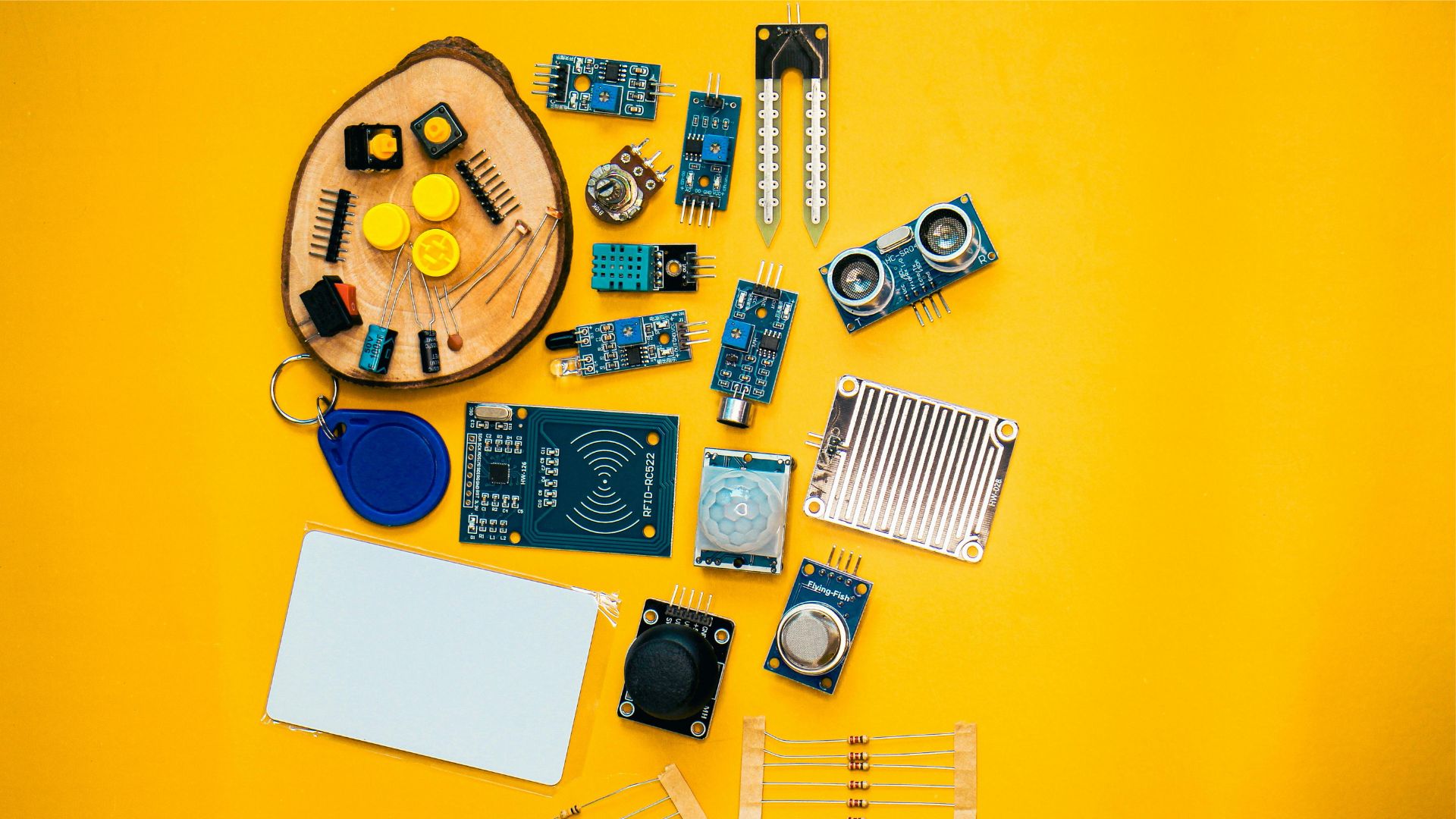
India’s electronics manufacturing strategy is entering a more important phase. The focus is shifting from expanding assembly capacity to building the components, materials, sub-assemblies and manufacturing capabilities that sit underneath finished electronic products.
The latest approvals under the Electronics Component Manufacturing Scheme (ECMS) reinforce this transition. The government has approved 31 additional projects, taking the total number of approved projects to 106. The latest approvals involve ₹7,877 crore of investment commitments, including ₹6,844 crore across the 31 proposals and an additional ₹1,033 crore investment by Wipro Global Engineering and Electronic Materials for copper-clad laminate manufacturing.
Cumulatively, the 106 approved projects represent ₹69,548 crore of investment across 15 states and are expected to generate 74,628 direct jobs and around 2.5 lakh direct and indirect employment opportunities.
The numbers are significant, but the product mix is arguably more important.
From assembly to the components beneath it
India has made substantial progress in electronics assembly, particularly in mobile phones and consumer electronics. But assembly-led growth has an inherent limitation. A finished product may be manufactured in India while many of its critical components, materials and manufacturing equipment continue to be imported.
That creates an electronics ecosystem that is large in output but relatively shallow in domestic value addition. ECMS is designed to address precisely this gap.
The latest approvals cover 20 target-segment products spanning sub-assemblies, components, supply-chain products and capital goods. These include camera and display modules, optical transceiver-SFPs, connectors, enclosures, transducers, speakers and microphones, relays, antennas, coils, filters, capacitors and metal shielding covers.
More importantly, the scheme is moving upstream into anode materials, rare-earth permanent magnets, acetylene black, electrolyte additives, metallised films for capacitors and hermetic terminals.
This is strategically important because supply-chain resilience is ultimately determined by access to critical inputs, not merely by the ability to assemble the final product.
The ₹40,000-crore question
One of the most important aspects of ECMS is understanding what the government’s ₹40,000-crore outlay actually represents.
The ₹40,000 crore is the revised government fiscal outlay for the scheme. It is not the investment being made by companies.
The original ECMS outlay was ₹22,919 crore. The government subsequently increased it to ₹40,000 crore in response to strong industry interest and the scale of investment proposals emerging under the scheme.
By comparison, the 106 approved projects represent ₹69,548 crore of cumulative private investment commitments.
This distinction matters. It demonstrates the leverage that a targeted fiscal incentive can potentially create. Government support is being used to reduce the economic barriers associated with establishing component manufacturing, while the larger capital commitment is coming from industry.
The policy objective is therefore not simply to spend ₹40,000 crore. It is to use that fiscal envelope to catalyse a much larger manufacturing ecosystem.
What ECMS is designed to solve
Component manufacturing has historically faced several structural disadvantages in India.
It is capital intensive, requires specialised technology, operates on relatively thin margins in several segments and depends on economies of scale. Global OEMs also demand extremely high standards of quality, consistency and delivery reliability.
For a new Indian component manufacturer, these factors can make the initial investment commercially difficult.
ECMS attempts to change that equation through differentiated incentives covering turnover, capital expenditure and a combination of both, depending on the target segment.
The scheme also incorporates employment-linked conditions, ensuring that incentives are connected not simply to investment announcements but to measurable economic activity.
This design is important because it moves away from an unconditional subsidy model.
The broader philosophy is straightforward: invest, manufacture, sell and create employment in India and receive support against defined performance parameters.
Why raw materials matter
The inclusion of materials such as acetylene black, electrolyte additives and anode material deserve particular attention.
These may not be visible in a finished electronic product, but shortages of such inputs can disrupt an entire production chain.
The same applies to rare-earth permanent magnets. Their applications extend across electronics, motors, automotive systems and other high-technology industries. Building domestic capacity in such materials reduces exposure to external supply disruptions and creates an upstream industrial base.
The government’s own data also suggests that capacity is beginning to emerge in several segments. Production capacity already exceeds estimated domestic demand in areas such as anode material, where capacity is around 110% of demand, optical transceiver-SFP at approximately 350%, and relays at around 200%.
This changes the conversation from import substitution to potential export capability.
If domestic capacity exceeds domestic consumption, the next question is whether Indian manufacturers can compete globally on price, quality and reliability.
The overlooked importance of capital goods
Perhaps the most strategically significant component of ECMS is its focus on capital goods and their parts.
Manufacturing components domestically is only one part of the challenge. India also needs the machinery, tools and specialised equipment required to manufacture those components.
If factories are established in India but the critical manufacturing equipment continues to be imported, another layer of supply-chain dependence remains.
Domestic capital-equipment manufacturing can therefore have a multiplier effect. A machine produced in India can enable several component factories, which in turn supply multiple electronics manufacturers.
The latest approvals include projects associated with electronics manufacturing equipment, reinforcing the idea that ECMS is not simply building factories. It is beginning to build the industrial infrastructure behind those factories.
A wider geographical footprint
The 31 latest projects are spread across 10 states: Goa, Gujarat, Haryana, Himachal Pradesh, Karnataka, Maharashtra, Tamil Nadu, Telangana, Uttar Pradesh and Uttarakhand.
The cumulative 106 projects extend across 15 states. This geographical distribution is important for another reason. A successful electronics ecosystem requires more than large factories. It requires suppliers, logistics providers, engineering companies, testing facilities, skilled manpower and ancillary manufacturers.
A wider geographical footprint can help create regional manufacturing clusters and reduce concentration risk.
The employment multiplier
The latest 31 projects are expected to generate 9,588 direct jobs, while the cumulative 106 projects are expected to create 74,628 direct jobs and approximately 2.5 lakh indirect employment opportunities.
The indirect impact could ultimately be more important than the factory-level numbers.
A deeper component ecosystem creates demand for precision engineering, tooling, testing, industrial automation, quality control, logistics, maintenance, materials science and process engineering.
That can gradually create a specialised industrial workforce capable of supporting increasingly sophisticated manufacturing.
The real test begins after approval
The approval numbers are encouraging, but they should not be confused with completed manufacturing capacity.
The government has said that of the 106 approved projects, 38 plants have already commenced manufacturing and another 16 are at advanced stages of construction or machinery installation.
This provides an early indication of execution, but the ultimate assessment will depend on whether approved projects become commercially viable manufacturing operations.
Five indicators will matter most: actual domestic value addition, capacity utilisation, global customer qualification, export competitiveness and technology ownership.
The question is whether Indian manufacturers can produce them at globally competitive cost and quality, at scale and consistently enough to become part of international supply chains.
The larger strategic shift
ECMS is therefore best understood as a second-generation electronics manufacturing policy. The first phase was about establishing India as a major location for electronics production and assembly.
The next phase is about creating the ecosystem underneath that production.
The latest approvals show this clearly. Camera modules and display modules matter, but so do connectors and capacitors. Anode materials and rare-earth magnets matter. Copper-clad laminate matters. Manufacturing machinery matters.
Taken together, these investments address different layers of the same problem: how to increase the amount of economic value created inside India before a finished electronic product leaves the factory.
With the scheme’s fiscal outlay now at ₹40,000 crore and approved private investment at ₹69,548 crore across 106 projects, ECMS has moved beyond being a policy announcement. It is becoming an important instrument in India’s attempt to construct a deeper electronics manufacturing base.
The real measure of success will not be the amount of government money committed, or the number of projects approved.
It will be whether those projects create a durable, competitive and increasingly self-sustaining Indian electronics supply chain.
That is ultimately what will determine whether India remains primarily a global assembly destination or evolves into a full-spectrum electronics manufacturing hub.