




Know Your Export Ecosystem: Why the Rubber Board Matters Far Beyond Plantations
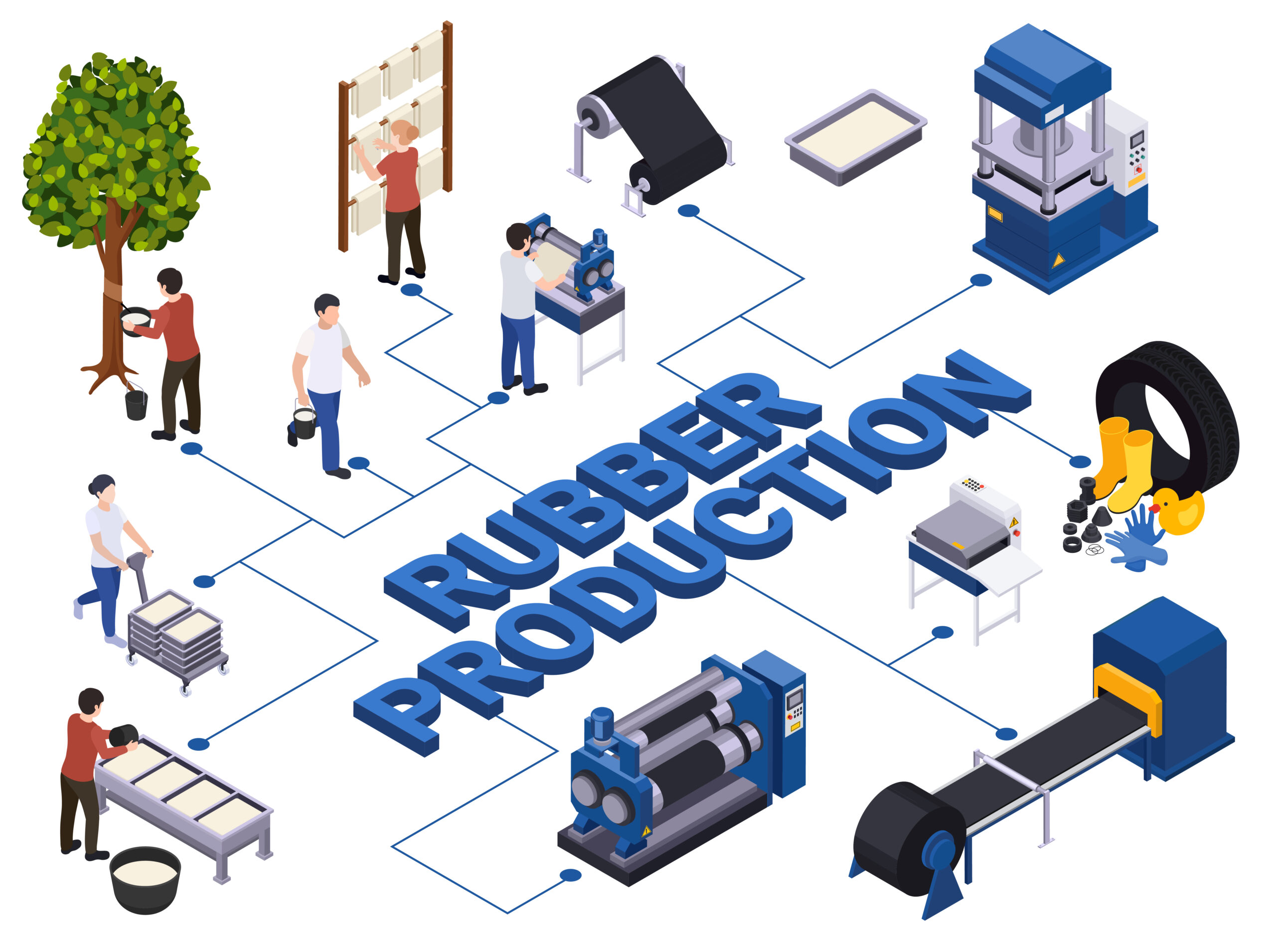
India’s rubber sector is often viewed narrowly through the lens of plantations and commodity cycles. Yet beneath that traditional perception lies a far larger industrial ecosystem increasingly connected to manufacturing, mobility, exports and supply-chain resilience.
From automotive tyres and conveyor belts to medical gloves, industrial components, footwear and aerospace applications, rubber today sits at the centre of multiple manufacturing value chains. As India positions itself as a stronger global manufacturing hub, the importance of the domestic rubber ecosystem is expanding well beyond agriculture.
The numbers themselves highlight the scale of this transition. India is currently among the world’s largest producers and consumers of natural rubber, with annual consumption crossing 1.4 million tonnes in recent years, driven heavily by automotive and industrial demand. The Indian tyre industry alone is projected to exceed ₹1 lakh crore in turnover over the next few years, supported by rising vehicle production, replacement demand and export momentum. Simultaneously, rubber-based product exports from India spanning tyres, gloves, mats, industrial goods and latex-based products continue contributing billions of dollars annually to the country’s export basket.
Yet despite the size of the opportunity, many SMEs operating across the rubber ecosystem remain disconnected from the broader institutional and export support frameworks shaping the industry’s future.
That is where Rubber Board becomes increasingly relevant, not merely as a plantation-focused institution, but as a strategic ecosystem enabler for manufacturing-linked SMEs.
The Rubber Industry Is Becoming More Technology-Driven
The global rubber business is changing rapidly. Automotive electrification, sustainability pressures, circular economy expectations and advanced material science are reshaping demand patterns across industries. International buyers increasingly evaluate suppliers not only on cost competitiveness, but also on traceability, environmental standards, quality consistency and compliance readiness.
This matters significantly for Indian SMEs. A mid-sized rubber products manufacturer in Kerala, Tamil Nadu or Maharashtra may possess strong production capability, but global competitiveness today increasingly depends on understanding changing industry expectations early. Export markets are becoming more quality-sensitive and sustainability-oriented. Buyers are paying closer attention to testing standards, raw material sourcing and long-term supply reliability.
This is where ecosystem awareness begins to matter commercially. The Rubber Board’s initiatives around quality improvement, skill development, production enhancement, testing infrastructure, market development and export support are becoming increasingly relevant in an industry moving towards higher-value manufacturing rather than pure commodity dependence.
Why SMEs Often Stay Trapped in Low-Margin Segments
One of the recurring challenges within India’s rubber ecosystem is that many SMEs continue operating in fragmented, low-margin manufacturing structures despite being part of globally relevant supply chains.
Several businesses remain heavily dependent on domestic intermediaries or limited customer bases without actively exploring higher-value export opportunities. Others focus primarily on production efficiency while underestimating the importance of certifications, market positioning and industry visibility.
This becomes particularly important as India attempts to strengthen its role within global automotive and industrial manufacturing supply chains.
Consider a small rubber components manufacturer supplying to domestic auto ancillaries. Without exposure to evolving export standards or global sourcing trends, the company may continue operating within highly price-sensitive local markets. Another SME within the same cluster that proactively engages with export development initiatives, testing infrastructure and international buyer ecosystems may gradually transition into supplying specialised components for export-oriented manufacturing networks.
The difference often lies less in production capability and more in ecosystem participation and market intelligence.
The Sustainability Shift Is Reshaping Global Rubber Trade
Another major trend influencing the industry is sustainability-linked trade regulation.
Global buyers, especially across Europe, are placing greater emphasis on deforestation-free sourcing, traceability and ESG-linked procurement practices. New environmental regulations and supply-chain transparency expectations are likely to affect rubber-linked industries significantly over the coming years.
For Indian SMEs, this creates both pressure and opportunity. Businesses that understand these transitions early can position themselves more favourably within evolving global supply chains. Those that remain disconnected from emerging compliance and sustainability expectations may find themselves increasingly excluded from higher-value international markets.
This is precisely why industry institutions are becoming more important strategically. The Rubber Board’s role is gradually extending beyond traditional cultivation support into areas connected with technology adoption, quality enhancement, skill development and market competitiveness. For SMEs operating across manufacturing-linked rubber value chains, staying connected to these developments could become commercially significant over time.
Why This Matters for India’s Manufacturing Ambitions
India’s manufacturing ambitions, particularly in automotive, industrial products and export-oriented sectors, cannot scale effectively without a stronger and more globally competitive rubber ecosystem.
But the future of the industry will not be shaped only by large tyre manufacturers or multinational players. Increasingly, it will depend on how effectively SMEs integrate themselves into higher-value supply chains, adopt global standards and improve export readiness.
That transition requires more than production capacity alone. It requires ecosystem literacy. Because in sectors such as rubber, competitiveness is no longer defined only by what businesses manufacture. Increasingly, it is also defined by how well they understand the ecosystem around them.