




$9.6 Billion in Auto Exports in Four Months: Why India’s Component Makers Matter
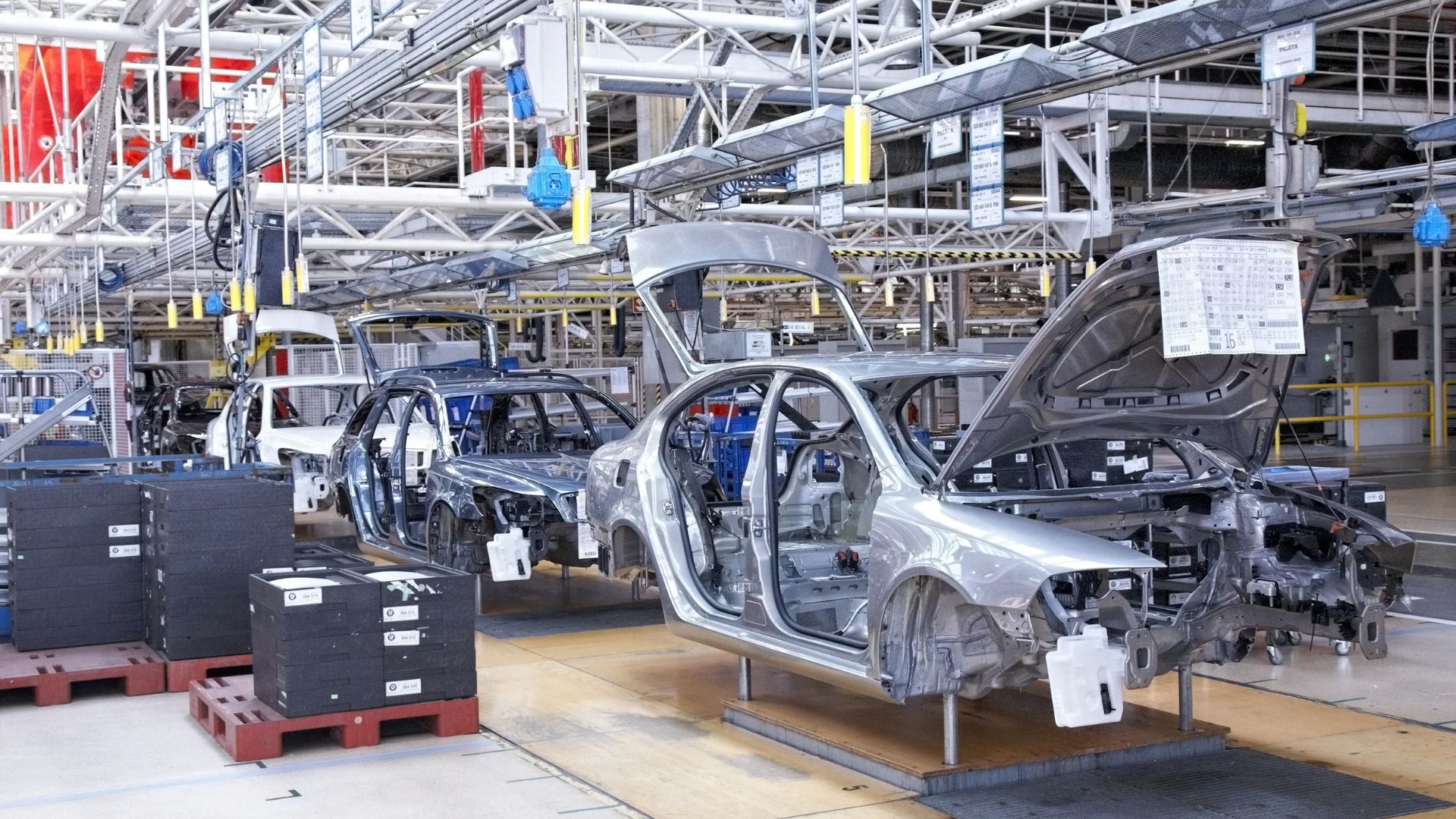
India’s automotive export story is acquiring a different shape. Finished vehicles remain the most visible part of it, but beneath the growth in car and two-wheeler shipments, another export opportunity is taking form across the country’s large and increasingly sophisticated component manufacturing base.
The latest figures from the Engineering Export Promotion Council of India (EEPC India) show how broad the momentum has become. During April-July 2026-27, exports of motor vehicles and cars increased 15.78% year-on-year, while two- and three-wheeler exports rose 28.72%. Auto components and parts registered 5.97% growth and tyres and tubes grew 4.59%. Together, these four categories generated $9.60 billion in exports during the first four months of FY27, an increase of 12.89% over the corresponding period.
The more interesting question for India’s SME manufacturing ecosystem is what happens further down the value chain. If Indian vehicles are increasingly finding overseas markets, can the companies making the components inside those vehicles capture a larger share of the same global demand?
A smaller component can open a much larger market
A September assessment by the Commerce Ministry’s Trade Intelligence and Analytics portal provides an indication of where this opportunity could emerge. Exports of motorcycle and moped parts reached $274.4 million during April-June 2026-27, with demand spread across South Asia, Latin America, Europe and emerging markets.
The significance of this number lies less in its absolute size than in what it says about the nature of India’s export opportunity. A company does not have to manufacture an entire motorcycle to participate in an international motorcycle market. A precision component, replacement part or specialised assembly can travel through an entirely different route involving OEMs, distributors, aftermarket networks and specialist importers.
For India’s smaller engineering businesses, that distinction matters. Becoming a global automotive supplier can be a more attainable proposition than building an international vehicle brand.
It also means that India’s auto-export story should increasingly be viewed through the depth of its supply chain, rather than only through the number of finished vehicles leaving Indian ports.
India’s component industry already has the industrial geography
India has the manufacturing base to pursue this opportunity. Automotive activity is concentrated around established clusters such as Pune and the wider Mumbai-Nashik-Aurangabad belt, Chennai, Bengaluru-Hosur and the Delhi-NCR region. Rajkot and Pithampur have developed strong engineering and component capabilities, while newer manufacturing centres such as Sanand, Sri City and Anantapur are adding capacity to India’s automotive landscape. NITI Aayog’s assessment of India’s automotive global value chains identifies these clusters as important nodes in the country’s manufacturing ecosystem.
The importance of these locations goes beyond the presence of vehicle manufacturers. Automotive clusters create an ecosystem of tooling companies, precision machinists, forging and casting units, electrical manufacturers, testing facilities, logistics providers and smaller ancillary suppliers.
That ecosystem can give SMEs an entry point into global supply chains without requiring them to build every capability independently.
A company in Rajkot, for instance, may begin by supplying a domestic manufacturer and eventually find its component travelling abroad as part of an exported vehicle. Another manufacturer in Pune, Chennai or Sanand could move from supplying a domestic Tier-1 company to pursuing direct overseas customers.
The progression is incremental, but its economic significance can be substantial.
The industry is now looking beyond cost competitiveness
The scale of India’s component industry makes this transition possible.
According to the Automotive Component Manufacturers Association of India (ACMA), the sector recorded turnover of ₹7.59 lakh crore, or $85.9 billion, in FY2025-26. Component exports reached $24 billion, while supplies to domestic OEMs rose 16.3%. Europe emerged as the fastest-growing export market for Indian components during the year.
This is no longer an industry whose relevance can be explained simply by India’s lower manufacturing costs. The competitive equation is shifting towards engineering capability, quality consistency, technology, localisation and the ability to integrate into global sourcing programmes.
That shift was also visible in September. At ACMA’s annual session, the Commerce and Industry Ministry emphasised the need for Indian component manufacturers to build global businesses, strengthen supply-chain resilience and move up the value chain. At the SIAM annual convention, the government similarly highlighted localisation, technology, innovation, R&D, skills and diversification of export markets as important priorities for the automotive sector.
The policy message is straightforward. Cost can open the door to an international supply chain, but it is unlikely to keep that door open indefinitely.
The difficult step is becoming a qualified supplier
For SMEs, this is perhaps the most important part of the export story. There is a substantial difference between manufacturing a component to specification and becoming a qualified international supplier. Global automotive buyers need consistency across production batches, documented processes, traceability, testing, certification and reliable delivery. Increasingly, they also expect suppliers to contribute engineering capability rather than simply manufacture a drawing provided by someone else. That creates a different investment requirement.
The next stage of India’s component-export growth may therefore depend less on adding basic production capacity and more on improving the capabilities that allow smaller manufacturers to qualify for international programmes.
Metrology, testing, tooling, automation, process control, product development and quality management may not be as visible as a new factory, but they determine whether an SME can remain part of a global supply chain once it has won the initial order.
This is particularly relevant as international manufacturers look to diversify sourcing and reduce concentration risks in their supply chains.
The aftermarket creates another route
The global aftermarket could provide an additional pathway for Indian component manufacturers. Unlike an OEM programme, where supplier qualification can be lengthy and procurement is concentrated among established players, the aftermarket is more fragmented. Replacement parts and service components move through distributors, wholesalers, repair networks and specialist importers across multiple countries.
India already has a sizeable domestic aftermarket to draw upon. ACMA estimates that the domestic automotive aftermarket reached ₹1.85 lakh crore, or $12.3 billion, in FY2025-26, growing 9%.
That experience can help Indian manufacturers understand the economics of replacement demand. But competing internationally requires more than offering a lower price. Product consistency, packaging, traceability, warranty support and dependable supply become critical when the buyer is thousands of kilometres away.
For an SME, the export proposition therefore extends beyond the component itself. It includes the reliability of the entire supply system behind it.
Electrification will change which components matter
There is another reason why the component story needs to be viewed over a longer horizon.
Electric vehicles are changing the architecture of the automobile. Some traditional internal-combustion components will gradually face declining demand, while new opportunities are emerging around electric motors, power electronics, thermal management, sensors, controllers, wiring systems and other electrical and precision-engineered components.
ACMA estimates that EV components, excluding lithium-ion batteries, accounted for 4.6% of domestic OEM supplies in FY2025-26.
For Indian SMEs, this transition presents both an opportunity and a qualification challenge. Companies with established machining, electrical or precision-engineering capabilities may be able to adapt those capabilities to new product categories. Others may need to invest in technology, engineering and testing before they can participate.
The important point is that the component opportunity is not static. The global vehicle architecture itself is changing, and suppliers that can adapt to that change will have a different export proposition from those competing only in mature categories.
Trade access can amplify manufacturing capability
Market access will also matter. India’s trade agreements are gradually changing the conditions under which Indian manufactured products enter major markets. Under the India-UK Comprehensive Economic and Trade Agreement, almost 99% of India’s exports to the UK receive zero-duty access, covering nearly the entire trade value. The Department of Commerce specifically identifies auto parts among the sectors expected to benefit.
Tariff access by itself does not create competitiveness. A buyer will still demand the right quality, certification, price and delivery performance.
But when favourable market access is combined with a capable domestic supplier base, it can make the business case for sourcing from India more attractive.
This is where manufacturing clusters, trade policy and SME export capability begin to intersect.
The deeper auto-export opportunity
India’s recent automotive export numbers do not suggest that components are about to replace finished vehicles as the country’s principal automotive export story. They reveal something more useful: India’s participation in the global automotive economy is becoming deeper.
Cars are being exported. Two- and three-wheeler shipments are growing rapidly. Components are finding overseas buyers. Motorcycle and moped parts are reaching geographically diverse markets. At the same time, India’s established automotive clusters are developing alongside newer manufacturing centres.
For SMEs, this creates multiple points of entry into the global automotive value chain.