



India Built a Textile Industry Around Cotton. It Is Now Building One Around Capability.
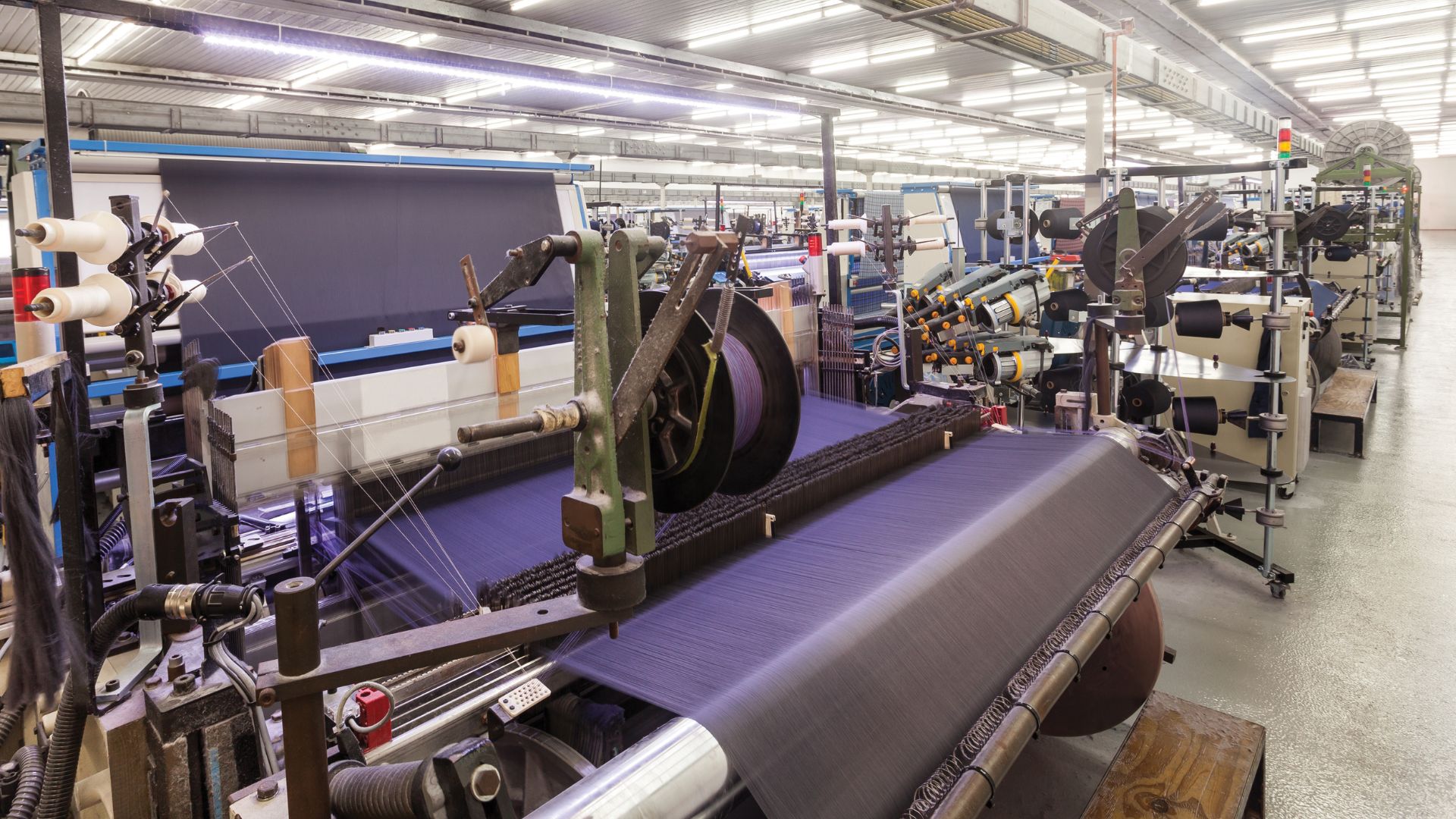
Fine muslin from Bengal was prized in European courts, Kanchipuram silk became synonymous with craftsmanship, Banarasi brocades reflected India’s weaving heritage, while Gujarat’s cotton fabrics found markets across West Asia and Africa. Long before manufacturing became an economic strategy, textiles had already become one of India’s earliest global industries. Even during the colonial era, India’s textile economy remained central to global trade, although its role shifted from exporting finished fabrics to supplying raw cotton for Britain’s industrial revolution.
Independent India rebuilt the industry once again. Large composite mills, cooperative spinning units, handloom clusters and power loom towns gradually restored manufacturing capacity, making textiles one of the country’s largest employment generators. Liberalisation in the 1990s unlocked exports, while subsequent decades witnessed the rise of globally recognised clusters such as Tiruppur, Surat, Panipat, Ludhiana, Karur, Bhilwara and Ichalkaranji.
Today, the industry is entering another transformation one that is perhaps more profound than any before it. This transition is no longer centred on producing more cotton or exporting more garments. It is about building deeper manufacturing capabilities, integrating fragmented supply chains and positioning India higher in global textile value chains.
The latest initiatives announced by the Ministry of Textiles illustrate this shift. Viewed individually, schemes such as PM MITRA Parks, the Production Linked Incentive (PLI) Scheme, technical textile initiatives and district-based export programmes may appear as separate policy interventions. Together, however, they reveal something larger: India is gradually redesigning its textile industry from a collection of production centres into an integrated manufacturing ecosystem.
India’s Textile Industry Is Healthy, But Its Next Challenge Is Different
By most conventional measures, India’s textile industry remains remarkably resilient.
It contributes around 2% to national GDP, accounts for nearly 12% of manufacturing Gross Value Added (GVA) and approximately 13% of industrial production. The sector supports over 45 million direct jobs and another 100 million people through allied activities, making it one of the country’s largest employers after agriculture. During FY2025-26, India’s textiles, apparel and handicrafts exports crossed ₹3.25 lakh crore, reinforcing the industry’s position as a major contributor to merchandise exports.
Scale, however, is no longer the defining question. The real challenge is value addition.
India remains one of the world’s largest producers of cotton, yarn and fabrics, yet global textile trade is increasingly shifting towards man-made fibres (MMF), technical textiles, sustainable materials, engineered fabrics and specialised industrial applications. The industry is moving beyond apparel into sectors as diverse as healthcare, mobility, infrastructure, defence, agriculture and advanced manufacturing.
In other words, the future of textiles is becoming increasingly technological.
The World’s Textile Leaders No Longer Compete Only on Labour Costs
For decades, textile competitiveness was largely determined by labour availability and production costs. That equation has changed.
Global buyers now evaluate suppliers on an entirely different set of parameters: integrated manufacturing, traceability, sustainability, speed-to-market, compliance, digital production systems and supply-chain resilience. The ability to manufacture a garment is no longer enough. Manufacturers are increasingly expected to demonstrate where fibres originate, how chemicals are managed, whether factories meet ESG commitments and how quickly products can move from design to delivery.
This explains why countries leading global textile exports have invested heavily in manufacturing ecosystems rather than isolated factories.
China built integrated industrial clusters where fibre production, spinning, weaving, dyeing, processing, machinery manufacturing and logistics operate within interconnected supply chains. Vietnam strengthened export competitiveness through trade agreements and manufacturing integration. Italy continues to dominate premium textiles through specialised regional clusters, while Germany focuses on high-value technical textiles and industrial fabrics.
The competitive advantage increasingly lies in ecosystems not individual factories.
India’s Textile Clusters Are Quietly Becoming Industrial Ecosystems
One of the least discussed developments in India’s manufacturing landscape is the evolution of its textile clusters.
Surat has expanded far beyond synthetic fabrics to become one of the world’s largest MMF and polyester textile hubs. Tiruppur continues to strengthen its position as a global knitwear export cluster. Panipat has emerged as a leader in recycled textiles and home furnishings. Ludhiana dominates woollens and hosiery, while Karur has built an internationally competitive home textile ecosystem. Bhilwara, often referred to as the country’s textile city, has diversified into technical fabrics and synthetic yarns, and Coimbatore continues to anchor India’s spinning machinery and textile engineering capabilities. Each cluster specialises in different parts of the value chain.
Collectively, they represent something far more valuable than individual manufacturing centres they form interconnected industrial ecosystems capable of supporting global supply chains.
Recognising this potential, the Ministry of Textiles has adopted initiatives such as the 100 Champion Textile Districts and 100 Aspirational Textile Districts, aiming to strengthen district-level manufacturing, exports and infrastructure. Textile production is gradually becoming geographically diversified instead of remaining concentrated in a handful of legacy centres.
Policy Has Shifted from Supporting Mills to Building Manufacturing Networks
Perhaps the most significant change is occurring within industrial policy itself.
Earlier policy interventions largely focused on expanding production capacity through mills, subsidies and export incentives. The current approach is considerably broader.
PM MITRA Parks integrate fibre production, spinning, weaving, processing, garmenting, warehousing and logistics within a single manufacturing ecosystem. Bharat Tex connects manufacturers with global buyers, investors and technology providers. The Production Linked Incentive Scheme targets higher-value MMF apparel and technical textiles, while programmes such as the Amended Technology Upgradation Fund Scheme (ATUFS) and Integrated Textile and Apparel Development Centres (ITADCs) seek to modernise machinery, testing, design capabilities and workforce skills.
Instead of treating infrastructure, technology, exports and manufacturing as separate priorities, policy is increasingly attempting to reduce friction across the entire textile value chain.
This ecosystem-based approach mirrors strategies adopted by many of the world’s successful manufacturing economies.
MSMEs Remain the Industry’s Strongest Competitive Advantage
The transformation of India’s textile industry cannot occur without its MSMEs. Unlike semiconductor manufacturing or large-scale petrochemicals, textiles are inherently distributed. Thousands of spinning units, weaving enterprises, dyeing facilities, garment manufacturers, processing units and exporters collectively form the backbone of India’s textile economy.
Many operate within regional industrial clusters where decades of accumulated knowledge have created specialised manufacturing capabilities.
Recent government initiatives increasingly acknowledge this reality. Under the PLI Scheme, 96 approved companies have committed investments exceeding ₹12,800 crore, targeting MMF apparel and technical textiles. Simultaneously, more than 10,000 textile units have received support under ATUFS, leveraging investments exceeding ₹53,000 crore towards technology modernisation and productivity improvements.
Rather than replacing MSMEs, the current policy direction aims to make them more competitive through better technology, common infrastructure, quality testing, design support and market access.
The Next Growth Opportunity Lies Beyond Apparel
Another structural shift receiving relatively little public attention is the rapid rise of technical textiles.
These products serve industries ranging from healthcare and construction to defence, automotive, filtration, geotextiles, agriculture and industrial manufacturing. Unlike conventional garments, technical textiles combine engineering, polymers, advanced materials and performance characteristics, creating higher entry barriers and stronger value addition.
India has already launched the National Technical Textiles Mission and aligned production incentives towards these higher-value segments. This reflects an important strategic objective: moving beyond volume-led manufacturing towards technology-intensive products capable of commanding higher global market share.
As manufacturing itself becomes more advanced, demand for industrial fabrics, composites and specialised textile applications is expected to expand significantly.
The Real Measure of Success Is Changing
The health of India’s textile industry can no longer be judged solely by export figures or production volumes. The more meaningful indicators today are whether manufacturers are moving into higher-value products, whether MSMEs are adopting advanced technologies, whether clusters are becoming globally integrated ecosystems and whether domestic supply chains are capable of reducing dependence on imported machinery, fibres and specialised materials. The industry’s next phase will not be defined simply by how many garments India exports.
It will depend on how much intellectual property, technology, engineering, sustainability and manufacturing capability India embeds into every metre of fabric it produces.
India’s textile story has always evolved with the country’s economic journey from artisanal craftsmanship to industrial manufacturing, from export-led growth to global supply chains. The next chapter appears to be about something even more ambitious.
Not becoming the world’s largest textile producer but becoming one of its most capable manufacturing ecosystems.