




The Factory Automation Trap: Why More Robots Do Not Automatically Mean Smarter Manufacturing
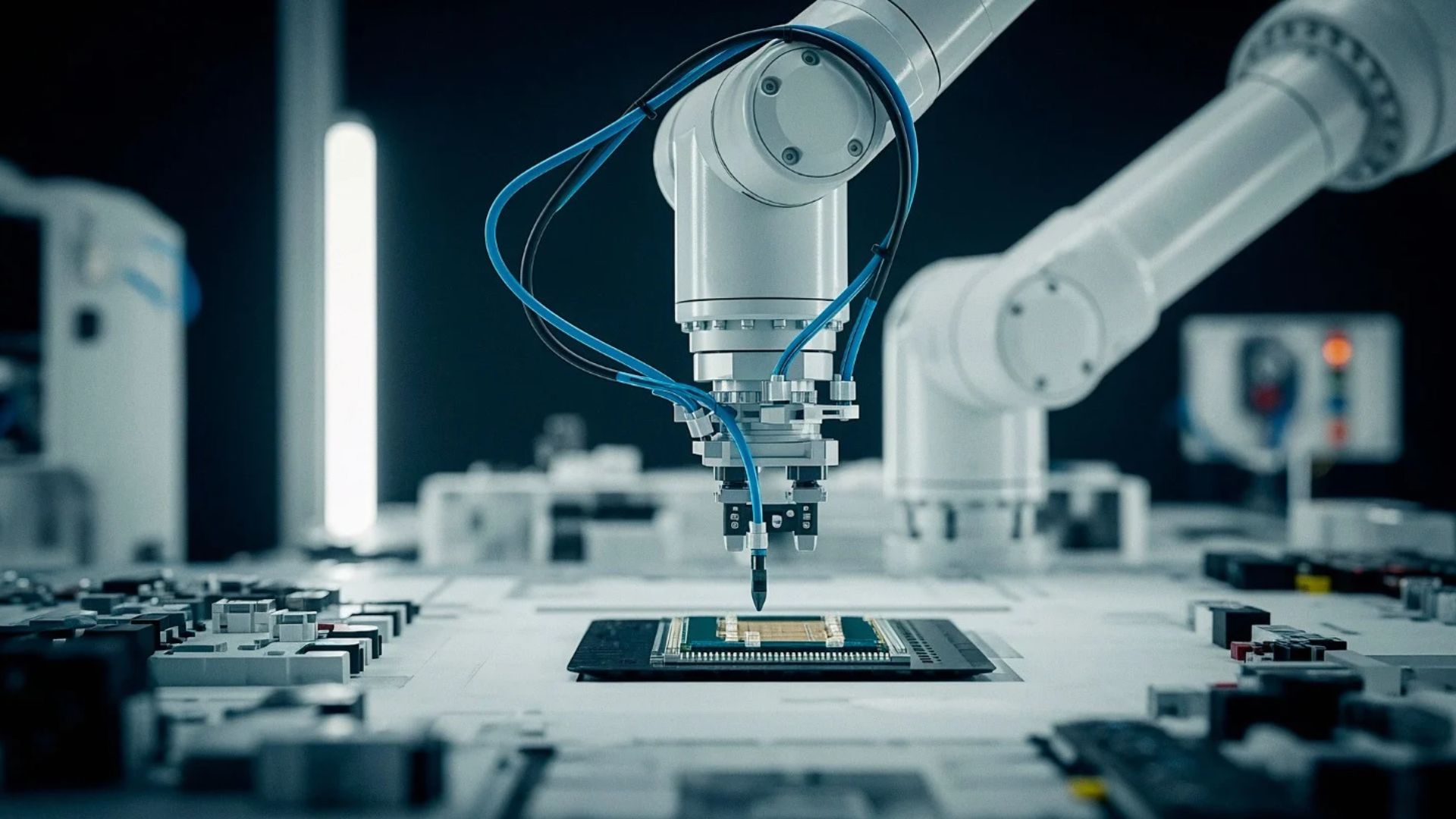
Manufacturing is moving rapidly towards robotics, artificial intelligence and connected production systems. But the next competitive advantage may depend less on how much technology a factory buys and more on whether its organisation is ready to use it effectively.
The nomenclature for decades was, manufacturing automation was largely a machinery question. A repetitive task could be mechanised, a production line could be equipped with robots and sensors could monitor equipment.
That equation is changing. AI is now being layered onto industrial automation, allowing manufacturers to analyse production data, identify patterns, anticipate equipment failures and optimise operations. At the same time, factories are connecting machines, software and production systems that were often designed independently.
This creates a fundamental challenge: a factory can have sophisticated technology without becoming a smarter factory.
India illustrates the speed of this transition. The International Federation of Robotics says India installed almost 10,500 industrial robots in 2025, 15% more than the previous year. India ranked sixth globally in annual robot installations, with installations growing at an average annual rate of 27% between 2020 and 2025.
The numbers show that automation is accelerating. They do not, by themselves, demonstrate higher productivity. That distinction is becoming central to the next phase of manufacturing.
Automation must begin with the process
The conventional approach starts with the machine: identify a repetitive task and find technology capable of performing it faster or more consistently. A more mature automation strategy starts with the process.
Before automating a production activity, manufacturers need to establish what is actually causing delays, defects, downtime or excessive cost. Otherwise, automation can simply make an inefficient process run faster.
This is particularly important for manufacturers introducing AI. AI can identify patterns and recommend actions, but it cannot compensate indefinitely for a poorly structured production process.
The four foundations of successful automation therefore extend beyond technology: people, processes, data and systems. The machine is only one component of that operating model.
Robots are an input, not an outcome
The global expansion of industrial robotics is undeniable. IFR data shows that more than 600,000 industrial robots were installed worldwide in 2025, taking the global operational stock to approximately five million units.
But robot installations are an input into manufacturing performance, not a measure of it.
The relevant questions are whether automation reduces production cycle times, improves first-pass yield, lowers scrap, increases machine utilisation or reduces maintenance and energy costs.
A manufacturer that installs hundreds of robots but cannot establish measurable improvements in these areas may have increased its technology footprint without necessarily improving its economics.
This is why automation investment needs to move from a technology-led conversation to an outcome-led one.
Data is becoming factory infrastructure
AI introduces another dependency: data quality. Modern factories often combine equipment from different generations and manufacturers. A new machine may continuously generate digital production information, while an older asset may still depend on manual readings. ERP, manufacturing execution, quality and shop-floor systems may also operate on separate architectures.
Connecting these systems is not merely an IT exercise. It determines whether management and AI systems have a reliable view of what is happening on the production floor.
NIST’s 2026 roadmap for AI and machine learning in smart manufacturing identifies data management, industrial data complexity and integration across heterogeneous sensing and control systems as significant challenges. It also stresses reliability and trustworthy operation for AI deployed in industrial environments.
The implication is straightforward: poor data can turn an advanced AI system into an expensive decision-making layer built on unreliable information.
For established manufacturers, this makes legacy equipment an important part of the automation strategy. Sensors, edge computing and industrial connectivity can extend the digital capabilities of older assets, but integration needs to be designed around the operational requirements of the factory rather than treated as a technology upgrade in isolation.
Automation is changing the workforce, not eliminating it
The workforce equation is changing alongside the technology.
As more physical tasks become automated, employees increasingly move towards supervision, maintenance, exception handling, process optimisation and data interpretation.
The OECD’s 2026 work on AI and skills identifies shortages of relevant capabilities as a significant barrier to adoption. For manufacturers, this means the return on an automation investment depends partly on whether employees can understand and operate the technology around it.
The difficult investment may therefore not be buying the machine. It may be building the capability to manage it.
The resilience question
There is another consideration that becomes more important as factories become increasingly connected: what happens when the technology fails?
A failure in an isolated machine may interrupt one operation. A failure in a connected production environment can potentially affect scheduling, quality monitoring, material movement and other dependent processes.
Cybersecurity and operational resilience therefore need to be incorporated into automation design rather than added later.
Manufacturers need defined recovery procedures, appropriate access controls and, where necessary, manual fallback mechanisms for critical operations.
A smarter factory must also be capable of failing safely.
India’s automation opportunity needs a practical approach
India’s manufacturing base ranges from highly automated global-scale plants to smaller engineering companies operating with very different levels of digital maturity.
There is therefore no single automation blueprint.
A large automotive manufacturer may justify machine vision, advanced robotics, digital twins and AI-driven production optimisation. An engineering SME may generate greater returns from automated inspection, predictive maintenance on a critical machine or digital production tracking.
The technology does not have to be spectacular to be commercially significant.
For an SME, reducing an expensive source of downtime or scrap can create more measurable value than deploying a sophisticated AI system that cannot be integrated into everyday operations.
The right question is therefore not “What can we automate?”
It is “Which manufacturing problem can automation solve measurably, and is the organisation ready to sustain that improvement?”
The real automation race
The next competitive divide in manufacturing may not be between companies that use robots and those that do not.
It may be between companies that continuously learn from automated operations and those that simply operate automated equipment.
That capability requires reliable data, redesigned processes, skilled people, interoperable systems and operational resilience.
For Indian manufacturers seeking greater productivity and a stronger position in global value chains, this may be the more important automation investment.
The factory of the future will not necessarily be the one with the most robots. It will be the one that can turn machines, data and people into a continuously improving production system.