


The Middle Corridor’s Next Phase: What the World Bank Sees and Where India Fits
Global trade is increasingly being designed around redundancy. The latest World Bank assessment titled Integration: World-Class Trade Logistics Along the Trans-Caspian Transport Corridor, suggests that an Asia-Europe logistics network is moving beyond geopolitical discussion and into a more concrete investment and operational phase.
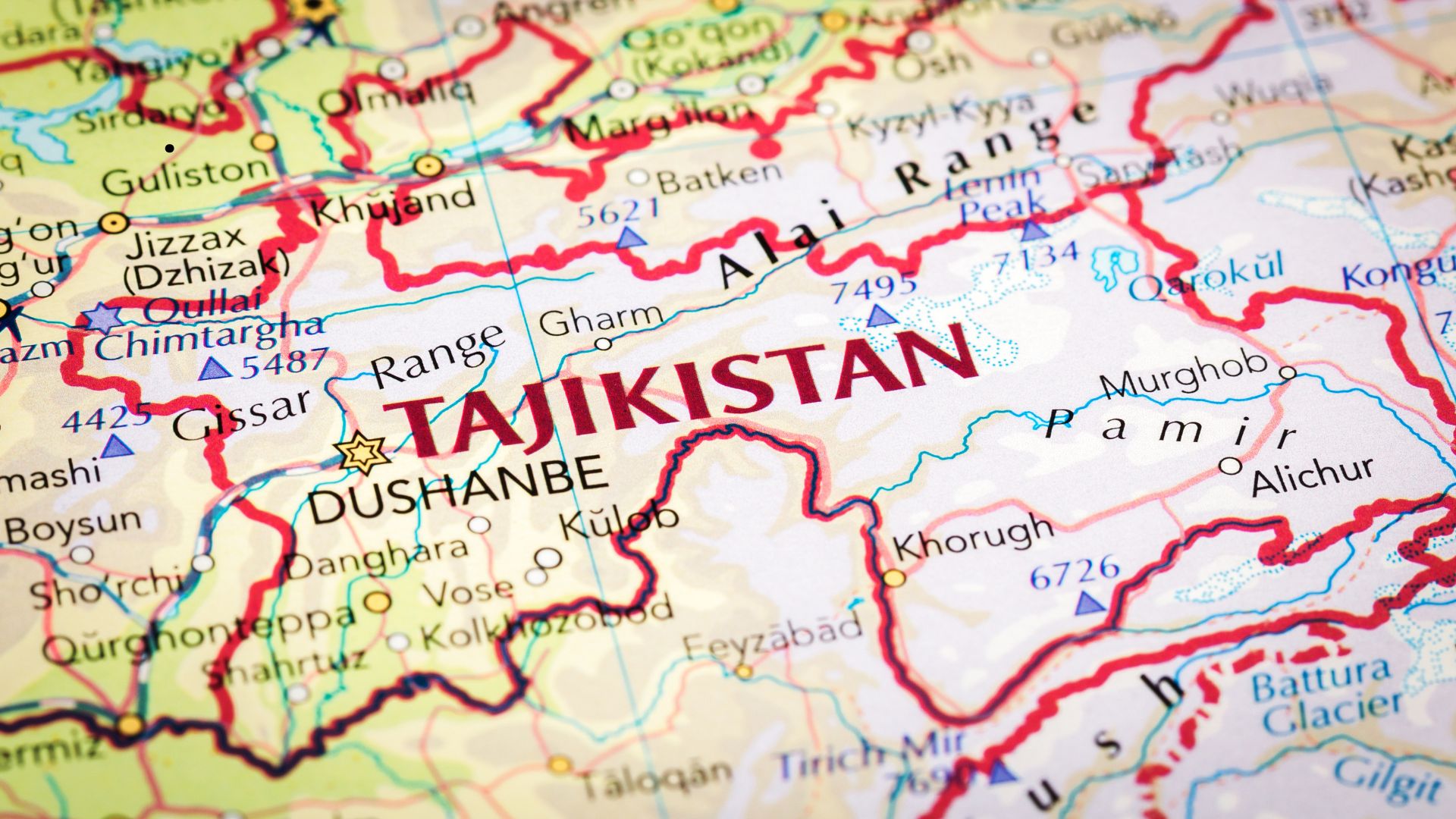
The corridor links East Asia with Europe through Central Asia, the Caspian Sea, the South Caucasus and Türkiye. It is over 10,000 kilometres long and combines rail, road, ports, maritime shipping and border crossings.
A corridor built for resilience
The World Bank’s argument is not that the Middle Corridor will replace established Asia-Europe routes. Its value is redundancy: an additional option for containerised trade when disruptions affect other routes.
That distinction matters for businesses. Modern supply chains increasingly value credible alternatives, not only the cheapest route. A second route becomes commercially meaningful when it can offer acceptable cost, predictable transit times and reliable service.
The TCTC is not there yet. The report says the corridor remains fragmented and that infrastructure alone will not make it competitive for high-value, time-sensitive cargo. Rail, ports, border procedures, documentation, digital systems and coordination all have to improve.
Under the World Bank’s development scenario, total TCTC volumes could rise 3.6 times by 2040 from 2023 levels, while non-oil volumes could increase 4.5 times. Travel times could be cut by half. GDP across host economies could rise 3.3%, with employment increasing 2.9%.
The report identifies about $25.1 billion of high-priority infrastructure investment needs, mainly in rail, ports and maritime systems. 75% of the 16 most critical projects are already underway or expected to begin soon.
But the more interesting message is what comes after infrastructure.
From transport corridor to economic corridor
The World Bank argues that the TCTC needs to evolve from a transport corridor into an economic corridor. That means logistics infrastructure must support investment, manufacturing, processing, warehousing, trade services and business ecosystems around major nodes.
This is where the SME story becomes relevant.
The report identifies potential growth in agro-processing, mining and minerals processing, light manufacturing and digital logistics. Trade in machinery, electronics, vehicles and processed goods is also expanding from a relatively low base.
The Middle Corridor is therefore not simply about moving more containers. If performance improves, it can influence where companies source, assemble, process and distribute products.
Where India can plug in
India is not a TCTC host economy, and the World Bank does not model Indian exporters as a separate beneficiary group. Its network map does, however, show Mumbai and Mundra as extensions of the broader corridor system.
That makes India’s opportunity more specific than simply finding a new route to Europe.
First, Indian manufacturers could use an Eurasian network where economics and service reliability make sense. Engineering goods, machinery and auto components are relevant because the corridor’s trade potential includes manufactured and intermediate goods.
Second, India can participate as a supplier to the corridor itself. Expansion of railways, ports, terminals and logistics hubs creates demand for equipment, engineering services, cargo-handling systems, digital logistics and technology. Indian engineering and technology SMEs could potentially compete, subject to procurement rules, standards, financing and local partnerships.
Third, Indian firms could become enablers rather than merely shippers. Freight visibility, documentation technology, customs and trade-compliance software, multimodal planning, warehouse systems and supply-chain analytics are capabilities required to make a fragmented corridor operate as a coordinated network. The World Bank places digital systems, logistics hubs, inland terminals and integrated documentation at the centre of the corridor’s next phase.
There is also a manufacturing-network opportunity. Better connectivity could support regional warehousing, component supply, assembly, distribution or sourcing around logistics nodes. Indian companies could participate in parts of the value chain without finished goods traversing the entire TCTC.
Reliability will decide the commercial case
The report distinguishes physical connectivity from commercial competitiveness.
Containerised trade requires scheduled and time-definite services, visibility, reliable transit, effective exception management and digitalisation. The World Bank recommends a single digital corridor system, stronger cross-border coordination and an integrated rail freight and trans-Caspian shipping operating model.
For SMEs, logistics decisions often depend on predictability rather than distance alone. A route facing uncertain border clearance, transshipment delays or inconsistent documentation can remain commercially unattractive.
For Indian exporters, the Middle Corridor is best viewed as an emerging piece of wider Eurasian logistics architecture, not an immediate substitute for existing routes.
Its importance for India may extend beyond freight. Indian companies could participate as exporters, component suppliers, technology providers and logistics partners around key nodes.
India does not need to be inside the core corridor to become commercially connected to it. The practical question is whether Indian businesses can identify the products, services and capabilities that this Eurasian network will need.